Skip to content
Briefings are running a touch slower this week while we rebuild the foundations.See roadmap
European Energy Markets
4JUN

EC benchmark revision slashes EUA consensus 13%

3 min read
10:45UTC

The European Commission published new ETS benchmark reference values on 11 May for 2026-2030 free allowances, saving industry an estimated EUR 4 billion and prompting a 13% cut in analyst carbon price consensus.

EconomicDeveloping
Key takeaway

The EUR 4 billion free-allowance increase caps EUA upside while confirming industrial competitiveness has overtaken carbon ambition as Brussels' priority.

The European Commission released new benchmark reference values on 11 May for 2026-2030 free allowances under the EU Emissions Trading System, increasing allocation and saving companies an estimated EUR 4 billion in compliance costs. EUA December 2026 settled at EUR 78.75/tonne on 28 May. The market repriced before the official release: leaked signals on 6 May pushed EUA from EUR 73 to EUR 76/tonne.

A Reuters poll of ten analysts returned a 2026 consensus of EUR 80.61/tonne, down from EUR 92.65 in January, a 13% cut. The 2027 consensus fell to EUR 93.29 from EUR 107.29. In practice, desks hedged at January consensus face material mark-to-market losses on their carbon books. The revisions reflect a structural reappraisal: the Commission is subsidising demand destruction prevention rather than letting the carbon price signal force adjustment.

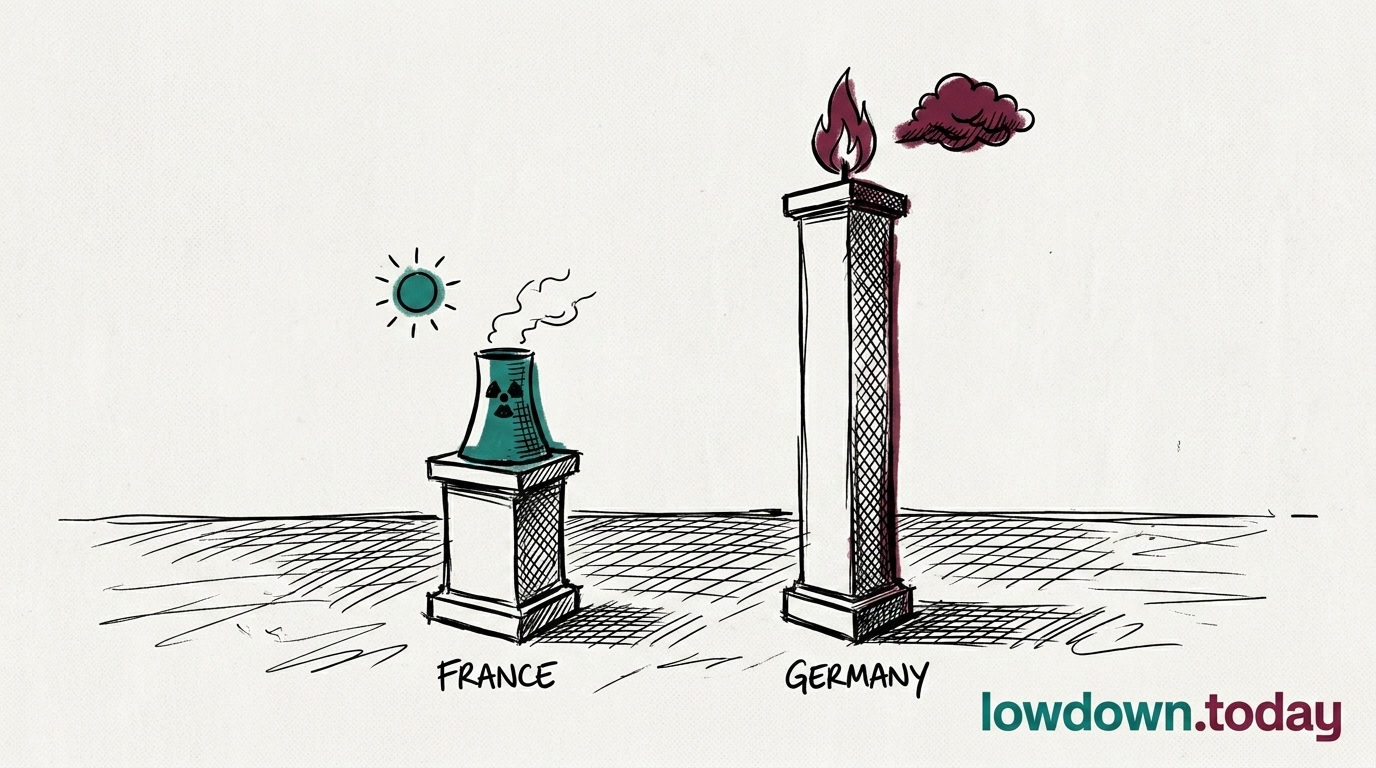
The clean spark spread for German CCGT generation makes the arithmetic visible. At EUR 47 TTF and EUR 78 EUA, output runs at roughly EUR 88/MWh against a fuel-plus-carbon stack above EUR 140/MWh: deeply negative. Gas-fired generation in Germany remains off-merit . European chemical plants are running at 62-68% capacity utilisation , and BASF has flagged Verbund freezes as a contingent option . The benchmark revision concedes what the utilisation data already showed: the carbon price was compounding the gas-cost structural disadvantage, and Brussels chose the factories over the climate target.


Deep Analysis

In plain English

The EU's carbon market works like a pollution permit system: factories must buy permits to emit CO2, and the price of those permits incentivises companies to clean up their processes. The EU has just reduced the number of permits that industries must buy, saving them about EUR 4 billion in costs, to help manufacturers who are struggling with very high energy bills to stay competitive against cheaper overseas rivals. The downside is that cheaper carbon permits reduce the financial incentive for companies to invest in cleaner technology; so the decision helps struggling factories in the short run but may slow Europe's transition away from fossil fuels.

Deep Analysis
Root Causes

European chemical and industrial competitiveness has been structurally impaired by the combination of TTF gas costs and EUA carbon costs: BASF, INEOS and Covestro are running at 62-68% capacity utilisation against an 80% profitability threshold. The benchmark revision is a direct response to lobbying from the chemistry and steel sectors, which have threatened relocation to lower-carbon-cost jurisdictions.

The Commission's 2026-2030 benchmark cycle set a policy decision point that coincided with the peak of the European energy cost crisis, creating unusual pressure to relieve industrial burden that might have been resisted in a lower-price environment.

What could happen next?
  • Consequence

    The 13% EUA consensus downgrade lowers the investment case for carbon capture and storage in Europe: projects requiring EUR 90+ EUA as a breakeven are commercially unviable at EUR 80.61/tonne, likely delaying final investment decisions by 2-3 years.

    Medium term · Assessed
  • Risk

    If the benchmark revision is read as a precedent that the Commission will relieve industry in every review cycle, the credibility loss could push EUA below EUR 70/tonne by 2027 as market participants anticipate further allocation increases.

    Short term · Suggested
  • Opportunity

    German chemical and steel plants running at 62-68% utilisation may stabilise or marginally improve capacity utilisation in H2 2026 as the EUR 4 billion cost saving flows through procurement decisions, partially offsetting the demand-destruction trend in industrial gas consumption.

    Short term · Assessed
First Reported In

Update #13 · Storage on track by 45 GWh; one outage away

IEEFA· 29 May 2026
Read original
Causes and effects
Different Perspectives
TTF traders / Amsterdam hub desks
TTF broke its 38-session EUR 46-47 band on 2 June to EUR 48.9 on stalled Iran diplomacy and an unconfirmed Troll A restart; Dutch EBN mandates carry storage trajectory while commercial injection books nothing. The 17 June pipeline expiry is the next binary level: Central European hub premium above EUR 2/MWh widens sharply on any physical step-down.
Red Electrica / Spanish grid operators
Spain logged 397 negative-price hours in Q1 2026, eight times the 48 hours of Q1 2025, documenting midday solar surplus now embedding structurally into Continental pricing. Spain is four to six quarters ahead of France and Germany on the solar-penetration curve, making it the clearest forward indicator of where Continental midday clearing is heading.
Equinor
Equinor
Equinor issued no Troll A restart notice through 4 June despite extending the combined outage to 31 May, keeping up to 51 mcm/day of Norwegian supply offline alongside Hammerfest LNG dark since 22 April. The company's silence follows its 2025 Hammerfest pattern, which ran 24 days past target, and each day without a notice sustains the TTF supply premium.
European Commission / GMTF
SWD(2026)147 found EU gas spot and derivatives markets functioning well on 2 June, recommending MiFID-REMIT legislative alignment rather than emergency intervention. The GMTF verdict addressed derivatives-market integrity, not the physical injection mechanism FNB Gas declared broken five days earlier: the Commission's immediate next step is a legislative proposal, not an emergency storage order.
FNB Gas / Bundesnetzagentur
FNB Gas declared the storage-refill mechanism broken on 27 May after zero bookings in January 2026 auctions, and German day-ahead cleared EUR 102.64 on 3 June on a CCGT stack set by TTF near EUR 49 plus EUA near EUR 78. Winter storage fill now depends on state mandates with no commercial self-correction.
EDF / French government
EDF held full-year nuclear guidance at 350-370 TWh after April output of 29.3 TWh, anchoring the surplus that collapsed French day-ahead to EUR 8.96 on 3 June and passed that price to VNU industrials. Flamanville-3's September overhaul removes 1.6 GW at heating-season onset, reversing the nuclear surplus that made VNU pricing competitive.
