Concept
Verbund
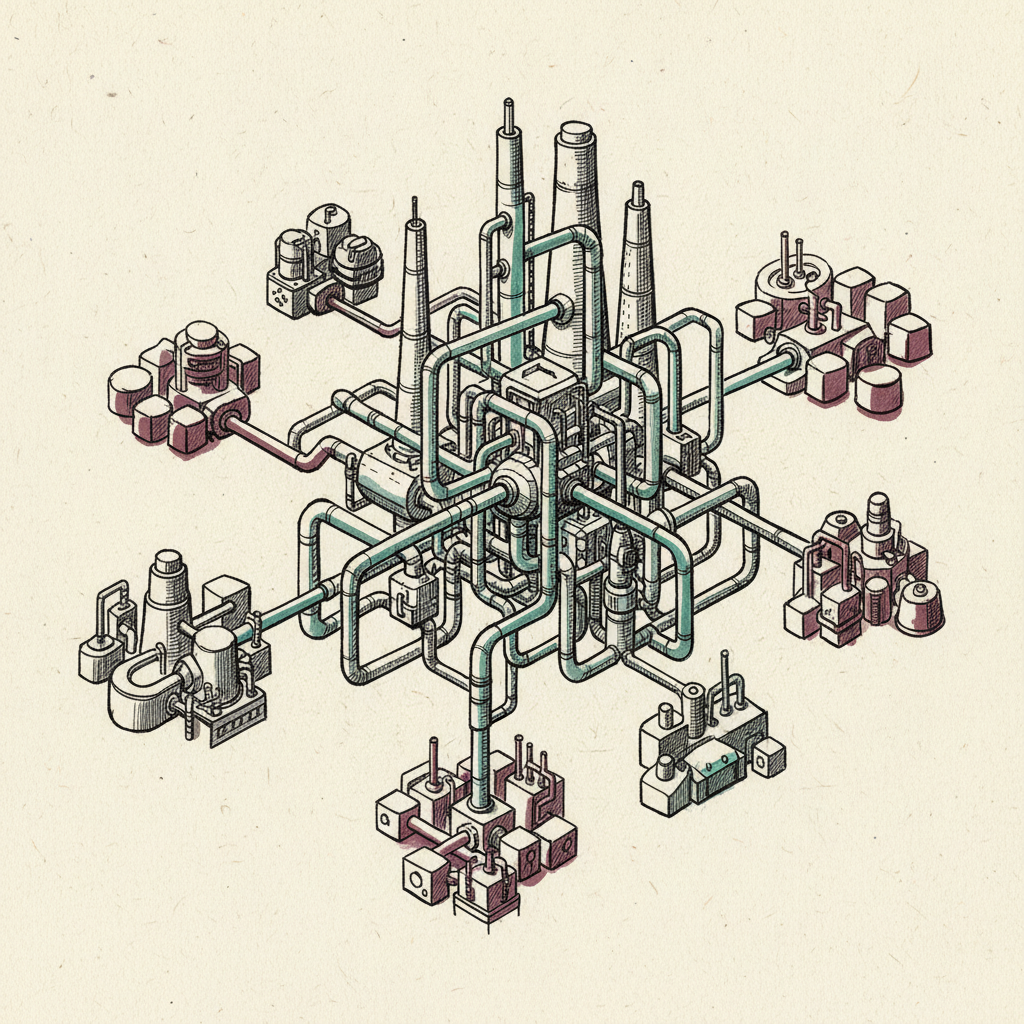
BASF integrated production model that monetises waste heat and by-product flows across the chemical chain.
Last refreshed: 22 May 2026 · Appears in 1 active topic
Key Question
Why does one uneconomic BASF plant threaten to shut down the whole Ludwigshafen complex?
Timeline for Verbund
#14 28 May
Mentioned in: Carbon claws back its 11 May cut
European Energy Markets#11 18 May
Chemicals 62-68% as the new running floor
European Energy Markets#13 11 May
Mentioned in: EC benchmark revision slashes EUA consensus 13%
European Energy MarketsBackground
BASF's Verbund Cascade logic is the central argument in the €62-68/MWh chemicals cost floor debate: because waste heat and intermediates cycle across 200+ interconnected plants, a power price floor that makes one stage uneconomic can shut down the entire Ludwigshafen site, not just one plant. BASF reported Q1 2026 EBITDA down approximately 6% in this context.
Common Questions
What is BASF's Verbund model and how does it work?
BASF's Verbund integrates 200+ chemical plants at Ludwigshafen by routing waste heat and intermediate chemicals between processes, cutting costs versus standalone plant operators. The model only functions at scale and integration.Source: BASF official
Why does BASF's Verbund mean high electricity prices in Germany are an existential threat?
Because waste heat and intermediates cycle across 200+ connected plants, making one stage uneconomic forces a Cascade shutdown rather than a targeted closure — one high-energy process going offline disrupts the entire Ludwigshafen site.Source: european-energy-markets briefing
How did BASF's earnings hold up in early 2026?
BASF reported Q1 2026 EBITDA approximately 6% lower quarter-on-quarter, with elevated energy costs at the Ludwigshafen Verbund cited as a contributing factor.Source: european-energy-markets briefing
How the World Sees Them
BASF management
The Verbund logic means the choice is between competitive energy costs at Ludwigshafen or site economics that break; partial measures do not solve the integration problem.
Chemical industry competitors
BASF's Verbund efficiency has historically been a competitive moat; if energy costs undermine the model, it erases the integrated-site advantage that justified the Ludwigshafen concentration.
EU energy and industry policymakers
The Verbund model is the strongest argument for industrial electricity price relief in Germany; the cascade risk means the policy stakes of inaction are amplified versus standalone plant economics.