Skip to content
Briefings are running a touch slower this week while we rebuild the foundations.See roadmap
Drones: Industry & Defence
4APR

Iran Fires 4,446 Drones in Five-Week Campaign

2 min read
20:57UTC

CSIS quantified the cost-exchange crisis: 71% of Iranian strikes are drones costing a fraction of the missiles used to stop them.

TechnologyDeveloping
Key takeaway

Iran's drone campaign proved the cost-exchange crisis is operational, not theoretical.

CSIS published its first detailed analysis of Iran's drone campaign in the Gulf on 3 April 2026. Since Operation Epic Fury began on 28 February, Iran has launched 4,446 drones and 1,725 missiles. 71% of recorded strikes were drone-based. 1

The UAE absorbed 55% of all incoming strikes. The initial wave on 1 March comprised 1,206 strikes; sustained pressure continued at 190 to 392 per day. CSIS framed the campaign as a deliberate cost-imposition strategy: a Shahed-136 costs between $20,000 and $50,000, while defending against it with a Patriot missile costs 80 to 200 times more. 2

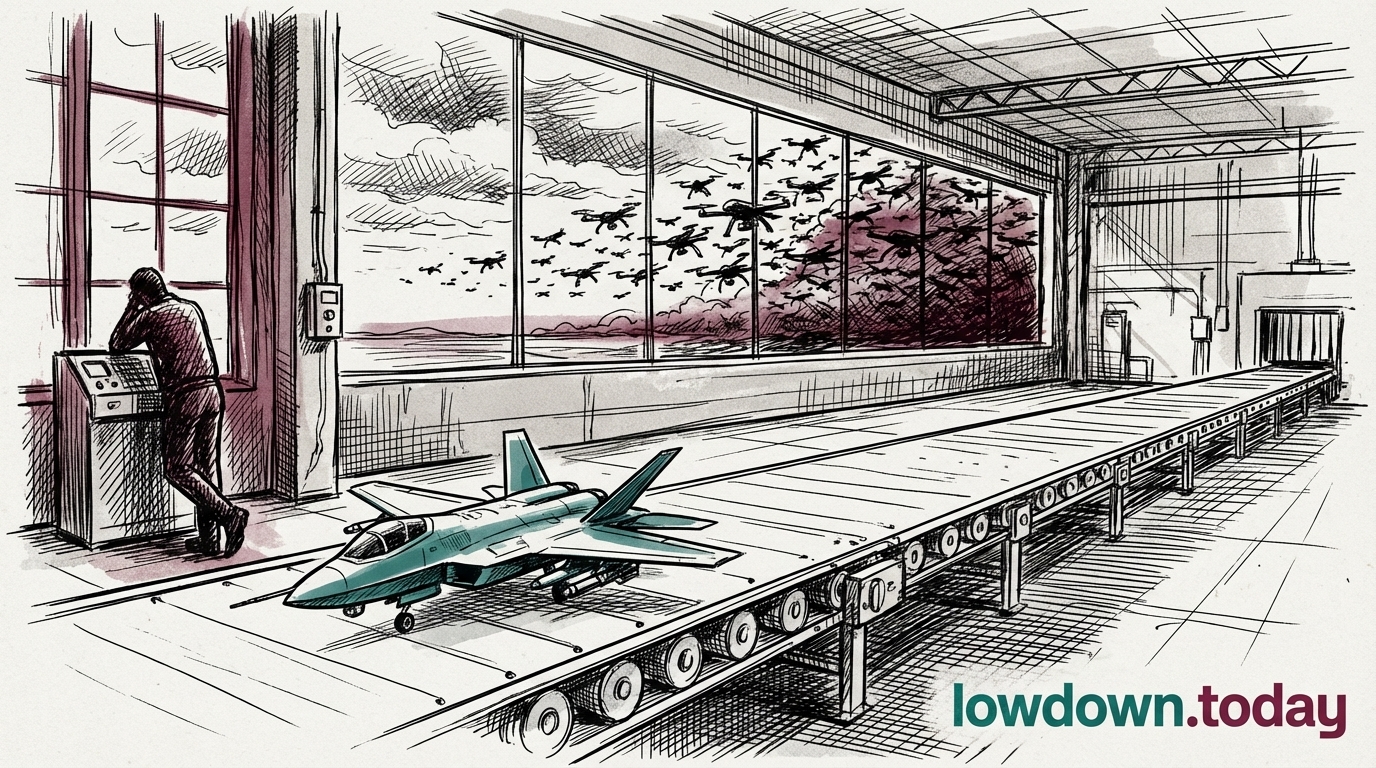
The report recommended adopting Ukraine's approach (cheap interceptor drones at $2,000 to $4,000 per unit) rather than missile-based defence . CSIS also noted evidence of possible Russian Geran-2 variants in Iranian stocks, suggesting reciprocal Iran-Russia technology transfer. 3 The data gives the Pentagon's Drone Dominance programme its most concrete demand signal yet: the threat is not hypothetical, and the current arsenal is orders of magnitude too small.

Deep Analysis

In plain English

Iran has been firing hundreds of low-cost drones at US allies in the Gulf every day for five weeks. Each drone costs roughly the same as a family car. To shoot them down, the US has been using missiles that cost more than a luxury house. CSIS, a Washington think tank, counted the numbers: 4,446 Iranian drones launched, the UAE taking 55 per cent of the hits. The report confirmed what many had feared: Iran is winning the economics of this conflict even if it is not winning tactically. The suggested fix is to stop using expensive missiles and start using cheap counter-drones instead, costing $2,000 to $4,000 each, similar to what Ukraine has been doing.

Deep Analysis
Root Causes

Iran developed its Shahed programme specifically in response to US precision-strike dominance, mirroring the logic of anti-ship missiles used to threaten carrier groups: impose unacceptable costs on a superior adversary rather than match them platform-for-platform.

The UAE's 55% share of incoming strikes reflects its role as the primary forward base for US forces in the Gulf, making it the highest-value target set for cost-imposition.

Evidence of Russian Geran-2 variants in Iranian stocks suggests the Iran-Russia technology transfer relationship is reciprocal: Russia received Shahed-136 designs for use in Ukraine; Iran received upgraded variants in return, deepening the campaign's industrial underpinning.

What could happen next?
  • CSIS data provides the Pentagon's Drone Dominance programme with a concrete demand signal, likely accelerating Gauntlet II timelines and funding.

  • Evidence of Russian Geran-2 variants in Iranian stocks will intensify pressure on Gulf states to accept tighter sanctions enforcement on Iran-Russia technology transfer.

First Reported In

Update #4 · Factories Under Fire: America's Drone Gap Meets Reality

Breaking Defense· 4 Apr 2026
Read original
Different Perspectives
Denmark (host nation)
Denmark accepted Fire Point's Skrydstrup plant after committing to bilateral defence co-production at the B9 Nordic summit in May; the facility sits beside a Danish F-35 base, sharing security perimeters. NATO has published no legal guidance on whether hosting Ukrainian weapons production converts Denmark into a co-belligerent, leaving the host-state obligation unresolved.
Russian Ministry of Defence
Russia's 117% YoY drone-output rise in April, accelerating from a 68% full-year 2025 baseline, validates the FPV mass-production doctrine and hands Moscow a cleaner targeting argument for the Skrydstrup plant than any hidden production line offered; a Ukrainian weapons facility on NATO sovereign territory is a legitimate military target under the laws of armed conflict.
Baltic NATO states (Latvia, Estonia, Lithuania)
Latvia deployed mobile drone-intercept teams on 29 May using domestic Origin Robotics and Eraser interceptors, the first kinetic Baltic border response to Russia's 117% output surge. The Baltic states are the primary target market for Ukraine's ten EU export offices, giving them direct commercial access to combat-tested interceptors their own manufacturers have not yet matched.
Pentagon / Joint Interagency Task Force 401
Two Ukrainian entrants in Drone Dominance Phase 2 and Red Cat's SEC-filed STE partnership bring combat-iterated Ukrainian designs into US procurement without triggering Foreign Military Sale approvals; the programme's performance-scoring methodology does not require US-origin hardware. Northrop holding the Common UAS Payload standard means a heritage prime captures interface revenue regardless of which startup airframe wins.
Ukrainian defence industry (Fire Point / Spetstechnoexport)
Fire Point's Skrydstrup construction start and Spetstechnoexport's Red Cat partnership execute Zelensky's 13 May Bucharest proposal: converting wartime production surplus into a state export apparatus, independent of US approval chains. For Ukraine, embedded manufacturing on NATO soil protects propellant supply from Russian strikes while generating hard currency the war effort needs.
Chinese drone manufacturers (DJI, Autel)
Autel's Ralls Corp Fifth Amendment filing and DJI's Ninth Circuit quantification of USD 1.56 billion in 2026 losses are parallel constitutional attacks on a classified-evidence exclusion mechanism; neither company can contest the intelligence allegations directly, so both are betting on due-process doctrine to reopen the FCC authorisation route.