Skip to content
You can now search across every topic, entity and event.What's new
Drones: Industry & Defence
20AUG

Ukraine exports the factory, not the drone

3 min read
16:38UTC

RSI Europe in Vilnius and Ukraine's The Fourth Law signed a memorandum at Eurosatory on 18 June to build drones in Lithuania, deepening a corridor that puts Ukrainian production lines and combat-iterated software on EU soil.

TechnologyDeveloping
Key takeaway

Ukraine's export ban has become a know-how export, seeding combat-proven production lines across NATO states.

RSI Europe, a Lithuanian drone manufacturer in Vilnius, signed a memorandum of understanding with Ukraine's The Fourth Law at Eurosatory on 18 June 2026 to build drones in Lithuania under the Build with Ukraine framework 1. The Fourth Law supplies the artificial-intelligence, computer-vision and manufacturing know-how; Ukrainian citizens are given priority for the production jobs. RSI is already delivering 9,500 Shpak FPV first-person-view drones to an undisclosed NATO buyer.

The deal advances a corridor that opened when Fire Point broke ground on a Danish plant and Kyiv announced ten EU export offices . Ukraine's Fire Point is scaling FP-1 output to more than 100 a day at Denmark's Skrydstrup airbase, set against the roughly 4 million drones Ukraine builds at home each year. The volume travelling abroad is small by that measure, which is not the point of the move.

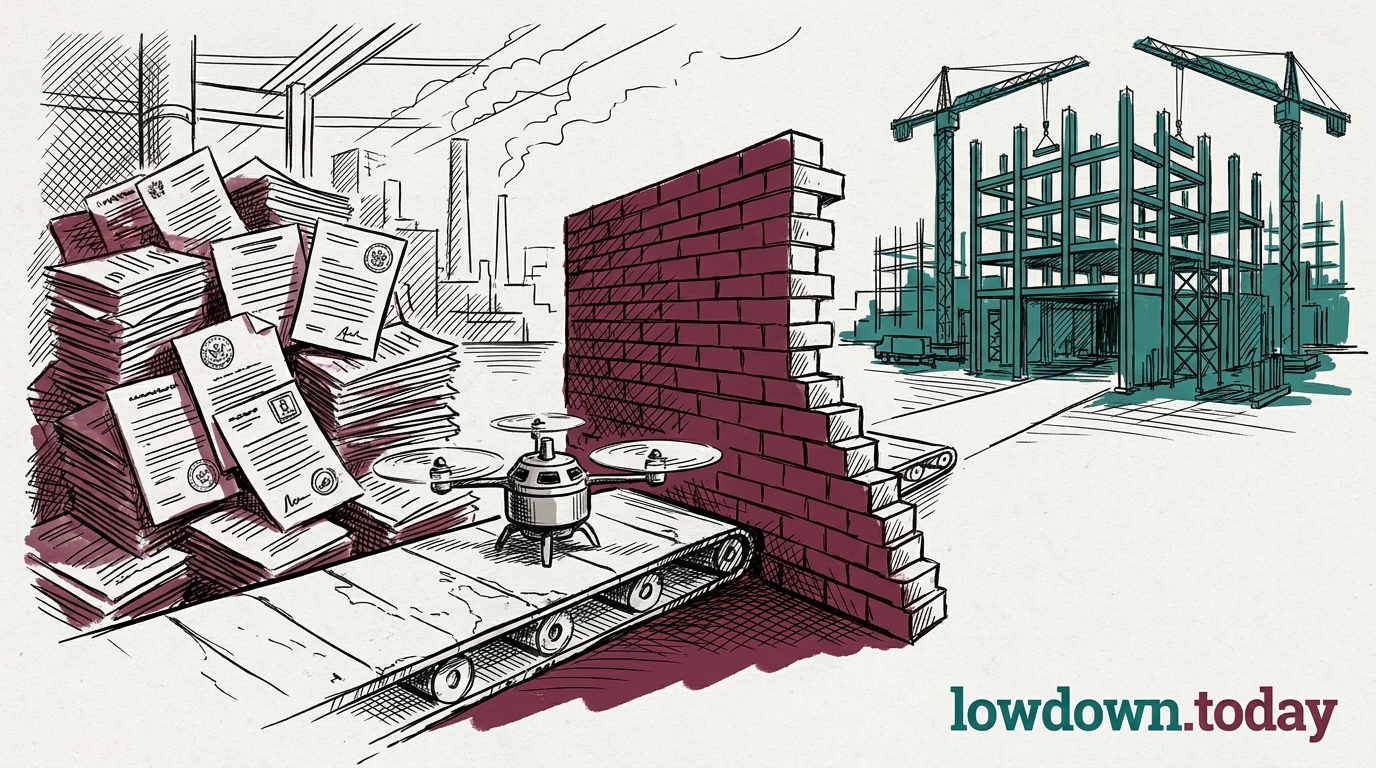
What travels with the production matters more than the throughput. Design know-how and combat-iterated software, refined over three years against Russian drones, now flow into NATO states alongside the airframes. Kyiv's wartime export ban still blocks the hardware, so it sells the harder asset instead, while host states absorb the manufacturing and the political risk of weapons plants on their territory. The export ban has been converted into an industrial-transfer business: Lithuania for assembly, Denmark for propellant and airframes, with Ukraine retaining the intellectual property.

Deep Analysis

In plain English

Ukraine produces roughly 4 million drones per year and has developed advanced manufacturing knowledge during the war. But Ukraine cannot legally export finished drones to most allied countries under its own export controls. Instead, Ukrainian firms are licensing their know-how to manufacturers in NATO countries. RSI Europe, a Lithuanian company, signed an agreement with Ukrainian firm The Fourth Law to build drones in Lithuania using Ukrainian AI and manufacturing methods. Ukrainian workers get priority for the jobs. This is Ukraine exporting a factory's worth of knowledge rather than the products themselves.

What could happen next?
  • Consequence

    The Baltic drone manufacturing corridor (Lithuania, Denmark hosting Fire Point and RSI Europe) is becoming a distinct regional industrial cluster that could attract further Ukrainian technology transfers and NATO supply contracts ahead of the UK and Germany.

  • Risk

    Manufacturing know-how transferred to Lithuania before the Ukraine war ends could be re-licensed to third parties outside Ukraine's control, reducing Ukraine's post-war export leverage in defence markets.

First Reported In

Update #13 · Air Force shuts primes out of drone wingman

Federal Register· 25 Jun 2026
Read original
Different Perspectives
South Korea's Defense Acquisition Program Administration
DAPA folded drone and roadside-bomb jammers into an 18-year, KRW 3.448 trillion K2 tank upgrade approved 11 August, rather than fund counter-drone kit as its own programme. Seoul is treating the threat as permanent enough to write into a platform's lifecycle, not urgent enough to buy ahead of it.
NATO Support and Procurement Agency
NSPA named five pre-qualified counter-drone suppliers under new framework contracts on 27 July, giving allies a purchasing route with no published budget attached. A framework without committed money is an instrument waiting for a spending decision, not a guarantee one is coming.
Ukraine's Ministry of Defence
Ukraine's forces strike with more than 70 AI and computer-vision systems drawn from over 200 domestic producers, the ministry said on 18 August, a supplier base neither Washington's tariff fight nor Beijing's export licence touches. Kyiv is scaling capability faster than either government is writing rules for it.
A European drone-component manufacturer
A European manufacturer selling components into the United States faces the same 100 per cent tariff and 3 September deadline as any other foreign supplier, with the duty-free onshoring carve-out available only to firms building on American soil. That leaves it to absorb the cost, relocate assembly, or cede the US market rather than shop around a rival supply chain.
Chinese drone component exporters
Exporters now need a case-by-case licence for each US-bound dual-use shipment after MOFCOM's 5 August order, with no published review clock. The same week Shenzhen logged nearly 200,000 domestic logistics-drone sorties and Hunan reported record spraying coverage, a home market large enough to absorb what the licence regime slows from leaving the country.
US drone manufacturers
The onshoring carve-out protects Performance Drone Works' $820 million War Department loan, but the same 3 September deadline hits Red Cat Holdings and Unusual Machines, both filing over 500 per cent revenue growth on 6 August, on Chinese-sourced components with no qualified domestic substitute yet.
