Skip to content
Briefings are running a touch slower this week while we rebuild the foundations.See roadmap
Drones: Industry & Defence
7JUN

8,828 drones in 24 hours — triple norm

3 min read
11:27UTC

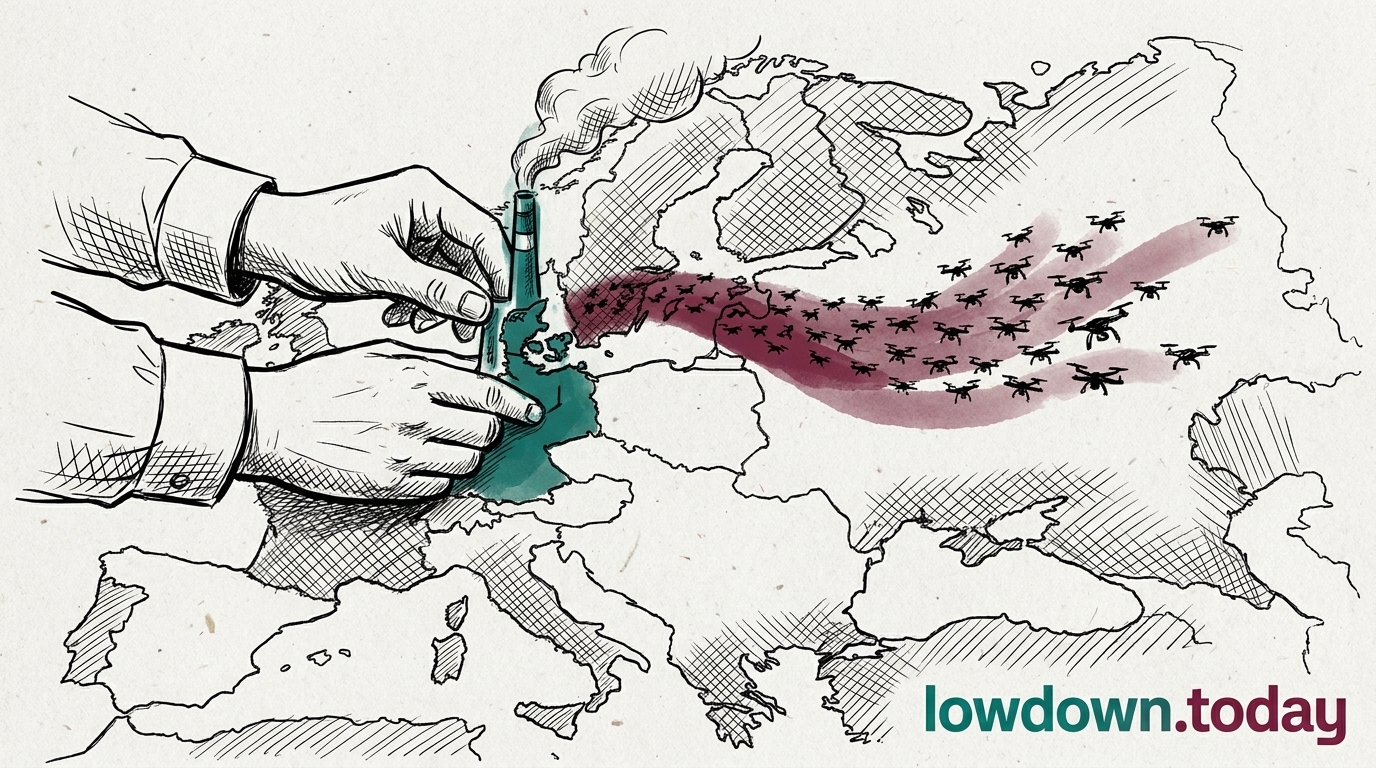
Russia launched 8,828 kamikaze drones in 24 hours on 2 March — nearly triple the 2025 daily average — driven by Iranian-licensed and domestic production that is outpacing Ukraine's capacity to intercept.

TechnologyDeveloping
Key takeaway

At 8,800 drones per day, Ukraine's air defence budget faces an existential cost-imposition crisis independent of interception success rates.

The Ukrainian General Staff recorded 8,828 Russian kamikaze drones launched in the 24 hours ending 2 March, alongside 145 combat engagements, 86 airstrikes, 285 guided aerial bombs, and 3,573 artillery incidents 1.

Through 2025, Russia's daily drone average ranged from 2,000 to 3,000. At 8,828, the throughput has nearly tripled. Two production lines sustain this: Iranian production licences for Shahed-pattern drones, transferred in late 2024, and domestic manufacturing at facilities in Tatarstan and Yelabuga that scaled throughout 2025. Iran's contribution has shifted from finished drones to industrial know-how — the capacity to build them at scale on Russian soil.

Each drone costs $20,000–$50,000 to manufacture. Intercepting one with missile-based systems costs $100,000–$500,000, a cost advantage for the attacker of between two-to-one and twenty-five-to-one per engagement. electronic warfare and drone-on-drone interception are cheaper alternatives, but neither has scaled fast enough to match the production increase. The economics impose a forced trade-off: every dollar spent on drone interception is a dollar unavailable for artillery shells, vehicle maintenance, or troop rotation along a 1,000 km front.

Whether 8,828 represents a permanent capacity expansion or a single-day spike determines what comes next. Russia has surged drone launches before — during the October 2025 winter infrastructure campaign — then reverted to baseline within days as stockpiles depleted. If daily launches stabilise above 5,000, manufacturing output has permanently outpaced consumption. NATO's collective pledge of $60 billion for 2026 was calibrated against 2025's threat environment. Ukraine estimates it needs $120 billion — a gap of $60 billion that widens with every additional drone Russia can produce.

Deep Analysis

In plain English

Imagine a scenario where stopping a £30 shoplifter costs your security team £300 in labour and equipment — and 8,800 shoplifters arrive every day. Even if you stop most of them, the cost of stopping them is financially ruinous. That is Ukraine's air defence problem in one sentence. Russia has found that it doesn't need its drones to hit their targets to win this exchange: the act of launching them forces Ukraine to spend four to ten times more on interception than Russia spent on production. At sufficient volume and frequency, this depletes Ukraine's missile stockpiles faster than Western factories can replace them, regardless of how many drones are actually shot down.

Deep Analysis
Synthesis

Russia's Yelabuga facility is estimated to produce 6,000–8,000 drones per month. Sustaining a daily rate of 8,828 beyond a few days would require drawing down inventory reserves, not just current production. A surge of this magnitude historically precedes one of two operational moves in this conflict: a major ground offensive requiring maximum air defence suppression, or a show-of-force designed to shape ongoing diplomatic negotiations. The timing — three days after the Abu Dhabi Round 2 deadlock — makes the latter interpretation analytically competitive with the former.

Root Causes

The body attributes production scaling to Iranian licences and Tatarstan-Yelabuga facilities. What it omits is the enabling role of Chinese dual-use components: navigation chips, gyroscopes, battery management systems, and microelectronics that continue to reach Russian drone producers through third-country intermediaries — principally in the UAE, Turkey, and Central Asia — despite G7 sanctions. The Kyiv School of Economics has tracked this supply chain since 2023. Without restricting Chinese component flows at the intermediary level, Western sanctions cannot impose a production ceiling on Russian drone output.

What could happen next?
2 risk1 consequence1 meaning1 precedent
  • Risk

    Ukraine's Patriot and NASAMS interceptor stockpiles face depletion faster than Western resupply cycles can replenish them if high-surge drone days occur weekly rather than episodically.

    Short term · Assessed
  • Consequence

    European interceptor missile manufacturers — MBDA, Kongsberg, Raytheon Europe — will face accelerated production demands that may extend lead times and squeeze interceptor supply to other NATO members.

    Medium term · Assessed
  • Meaning

    Russia has operationally validated mass drone saturation as more cost-efficient than precision strikes at this phase of the war, a finding that will reshape global military procurement priorities.

    Medium term · Assessed
  • Precedent

    The 8,828-drone day establishes a new benchmark for drone swarm saturation that will be studied and potentially replicated in future conflicts by actors with access to similar production bases.

    Long term · Assessed
  • Risk

    If the surge is a pre-operation suppression campaign, a major Russian ground offensive may be imminent in the sector subjected to the heaviest drone concentration.

    Immediate · Suggested
First Reported In

Update #1 · Ukraine best month as Russia triples drones

EMPR· 3 Mar 2026
Read original
Different Perspectives
Denmark (host nation)
Denmark accepted Fire Point's Skrydstrup plant after committing to bilateral defence co-production at the B9 Nordic summit in May; the facility sits beside a Danish F-35 base, sharing security perimeters. NATO has published no legal guidance on whether hosting Ukrainian weapons production converts Denmark into a co-belligerent, leaving the host-state obligation unresolved.
Russian Ministry of Defence
Russia's 117% YoY drone-output rise in April, accelerating from a 68% full-year 2025 baseline, validates the FPV mass-production doctrine and hands Moscow a cleaner targeting argument for the Skrydstrup plant than any hidden production line offered; a Ukrainian weapons facility on NATO sovereign territory is a legitimate military target under the laws of armed conflict.
Baltic NATO states (Latvia, Estonia, Lithuania)
Latvia deployed mobile drone-intercept teams on 29 May using domestic Origin Robotics and Eraser interceptors, the first kinetic Baltic border response to Russia's 117% output surge. The Baltic states are the primary target market for Ukraine's ten EU export offices, giving them direct commercial access to combat-tested interceptors their own manufacturers have not yet matched.
Pentagon / Joint Interagency Task Force 401
Two Ukrainian entrants in Drone Dominance Phase 2 and Red Cat's SEC-filed STE partnership bring combat-iterated Ukrainian designs into US procurement without triggering Foreign Military Sale approvals; the programme's performance-scoring methodology does not require US-origin hardware. Northrop holding the Common UAS Payload standard means a heritage prime captures interface revenue regardless of which startup airframe wins.
Ukrainian defence industry (Fire Point / Spetstechnoexport)
Fire Point's Skrydstrup construction start and Spetstechnoexport's Red Cat partnership execute Zelensky's 13 May Bucharest proposal: converting wartime production surplus into a state export apparatus, independent of US approval chains. For Ukraine, embedded manufacturing on NATO soil protects propellant supply from Russian strikes while generating hard currency the war effort needs.
Chinese drone manufacturers (DJI, Autel)
Autel's Ralls Corp Fifth Amendment filing and DJI's Ninth Circuit quantification of USD 1.56 billion in 2026 losses are parallel constitutional attacks on a classified-evidence exclusion mechanism; neither company can contest the intelligence allegations directly, so both are betting on due-process doctrine to reopen the FCC authorisation route.
