Skip to content
You can now search across every topic, entity and event.What's new
Data Centres: Boom and Backlash
17JUN

DOE curtailment order faces taking claim

3 min read
10:13UTC

Parties challenging the DOE's Section 202(c) curtailment order filed a rehearing on 28 May, calling it a physical and regulatory taking of property without compensation.

IndustryDeveloping
Key takeaway

The DOE 202(c) rehearing tests whether emergency curtailment counts as a compensable seizure of property.

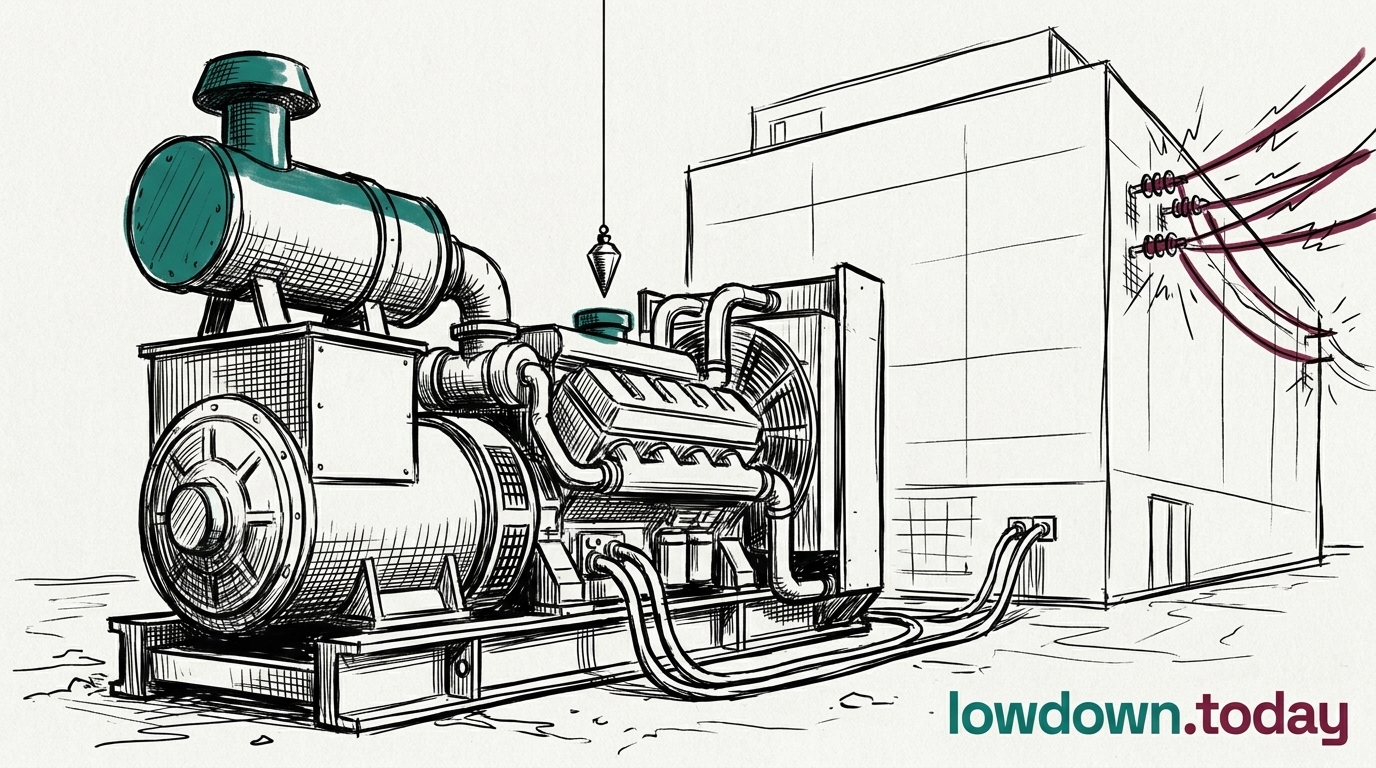
Parties challenging the DOE (Department of Energy) Section 202(c) curtailment order, Order 202-26-06, filed a rehearing request on 28 May 2026 arguing it is "both a physical taking and a regulatory taking" of property without just compensation. The order is the same emergency authority that PJM now wields over backup-equipped data-centre generators . The petition lands at FERC (Federal Energy Regulatory Commission), where resolution is not expected before 2027.

This challenge borrows the constitutional weapon RCM Hill aimed at Hill County the same week, but the federal facts cut the other way. A construction moratorium stops a project that never started; curtailment reaches into a running facility and orders its operator to shed load on command, which is why the petitioners frame it as a physical seizure of generating equipment, not merely a limit on use.

The counter-argument rests on a century of utility law. Section 202(c) of the Federal Power Act lets the DOE compel generation and load-shedding during a grid emergency, and courts have long treated emergency curtailment as conditional regulatory power rather than a compensable taking. DOE lawyers argue a data centre running a backup generator accepted that reliability condition the day it interconnected. Whether FERC and the courts accept the seizure framing will set the price of every future emergency order against a data centre.

Deep Analysis

In plain English

The US Department of Energy has the power, under a law called Section 202(c) of the Federal Power Act, to order certain large electricity users to cut their power use during a grid emergency, like an extreme heat event. In May 2026, DOE used this law to allow PJM, the grid operator, to switch off backup generators at data centres if needed. Now, the companies affected are arguing that this is unconstitutional. They say the government is effectively taking their property, the backup generators they own, without paying them compensation. Under the US Constitution's Fifth Amendment, the government must pay fair value when it takes private property. The same constitutional argument appears in the Hill County case {{EVREF:/t/data-centres/2/twinsburg-and-ypsilanti-use-utility-hookup-denial/}}, making this a coordinated legal challenge across two different levels of government.

Deep Analysis
Root Causes

Section 202(c) of the Federal Power Act predates the data-centre era by nearly 90 years and was written for fuel-supply and physical-plant emergencies affecting public utilities. It grants the Secretary of Energy authority to order temporary generation and load-curtailment measures during a reliability emergency, but its legislative history contains no reference to private commercial buildings, behind-the-meter backup generation, or AI compute loads.

The absence of a settled statutory framework for managing large dispatchable private loads, precisely the gap that FERC's Docket RM26-4-000 is meant to close, forces the DOE to use emergency authority as a workaround.

The taking challenge will not resolve before 2027 because it depends on FERC's RM26-4-000 rulemaking establishing the permanent framework. Until that rule sets what obligations data-centre operators carry as a condition of grid connection, every 202(c) order is litigable as either an overstep of emergency authority or a regulatory taking of property that was never explicitly made subject to grid-control conditions in the first place.

What could happen next?
  • Risk

    A court ruling that repeated use of Section 202(c) for a structural load-management problem violates procedural requirements would force the DOE to pursue notice-and-comment rulemaking, removing emergency curtailment as a tool until a formal rule is in place, potentially through 2028.

    Medium term · Suggested
  • Precedent

    If the taking theory survives threshold review and reaches a damages assessment, it would set a price for all future grid emergency curtailments applied to private commercial buildings, changing the risk calculus for every future DOE 202(c) order.

    Long term · Suggested
  • Consequence

    Uncertainty over curtailment authority accelerates data-centre operators' investment in physical islanding, where a campus generates and stores its own power and reduces reliance on grid-connected backup, to remove the regulatory handle DOE is using.

    Short term · Suggested
First Reported In

Update #5 · Who pays when the grid bends for AI

PJM Interconnection· 2 Jun 2026
Read original
Different Perspectives
Government of Odisha
Odisha signed a $1.5bn agreement with HCLTech and Sarvam AI on 24 July for a sovereign AI data centre in Bhubaneswar, targeting 2028 operations. While regulators elsewhere price developers out of the queue, Odisha is bidding state financial assistance to bring capacity in, betting the AI infrastructure boom is worth courting rather than rationing.
Switch Datacenters and Uithoorn
The developer, the municipality, Liander and dozens of greenhouse growers signed a waste-heat agreement letting a 60 MVA facility proceed under a provincial rule that bans sites above 5 MVA. The public-interest exception argues the site relieves rather than adds to grid congestion, working around a standing ban from inside rather than waiting for it to change.
Iskandar Puteri residents
Residents protested in February over falling water pressure they attribute to ZDATA's 300 MW construction; ZDATA disputes causation and has not yet resolved the dispute with its wastewater-only pivot. The complaint sits unadjudicated while the operator advertises compliance to state authorities the residents cannot address directly.
Microsoft
Microsoft
DC Byte reports Microsoft looking to the Nordics for new capacity while Dublin's regional share falls to 15 per cent, though this is a market-intelligence inference rather than a company statement. Microsoft keeps its existing Dublin cloud region, which is costly to relocate, while directing new investment where power is cheaper and the queue is shorter.
ISO New England
ISO New England
ISO-NE proposed excluding new large loads from its Installed Capacity Requirement entirely, forcing data centres to bring their own generation or accept curtailment, even though New England's demand has been flat or falling for a decade. The reform is pre-emptive, written before the region has felt the strain PJM and MISO already report.
Ofgem
Ofgem
Ofgem opened its Data Centre Commitment Fee consultation on 29 July, arguing that free options on grid capacity let developers bank places on ten sites and abandon nine, crowding out projects that would build. It expects the deposit to filter the queue before the rule even takes final form.

