Skip to content
Briefings are running a touch slower this week while we rebuild the foundations.See roadmap
Data Centres: Boom and Backlash
10JUN

Seattle freezes data centres for a year

4 min read
10:06UTC

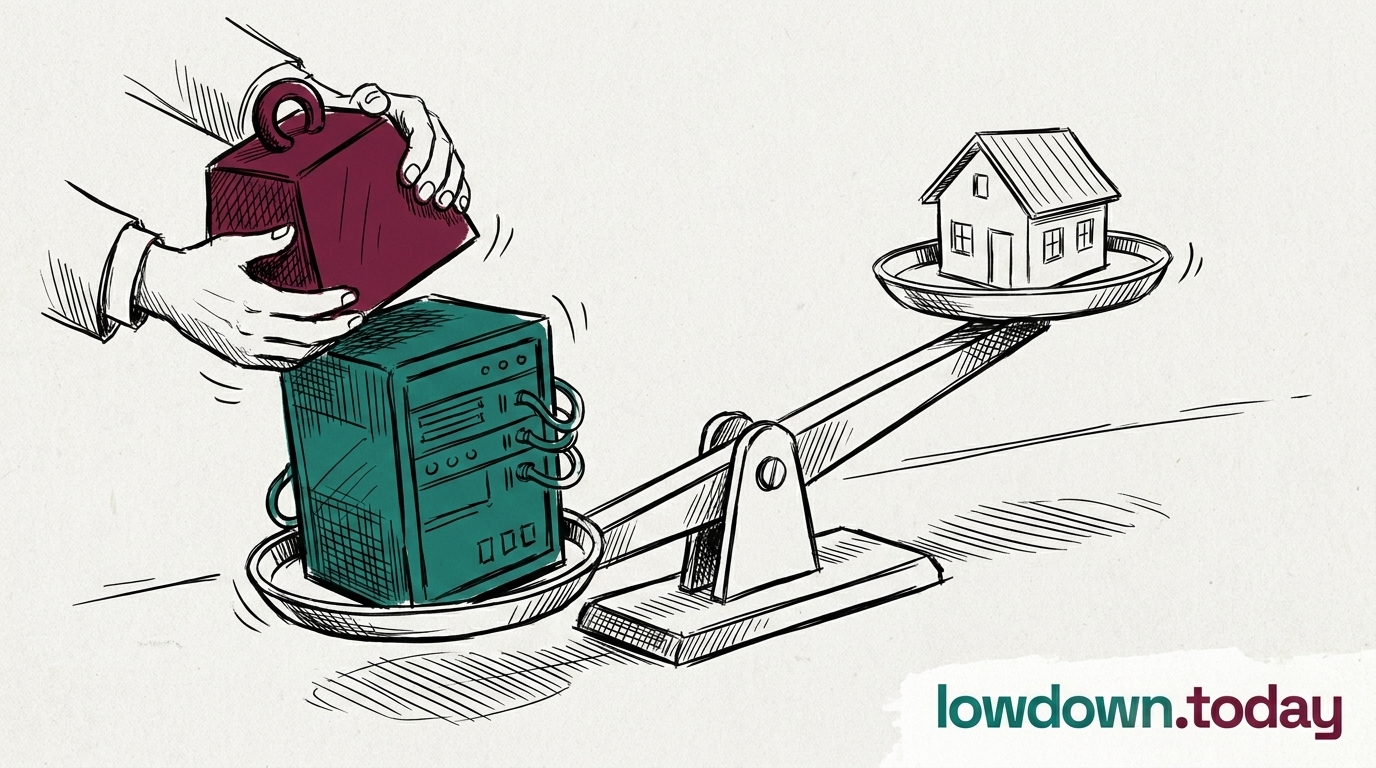
Seattle councilmembers introduced a 365-day emergency moratorium on 30 April after four developers asked Seattle City Light for 369 MW of power, enough to run roughly 300,000 homes.

IndustryDeveloping
Key takeaway

Seattle's freeze took five days from override failure to introduction; the muni-utility tier moves at request speed.

Seattle City Council members introduced a 365-day emergency moratorium on large data centres on 30 April 2026, the day after Maine's House failed to override Governor Mills's veto . The proposed ordinance bans any new or expanded electrical load above 10 MW for a full year, with a possible six-month extension if the council chooses to renew it.

The trigger was four developers asking Seattle City Light, the city's publicly-owned electricity utility, to power five facilities totalling 369 MW, roughly the consumption of 300,000 Seattle homes. Four requests, one week, one freeze. At least two of those developers withdrew their plans before the ordinance came up for a vote. Mayor Katie Wilson announced on 1 May that she was identifying initial executive steps, language that operators read as a signal the freeze will harden, not soften, in committee.

Seattle is the first major American city to pull the moratorium lever at the speed of the load request that prompted it, and the legal architecture matters. State moratoriums are creatures of legislative committees, governor sign-offs, and trade-association lobbying budgets; municipal moratoriums are creatures of council majorities and utility-board agendas. The route from Microsoft's Quincy campus, the AWS US-West-2 cluster, and the Tacoma greenfield queue all run through Seattle City Light's interconnection process, and that process is now unavailable until at least 30 April 2027. For developers running Pacific Northwest siting plans on a 36 to 48 month timeline, a year-long freeze inside that window is a forced relocation of capital, not a delay.

Deep Analysis

In plain English

Seattle's city council voted to pause new large data centre projects for one year after four companies asked the city's electricity supplier (Seattle City Light, which is owned by the city) for enough power to run five new facilities. The amount of power they requested, 369 megawatts, is roughly as much as 370,000 homes use at peak. The council decided the city needed time to write proper rules before that level of demand hit the grid. Two companies pulled their applications before the vote was finalised, which suggests the threat of a freeze was itself enough to change developer behaviour.

Deep Analysis
Root Causes

Seattle City Light operates as a municipal utility with a fixed distribution network sized for the city's 2025 load profile. Four developers requesting 369 MW collectively represent a demand block larger than the entire load growth City Light had planned for over the following five years.

Municipal utilities lack the interstate grid operator options available to investor-owned utilities: City Light cannot easily source new capacity from WECC (the Western interconnection) on the compressed timescales data centre developers demand, because its transmission agreements were written for incremental industrial growth, not step-change demand.

The structural driver beneath the Seattle moratorium is therefore not political opposition to data centres but a planning-system mismatch: large data centre applications require a grid capacity assessment that City Light's standard interconnection process was not designed to complete within the three-to-six-month windows developers are used to from ERCOT or Dominion territory.

What could happen next?
  • Precedent

    Seattle's emergency ordinance path, requiring only a council majority, may become the preferred instrument for cities that cannot rely on state-level moratorium legislation after the Maine veto outcome.

  • Risk

    If the Pacific Legal Foundation or one of the withdrawing developers files a takings or due-process challenge, a court ruling on the retroactive effect of the emergency designation will set municipal moratorium boundaries across Washington State.

First Reported In

Update #2 · Maine veto, Seattle freeze, $725bn capex

Seattle City Council· 6 May 2026
Read original
Different Perspectives
Data-centre developers and hyperscale operators
Hill County's rescission on 4 June, seven days after RCM Hill filed a $100 million taking suit, shows the Fifth Amendment threat is faster than any appellate route: the damages clock runs from the day the moratorium passed. Rural counties with no large-load permitting framework face a litigation bill that can exceed their entire annual budget.
Kenya and President Ruto
Kenya's suspension of the $1 billion Microsoft-G42 Olkaria project in early May applies raw-capacity logic at national scale: President Ruto stated the full 1 GW build would mean switching off half the country against a 3 GW installed base. A single hyperscale campus can consume a third of a Sub-Saharan grid with no equivalent constraint in Europe.
Denmark and Energinet
Energinet's 27 May extension of its large-load connection pause, with a 60 GW queue against 7 GW peak demand, demolishes the assumption that surplus renewable generation is a relief valve for compute demand. Denmark has more wind than it can use and still cannot connect data centres, because transmission pace is the binding constraint.
France and EDF
France and EDF
EDF's repurposing of the Bouchain former power-station site for SoftBank's Phase 1 campus gives France a replicable siting instrument, a brownfield nuclear connection bypass, that no other G7 grid operator can match. France's Choose France summit on 30 May secured the boom's largest European bet without a connection-queue fight or community moratorium.
SoftBank Group
SoftBank Group
SoftBank's EUR 75 billion France commitment on 30 May anchors at EDF's Bouchain nuclear baseload, bypassing the UK's four-times-US electricity cost premium (cited by OpenAI as reason to pause Cobalt Park) and Germany's grid-queue delays. EDF's supply relationship is bilateral; SoftBank never enters the French connection queue.
US residential ratepayers and state regulators
Portland General Electric's 4 June tariff is the first evidence that PJM's cost-transfer warning to governors on 19 May can run in reverse: Oregon households get a 1.3% bill reduction as data centres absorb their grid costs. The 12 other states carrying active cost-attribution bills now have a filed tariff with actual numbers to cite.

