Fault-Ride-Through
Grid-code procedure requiring large loads to stay connected through a brief transmission voltage DIP instead of tripping to backup power.
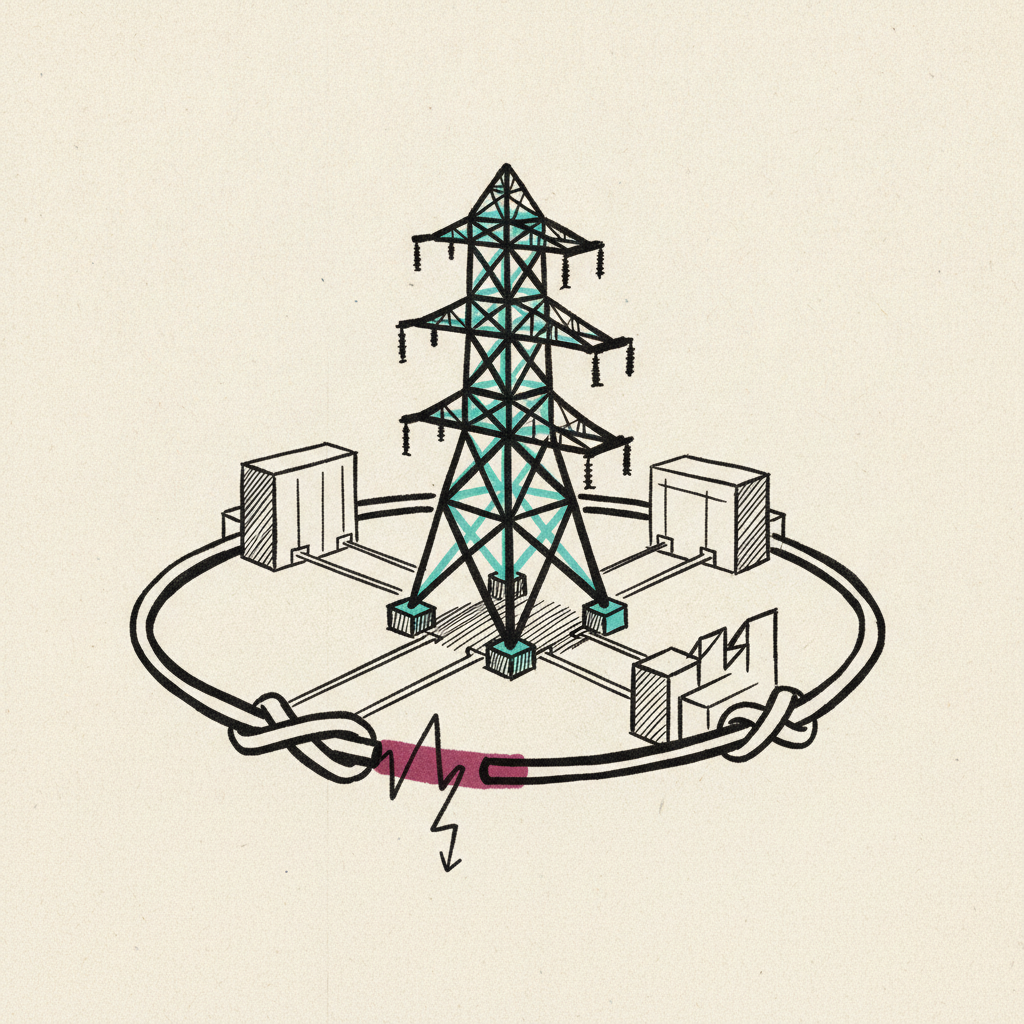
fault-ride-through obliges large loads, including data centres, to stay connected through a brief grid voltage DIP rather than trip to backup power; Ireland's CRU closed consultation on EirGrid's Grid Code Modification 345, which writes the obligation into contracts, on 29 July 2026.
Last refreshed: 4 August 2026 · Appears in 1 active topic
Timeline for fault-ride-through
Ireland writes the grid rules into contracts
Data Centres: Boom and BacklashMentioned in: Ireland codes a 900 MW load-loss limit
Data Centres: Boom and BacklashBackground
fault-ride-through is a grid-code requirement obliging large electricity users, including data centres, to ride out a brief transmission voltage DIP rather than disconnect to onsite backup generation. Without it, a single grid fault can trip many large loads at once, turning a minor DIP into a sudden, large-scale loss of demand.
EirGrid and SONI, the transmission operators for the all-island Irish grid, made the requirement operational on 30 June 2026, setting a 900 MW ceiling on instantaneous demand loss from data centres and warning that imbalance above 1,150 MW without mitigation could destabilise the grid.
Ireland's Commission for Regulation of Utilities then moved to write the obligation into the formal grid code: its consultation on EirGrid's Grid Code Modification 345, covering fault-ride-through alongside RoCoF robustness and active power recovery, closed on 29 July 2026. The draft includes a 24-month group derogation route, applied via a Demand Utilisation Threshold, for sites that cannot comply immediately; the consultation has closed but the modification is not yet shown as adopted.

