Skip to content
Welcome, thoughtbot's Giant Robots listeners!Start here
Data Centres: Boom and Backlash
15NOV

Jemena halts power line to NEXTDC's M3

4 min read
23:07UTC

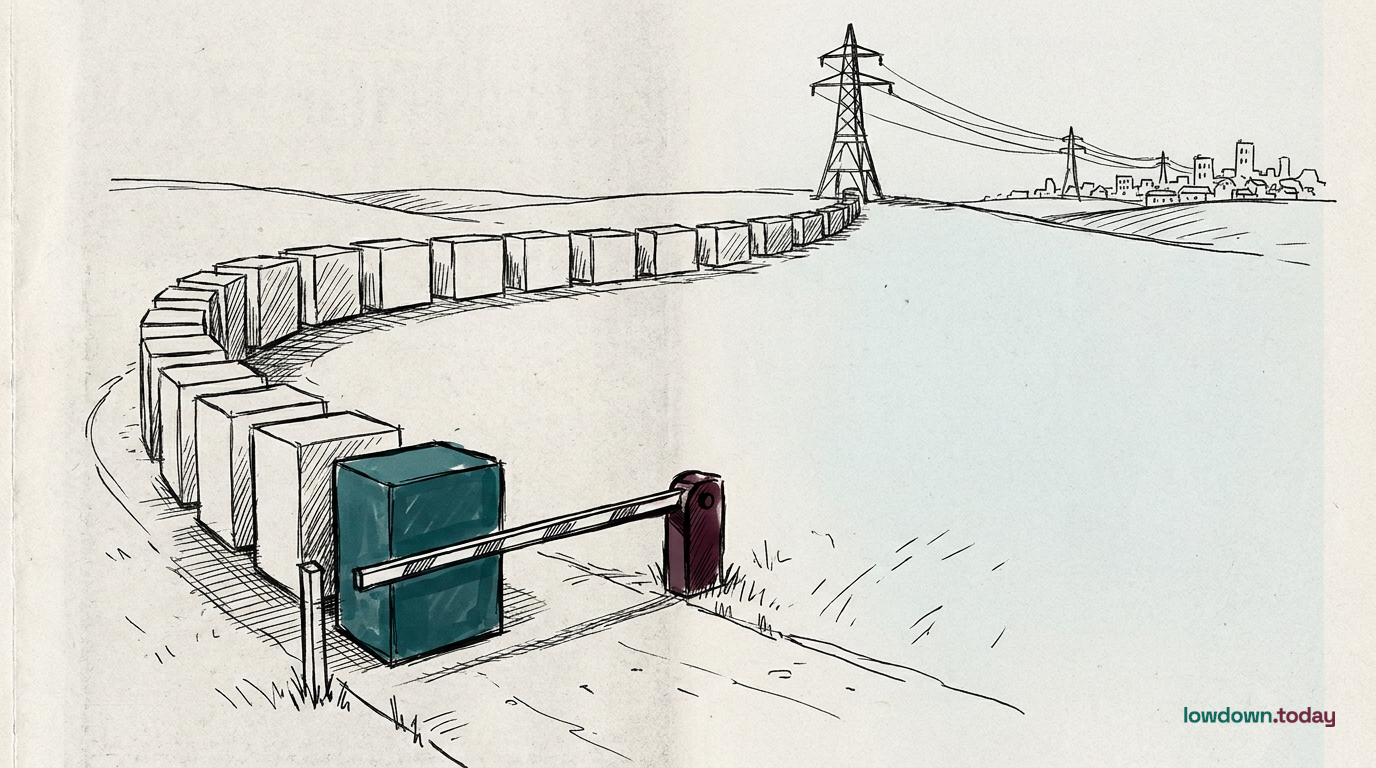
Jemena stopped work on the line to NEXTDC's West Footscray campus after local opposition, and NEXTDC cut its FY27 EBITDA guidance to A$245m-A$265m.

IndustryAssessed
Key takeaway

One delayed local power line cut NEXTDC's earnings guidance by more than a third.

Jemena, the electricity distributor for western Melbourne, has halted work on the power line to NEXTDC's M3 data centre at West Footscray. NEXTDC told the ASX on 21 October that Jemena cited "safety concerns and lack of access to work sites arising from community and stakeholder opposition to the works"⁠1. Jemena does not expect to restart before February 2027, and the council, as road authority, has not given consent while further consultation takes place.

NEXTDC, one of Australia's largest data-centre operators, now expects the first increase in grid supply to M3 in its 2028 financial year. Later increases depend on transformer projects at the Brooklyn Terminal Station, which are also delayed.

The company cut underlying EBITDA (earnings before interest, tax, depreciation and amortisation) guidance for its 2027 financial year to A$245m-A$265m from A$385m-A$410m, and net revenue to A$475m-A$500m from A$615m-A$640m. The new guidance excludes about A$140m each of revenue and EBITDA from the affected M3 contracts. Capital spending guidance drops to A$4.5bn-A$5.0bn from A$5.25bn-A$5.75bn, and every new development and land purchase is on hold "for the foreseeable future". The shares fell about 40% when trading resumed, ABC reported, after a halt NEXTDC requested on 19 October⁠2.

The M3 contracts carry service-level credits, refunds owed to customers for late or unpowered capacity, and may give customers the right to terminate. NEXTDC is assessing whether force majeure, a clause excusing delays outside its control, applies⁠3. In August the company presented a 565.1 megawatt (MW) binding order book, of which 197 MW was due to start billing in the year to June 2027; some contracts inside that figure may now carry termination rights. The board will report on capital spending and a possible sale of development sites by its annual meeting on 20 November.

Victoria's planning decision on M3 stages 6 and 7 is not now expected until 2027, because caretaker conventions, which bar major decisions in the run-up to a vote, apply before the 28 November state election. The state already requires new data centres to bring their own renewable power.

Deep Analysis

In plain English

NEXTDC is an Australian company that runs data centres: large buildings full of computers that store and process data for other businesses. A data centre is useless without a big supply of electricity. In Melbourne, the company Jemena owns the local power lines. It was building a new line to NEXTDC's M3 site in West Footscray, but stopped because of local opposition to the works. It says it will not start again before February 2027. NEXTDC had promised space at M3 to paying customers. Without the extra power, it cannot deliver that space on time. So it has lowered its forecast of how much money it will make, and may owe customers refunds.

Deep Analysis
Root Causes

Power to an operating campus depends on three parties NEXTDC does not own: Jemena, which builds the distribution line; the council, which as road authority must consent to the works; and the transmission-side substation at Brooklyn. Contracts with customers were signed against a supply timetable that needed all three to hold.

Victoria's electoral calendar adds a second constraint. Caretaker conventions before the 28 November state election push the planning decision on M3 stages 6 and 7 into 2027, so the wire delay and the consent delay now run side by side rather than one after the other.

What could happen next?
  • Risk

    Customers with M3 contracts may claim service-level credits or seek to terminate if force majeure does not apply.

    Short term · Assessed
  • Consequence

    NEXTDC may sell development sites; the board reports on this by its 20 November annual meeting.

    Short term · Suggested
  • Precedent

    Opposition to the distribution line, rather than to the data centre itself, has stopped supply to an operating campus.

    Medium term · Assessed
First Reported In

Update #17 · Stalled power line cuts A$140m from NEXTDC guidance

NEXTDC (ASX release via TradingView)· 22 Oct 2026
Read original →
Causes and effects
This Event
Jemena halts power line to NEXTDC's M3
One stalled distribution line, not a shortage of generation, has taken more than a third off an ASX-listed operator's earnings outlook.
Different Perspectives
Mooresville Board of Commissioners
The town board north of Charlotte voted unanimously on 2 November to stop taking data-centre applications for 12 months. Commissioners cited environmental and electrical impacts, joining other North Carolina towns that have paused new projects.
Naver
Naver
Naver signed a US$9bn contract under which a Brookfield vehicle owns the GPUs and buildings and sells computing to Naver Cloud. It guarantees the fees for up to eight years, which also unlocked Nvidia's US$1bn equity investment.
Saudi Aramco
Saudi Aramco
Aramco closed its purchase of 49% of HUMAIN on 1 November, paying about US$2.6bn in cash and adding its own AI, compute and digital assets. Chief executive Amin Nasser cast the deal as a gain in technology standing.
NEXTDC board
NEXTDC board
The board called the Goodman and Digital Realty stake opportunistic and said it had received no takeover proposal. It enters the 20 November meeting with a new chairman search, a 10% fee cut and a spill resolution on the agenda.
Brasscom
Brasscom
Sergio Sgobbi of Brazil's technology industry association says investors face uncertainty until the Redata rules are public. Members need rulings on gas and the CDE levy after Lula said data centres must build their own power.
Johari Abdul Ghani, Malaysia's investment, trade and industry minister
He told the Dewan Rakyat in October that data centres pay for all the grid capacity they reserve and fund upgrades to TNB's network. Google's 4 November pledge repeats those terms as its own.

Written with AI from Lowdown's published reporting. Not individually reviewed by an editor. Editorial standards.