Skip to content
Welcome, thoughtbot's Giant Robots listeners!Start here
Data Centres: Boom and Backlash
15NOV

Alphabet lifts 2026 capex to $205bn

2 min read
23:07UTC

Alphabet raised its 2026 capital budget to $195-205bn at its 22 July results, the only big-four hyperscaler on the record this fortnight, as Google Cloud revenue jumped 82%.

IndustryDeveloping
Key takeaway

Alphabet raised its 2026 capital budget to $205bn even as refusals against new campuses mount.

Alphabet raised its 2026 capital-expenditure guidance to $195-205bn at its 22 July quarterly results, up from the $180-190bn it set three months earlier. Capital expenditure, or capex, is the money a company commits to physical assets such as servers, buildings and networking gear. Google Cloud revenue grew 82% to $24.8bn, and management put 60% of the extra spend into servers, 40% into data centres and networking.⁠1

Alphabet was the only one of the four big US hyperscalers to report inside this fortnight; Microsoft and Meta file on 29 July, Amazon on 30 July, so their figures are not yet on the record. The server-weighted split matters. Money flowing to chips rather than empty shells means the power demand arrives sooner than the construction calendar implies.

That demand already shows in the connection queues. ERCOT's Texas interconnection backlog passed 438 GW in June, roughly five times the state's peak demand and overwhelmingly data centres. Alphabet's shares fell more than 4% on the raise, the market pricing scepticism about when AI infrastructure pays back; the physical read here is simpler, that the money is buying hardware someone must find the power to run.

Deep Analysis

In plain English

Alphabet, Google's parent company, said on 22 July it now plans to spend $195 billion to $205 billion in 2026 building AI and cloud infrastructure, up from the $180-190 billion it had promised just three months earlier. Google Cloud, the part of the business that rents out computing power to other companies, grew revenue 82% compared with a year earlier, to $24.8 billion. Even so, Alphabet's shares fell more than 4% after the announcement. Investors are weighing whether all this spending will eventually pay off, or whether the company is committing more and more money without clear proof it will be worth it.

Deep Analysis
Root Causes

Alphabet's capex raise is arithmetically downstream of its own demand signal: Google Cloud's $514bn backlog, up $50bn in one quarter, represents contracted future revenue the company cannot fulfil without building capacity now, not a discretionary spending choice.

Supply-side constraints compound the pressure: roughly 60% of the new spend is earmarked for servers rather than buildings, a split reflecting component and chip lead times, not construction capacity, as the binding constraint on how fast Alphabet can convert backlog into delivered compute.

What could happen next?
  • Consequence

    Alphabet's raised guidance adds pressure on GE Vernova and other turbine suppliers already carrying multi-year gas-turbine backlogs, since more capex means more power procurement layered onto an already-booked supply chain.

  • Risk

    A 4% share-price fall on a capex raise signals investors are starting to price AI infrastructure spending as a risk factor rather than a pure growth signal, worth tracking through Microsoft, Meta and Amazon's late-July reports.

First Reported In

Update #11 · Pipeline vetoed, campus keeps building

CNBC· 25 Jul 2026
Read original →
Causes and effects
This Event
Alphabet lifts 2026 capex to $205bn
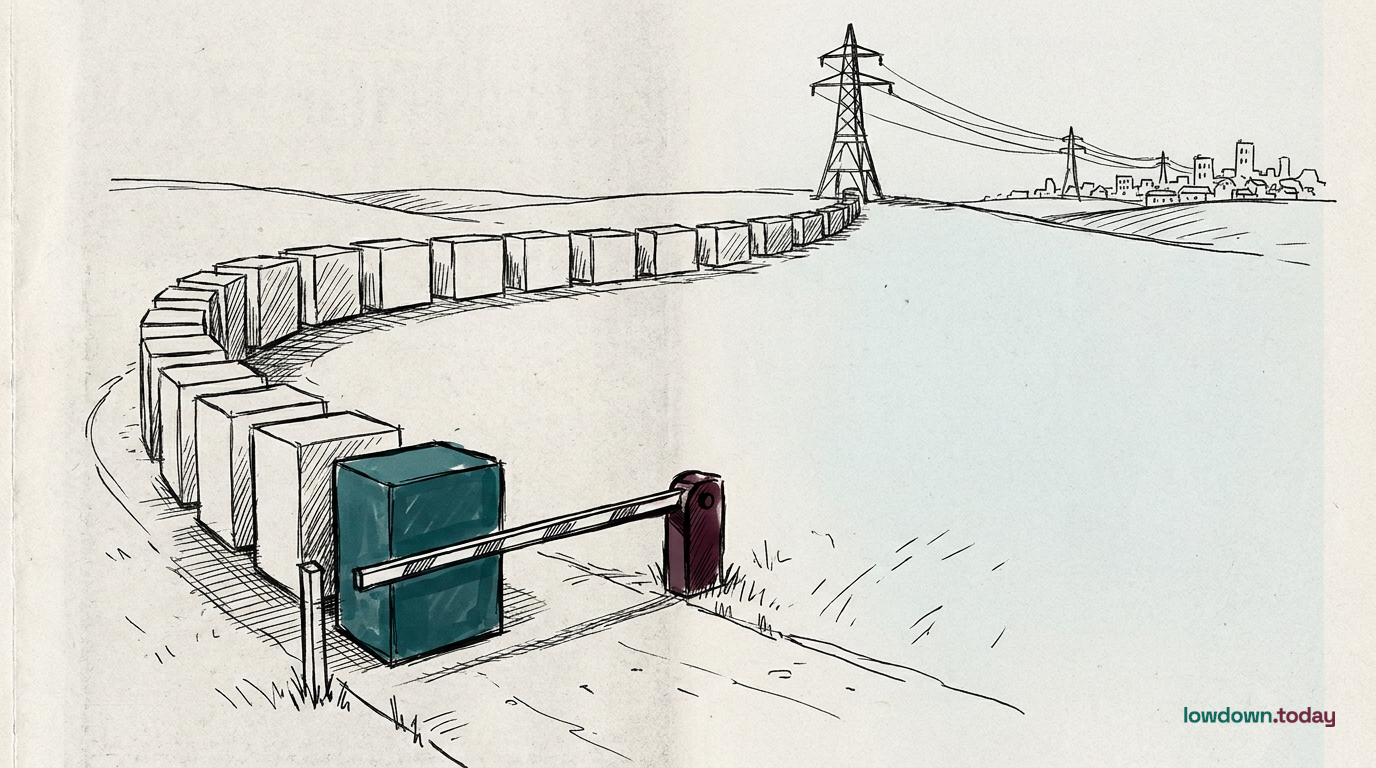
One hyperscaler's raised spending guidance shows the order book climbing even as counties and commissioners stack up refusals against it.
Different Perspectives
Mooresville Board of Commissioners
The town board north of Charlotte voted unanimously on 2 November to stop taking data-centre applications for 12 months. Commissioners cited environmental and electrical impacts, joining other North Carolina towns that have paused new projects.
Naver
Naver
Naver signed a US$9bn contract under which a Brookfield vehicle owns the GPUs and buildings and sells computing to Naver Cloud. It guarantees the fees for up to eight years, which also unlocked Nvidia's US$1bn equity investment.
Saudi Aramco
Saudi Aramco
Aramco closed its purchase of 49% of HUMAIN on 1 November, paying about US$2.6bn in cash and adding its own AI, compute and digital assets. Chief executive Amin Nasser cast the deal as a gain in technology standing.
NEXTDC board
NEXTDC board
The board called the Goodman and Digital Realty stake opportunistic and said it had received no takeover proposal. It enters the 20 November meeting with a new chairman search, a 10% fee cut and a spill resolution on the agenda.
Brasscom
Brasscom
Sergio Sgobbi of Brazil's technology industry association says investors face uncertainty until the Redata rules are public. Members need rulings on gas and the CDE levy after Lula said data centres must build their own power.
Johari Abdul Ghani, Malaysia's investment, trade and industry minister
He told the Dewan Rakyat in October that data centres pay for all the grid capacity they reserve and fund upgrades to TNB's network. Google's 4 November pledge repeats those terms as its own.

Written with AI from Lowdown's published reporting. Not individually reviewed by an editor. Editorial standards.