Skip to content
You can now search across every topic, entity and event.What's new
Data Centres: Boom and Backlash
14AUG

Stargate US: $500B headline, 1.2 GW operational

3 min read
10:48UTC

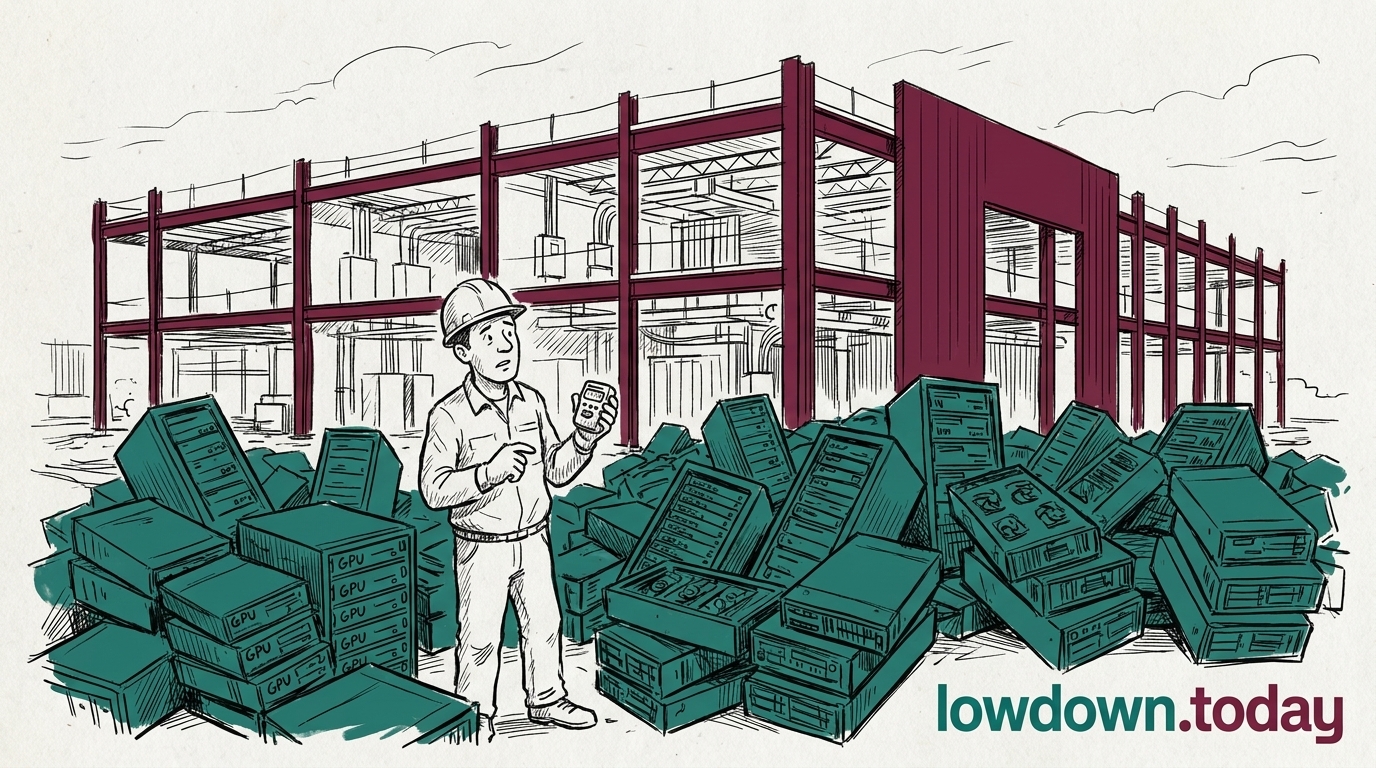
Stargate US launched at $500 billion in January 2025, but only Abilene is partially operational at roughly 1.2 GW against a nominal 10 GW programme; Latitude Media forecasts 30-50% of 2026 data centre completions will slip.

IndustryDeveloping
Key takeaway

Stargate US runs 1.2 GW of a 10 GW headline; a third of 2026 capacity is paper only.

The Stargate US programme was unveiled in January 2025 at $500 billion of headline capex, of which only the first $100 billion was described as committed. 1 Abilene, Texas is the only Stargate US site partially operational, at roughly 1.2 GW against a nominal 10 GW US programme. SemiAnalysis, the semiconductor and infrastructure research firm, has questioned whether SoftBank can finance the full commitment. Latitude Media estimates that 30% to 50% of large data centres scheduled for 2026 completion will slip, against a 2025 delay rate of 26%, with only 5 GW of the planned 16 GW physically under construction. 2

Stargate is the OpenAI-Oracle-SoftBank joint vehicle unveiled at a White House event in January 2025, structured as a holding company that channels SoftBank-led equity into US data centre campuses contracted to OpenAI workloads. The $500 billion total is the four-year programme headline; the $100 billion first-phase figure is the only number disclosed alongside actual commitment letters. Abilene, Texas hosts the Crusoe-built campus that is the programme's flagship and to date its only partially operational site. Roughly 1.2 GW of the planned 10 GW US programme is energised, with the remainder still in early-stage permitting or unannounced.

SemiAnalysis is the Dylan Patel-led research outfit whose hyperscaler capex modelling is closely tracked by chip and infrastructure investors. Its question on SoftBank's financing capacity is grounded: SoftBank's Vision Fund balance sheet is concentrated in Arm Holdings, with limited liquid capacity to fund a multi-year $100 billion direct-equity commitment without partner co-investment. Latitude Media is the energy-and-data-centre trade publication whose 2025 delay-rate baseline of 26% is the sector's most-cited figure. Its 30-50% forecast for 2026 implies that roughly two-thirds of announced capacity for the year is either still on paper or already delayed.

Latitude Media's 5-of-16 GW figure is the year's cleanest single metric for the headline-versus-ground gap. The 2025 hyperscaler capex of $400 billion is real and is showing up in 10-Q filings, but commissioned megawatts in 2026 will run well below the implied build rate. Synergy Research Group's Q1 2026 hyperscale figures, due mid-May, are the next confirmation point. Whether the gap closes depends on whether the gas-turbine deliveries arrive on time, whether transmission upgrades clear in PJM and ERCOT, and whether OpenAI's pauses at sites like Cobalt Park spread or stay isolated. SoftBank's Q1 2026 disclosures and the Abilene commissioning timeline are the two specific signals to watch.

Deep Analysis

In plain English

Stargate is the name of a joint programme announced by OpenAI, SoftBank (a Japanese investment firm), and Oracle in January 2025 to build AI data centres across the United States, eventually totalling $500 billion in investment. That figure attracted enormous attention. By April 2026, the only site that has made significant progress is in Abilene, Texas, which has about 1.2 GW of capacity operating, a fraction of the 10 GW originally described for the full US programme. SemiAnalysis, a technology research firm, questioned whether SoftBank has enough financial resources to fund the entire commitment. Latitude Media, which tracks data centre construction, estimates that 30-50% of the large data centres scheduled for completion in 2026 will be delayed. Only 5 GW of the 16 GW globally planned for 2026 is actually being built right now. Latitude Media tracks what is physically being built: 5 GW, not 16 GW.

Deep Analysis
Root Causes

Large infrastructure programmes announce at headline to capture political and market attention, then rely on sequential financing tranches as construction milestones validate the commercial case. Stargate's structure, three primary partners (OpenAI, Oracle, SoftBank) with different balance sheets and motivations, created a financing architecture that requires continuous alignment between partners whose interests may diverge as the programme scales.

The Latitude Media delay rate increase from 26% to 30-50% reflects supply-side constraints (turbine backlog, grid connections, skilled labour) rather than demand-side weakness. The projects are not being cancelled; they are being delayed by the physical constraints documented in earlier events.

What could happen next?
  • Risk

    If SoftBank requires additional co-investors to fund Stargate phases beyond the initial $100 billion, the programme's expansion timeline becomes contingent on capital market conditions and SoftBank's Vision Fund performance, both subject to macro volatility.

  • Meaning

    The 5-GW-of-16-GW construction figure quantifies the headline-to-ground gap across the global data centre pipeline, establishing that announced AI infrastructure investment should be discounted by roughly 70% when assessing near-term electricity demand impact.

First Reported In

Update #1 · Boom hits wall: grid says no, states freeze

CNBC· 26 Apr 2026
Read original
Different Perspectives
Antel, Uruguay's state telecom
Antel will build a $70m AI data centre in Canelones, announced after an 11-12 August Council of Ministers meeting, with construction from Q1 2027 and roughly 250 direct jobs. Uruguay is putting a sovereign AI facility on the state balance sheet rather than courting a hyperscaler to build one.
Comtel
Comtel
Comtel is building a Figline Valdarno data centre inside the H2-Era Green Valley complex, powered by an 84 MW solar plant and selling waste heat to on-site farming. Co-location with generation and a heat offtaker is the model regulators elsewhere are now writing into connection terms rather than negotiating case by case.
Greg Abbott, Texas Governor
Abbott directed PUCT and ERCOT on 3 August to audit every queued data centre's ownership, incentives and water use, saying projects that fail the state's survey should lose grid access. QTS's co-chief executives welcomed the review; Agriculture Commissioner Sid Miller called it too vague and wants a special legislative session instead.
Government of Gujarat
Gujarat notified a Data Centre Policy on 7 August offering capital, interest, tax and duty subsidies for projects sourcing at least 51% green power, targeting 7.5 GW against a 74 GW installed base. Where other jurisdictions priced or restricted grid access this month, Gujarat is paying developers to come instead.
Taiwan's Legislative Yuan Economics Committee
The committee gave preliminary approval on 5 August to a self-generation mandate for large power users, including data centres, with fines up to NT$750,000. It agreed the obligation in principle while leaving the megawatt threshold that defines its reach to later implementing regulation.
Australian Energy Market Commission
AEMC advised ministers on 5 August that data centres should surrender renewable certificates against actual consumption, prove new demand with new firm capacity, and register as market participants. The advice would turn passive customers into obligated participants inside the market's dispatch and settlement machinery, ahead of an access-standards determination due in late October.

