Skip to content
You can now search across every topic, entity and event.What's new
Data Centres: Boom and Backlash
14AUG

Seattle freezes data centres for a year

4 min read
10:48UTC

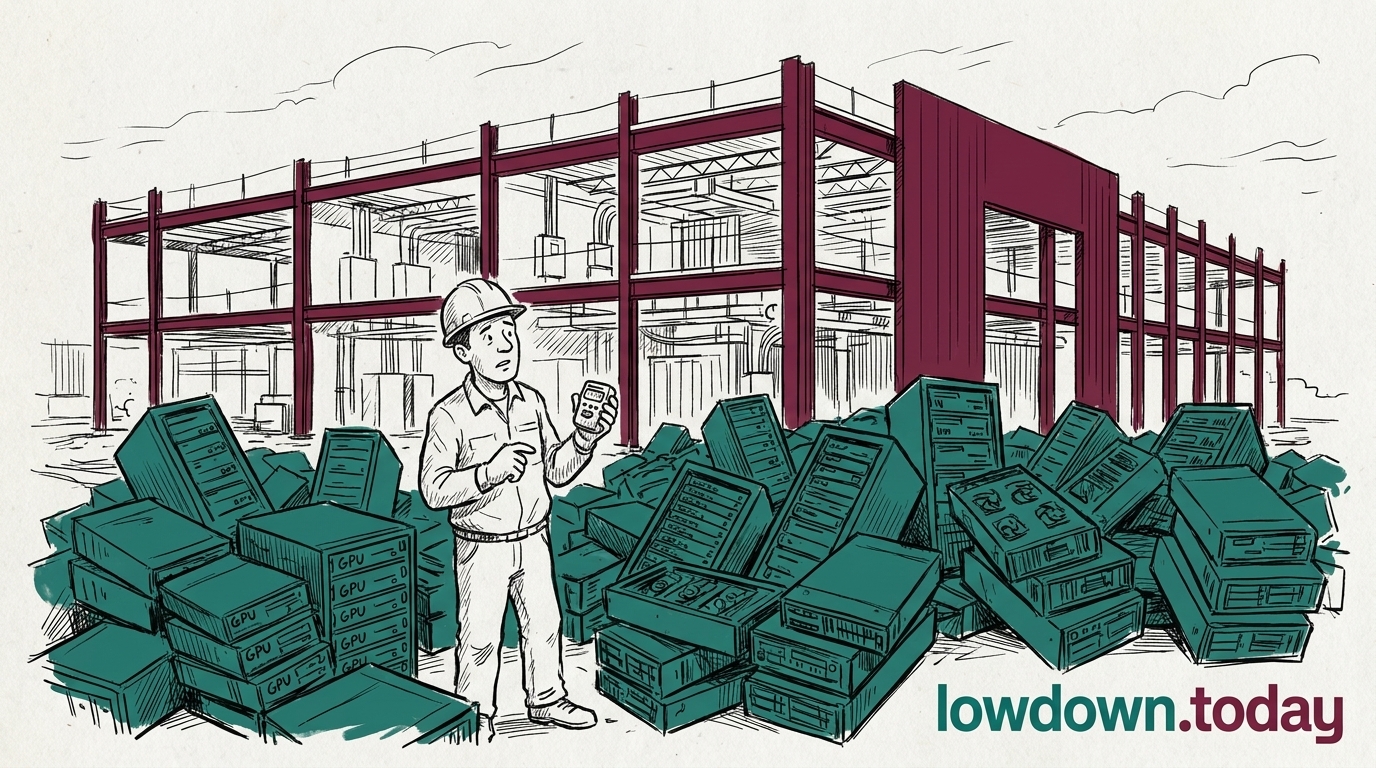
Seattle councilmembers introduced a 365-day emergency moratorium on 30 April after four developers asked Seattle City Light for 369 MW of power, enough to run roughly 300,000 homes.

IndustryDeveloping
Key takeaway

Seattle's freeze took five days from override failure to introduction; the muni-utility tier moves at request speed.

Seattle City Council members introduced a 365-day emergency moratorium on large data centres on 30 April 2026, the day after Maine's House failed to override Governor Mills's veto . The proposed ordinance bans any new or expanded electrical load above 10 MW for a full year, with a possible six-month extension if the council chooses to renew it.

The trigger was four developers asking Seattle City Light, the city's publicly-owned electricity utility, to power five facilities totalling 369 MW, roughly the consumption of 300,000 Seattle homes. Four requests, one week, one freeze. At least two of those developers withdrew their plans before the ordinance came up for a vote. Mayor Katie Wilson announced on 1 May that she was identifying initial executive steps, language that operators read as a signal the freeze will harden, not soften, in committee.

Seattle is the first major American city to pull the moratorium lever at the speed of the load request that prompted it, and the legal architecture matters. State moratoriums are creatures of legislative committees, governor sign-offs, and trade-association lobbying budgets; municipal moratoriums are creatures of council majorities and utility-board agendas. The route from Microsoft's Quincy campus, the AWS US-West-2 cluster, and the Tacoma greenfield queue all run through Seattle City Light's interconnection process, and that process is now unavailable until at least 30 April 2027. For developers running Pacific Northwest siting plans on a 36 to 48 month timeline, a year-long freeze inside that window is a forced relocation of capital, not a delay.

Deep Analysis

In plain English

Seattle's city council voted to pause new large data centre projects for one year after four companies asked the city's electricity supplier (Seattle City Light, which is owned by the city) for enough power to run five new facilities. The amount of power they requested, 369 megawatts, is roughly as much as 370,000 homes use at peak. The council decided the city needed time to write proper rules before that level of demand hit the grid. Two companies pulled their applications before the vote was finalised, which suggests the threat of a freeze was itself enough to change developer behaviour.

Deep Analysis
Root Causes

Seattle City Light operates as a municipal utility with a fixed distribution network sized for the city's 2025 load profile. Four developers requesting 369 MW collectively represent a demand block larger than the entire load growth City Light had planned for over the following five years.

Municipal utilities lack the interstate grid operator options available to investor-owned utilities: City Light cannot easily source new capacity from WECC (the Western interconnection) on the compressed timescales data centre developers demand, because its transmission agreements were written for incremental industrial growth, not step-change demand.

The structural driver beneath the Seattle moratorium is therefore not political opposition to data centres but a planning-system mismatch: large data centre applications require a grid capacity assessment that City Light's standard interconnection process was not designed to complete within the three-to-six-month windows developers are used to from ERCOT or Dominion territory.

What could happen next?
  • Precedent

    Seattle's emergency ordinance path, requiring only a council majority, may become the preferred instrument for cities that cannot rely on state-level moratorium legislation after the Maine veto outcome.

  • Risk

    If the Pacific Legal Foundation or one of the withdrawing developers files a takings or due-process challenge, a court ruling on the retroactive effect of the emergency designation will set municipal moratorium boundaries across Washington State.

First Reported In

Update #2 · Maine veto, Seattle freeze, $725bn capex

Seattle City Council· 6 May 2026
Read original
Different Perspectives
Antel, Uruguay's state telecom
Antel will build a $70m AI data centre in Canelones, announced after an 11-12 August Council of Ministers meeting, with construction from Q1 2027 and roughly 250 direct jobs. Uruguay is putting a sovereign AI facility on the state balance sheet rather than courting a hyperscaler to build one.
Comtel
Comtel
Comtel is building a Figline Valdarno data centre inside the H2-Era Green Valley complex, powered by an 84 MW solar plant and selling waste heat to on-site farming. Co-location with generation and a heat offtaker is the model regulators elsewhere are now writing into connection terms rather than negotiating case by case.
Greg Abbott, Texas Governor
Abbott directed PUCT and ERCOT on 3 August to audit every queued data centre's ownership, incentives and water use, saying projects that fail the state's survey should lose grid access. QTS's co-chief executives welcomed the review; Agriculture Commissioner Sid Miller called it too vague and wants a special legislative session instead.
Government of Gujarat
Gujarat notified a Data Centre Policy on 7 August offering capital, interest, tax and duty subsidies for projects sourcing at least 51% green power, targeting 7.5 GW against a 74 GW installed base. Where other jurisdictions priced or restricted grid access this month, Gujarat is paying developers to come instead.
Taiwan's Legislative Yuan Economics Committee
The committee gave preliminary approval on 5 August to a self-generation mandate for large power users, including data centres, with fines up to NT$750,000. It agreed the obligation in principle while leaving the megawatt threshold that defines its reach to later implementing regulation.
Australian Energy Market Commission
AEMC advised ministers on 5 August that data centres should surrender renewable certificates against actual consumption, prove new demand with new firm capacity, and register as market participants. The advice would turn passive customers into obligated participants inside the market's dispatch and settlement machinery, ahead of an access-standards determination due in late October.

