Skip to content
You can now search across every topic, entity and event.What's new
Data Centres: Boom and Backlash
14AUG

ERCOT large-load queue passes 225 GW

3 min read
10:48UTC

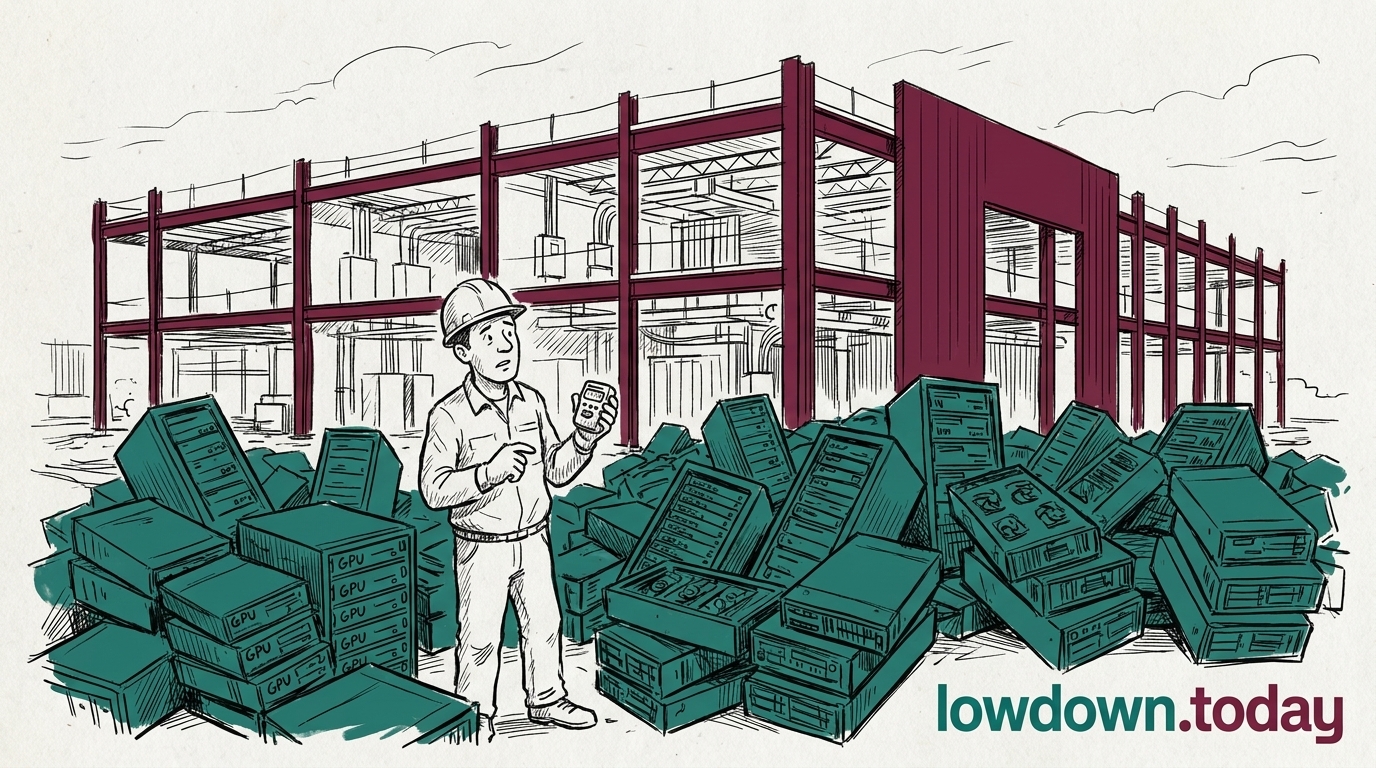
ERCOT disclosed in April that its large-load process has 225 GW of capacity in study, with over 70 per cent from data centres; West Texas operators want to convert 9.1 GW of crypto-mining brownfield to AI compute.

IndustryDeveloping
Key takeaway

ERCOT's process is overrun because every operator wanting out of FERC jurisdiction is routing through it.

ERCOT, the Texas grid operator, told an April 2026 state Senate hearing that more than 225 GW of large electricity loads are in formal interconnection study, with over 70 per cent from data centres. A further 137 unposted requests totalling roughly 140,000 MW would push the working total toward 380 GW if and when they hit the public queue chart. ERCOT received 225 new large-load requests during 2025 alone against an interconnection process designed to handle 40 to 50 at a time.

ERCOT is not synchronised with the Eastern or Western Interconnection, which means it falls outside FERC jurisdiction. Operators looking to escape the federal layer have begun routing capacity through West Texas already, and the 9.1 GW of crypto-mining brownfield infrastructure across the Midland-Abilene corridor is the brownfield route. Crypto sites already have grid connections, building shells, and cooling rated for high-density compute; converting that load class to AI inference and training is faster than greenfield construction by 18 to 24 months. xAI's 41 turbines at Memphis sit on the same behind-the-meter logic, but operators copying that play now have to find a turbine slot before they find a site, and the queue runs to 2031.

McKinsey has been contracted to deliver a short- and mid-term solutions framework for ERCOT, with a streamlined batch-study implementation expected to follow. The March 2026 Large Load Working Group meeting focused on flexible-interconnection models that allow loads to come online with curtailment commitments instead of full firm-capacity rights. The interaction with the FERC June order is straightforward: every operator who can route through ERCOT is doing so, every operator who cannot is waiting to see whether RM26-4-000 cuts the wait or extends it. The queue grows in either case, because the structural attractiveness of a non-FERC grid does not turn on a single rule cycle.

Deep Analysis

In plain English

ERCOT runs the Texas electricity grid, which operates independently from the rest of the US national grid. Companies wanting to connect large facilities to the Texas grid apply to ERCOT for permission. The queue currently holds more than 225,000 megawatts of applications waiting for approval, more than four times the total capacity Texas currently uses at peak. More than 70 per cent of those applications are from data centres. ERCOT hired McKinsey to work out how to process them faster. Meanwhile, companies in West Texas are trying a shortcut: convert existing Bitcoin mining facilities, which already have grid connections, into AI computing centres. This avoids the queue entirely because the electricity connection is already built.

First Reported In

Update #2 · Maine veto, Seattle freeze, $725bn capex

ERCOT· 6 May 2026
Read original
Different Perspectives
Antel, Uruguay's state telecom
Antel will build a $70m AI data centre in Canelones, announced after an 11-12 August Council of Ministers meeting, with construction from Q1 2027 and roughly 250 direct jobs. Uruguay is putting a sovereign AI facility on the state balance sheet rather than courting a hyperscaler to build one.
Comtel
Comtel
Comtel is building a Figline Valdarno data centre inside the H2-Era Green Valley complex, powered by an 84 MW solar plant and selling waste heat to on-site farming. Co-location with generation and a heat offtaker is the model regulators elsewhere are now writing into connection terms rather than negotiating case by case.
Greg Abbott, Texas Governor
Abbott directed PUCT and ERCOT on 3 August to audit every queued data centre's ownership, incentives and water use, saying projects that fail the state's survey should lose grid access. QTS's co-chief executives welcomed the review; Agriculture Commissioner Sid Miller called it too vague and wants a special legislative session instead.
Government of Gujarat
Gujarat notified a Data Centre Policy on 7 August offering capital, interest, tax and duty subsidies for projects sourcing at least 51% green power, targeting 7.5 GW against a 74 GW installed base. Where other jurisdictions priced or restricted grid access this month, Gujarat is paying developers to come instead.
Taiwan's Legislative Yuan Economics Committee
The committee gave preliminary approval on 5 August to a self-generation mandate for large power users, including data centres, with fines up to NT$750,000. It agreed the obligation in principle while leaving the megawatt threshold that defines its reach to later implementing regulation.
Australian Energy Market Commission
AEMC advised ministers on 5 August that data centres should surrender renewable certificates against actual consumption, prove new demand with new firm capacity, and register as market participants. The advice would turn passive customers into obligated participants inside the market's dispatch and settlement machinery, ahead of an access-standards determination due in late October.

