Skip to content
Briefings are running a touch slower this week while we rebuild the foundations.See roadmap
Cybersecurity: Threats and Defences
30APR

FIRESTARTER puts Cisco below the patch line

4 min read
08:16UTC

Sixteen agencies admitted on 23 April that indicators of compromise vanish faster than blocklists can absorb them. A day later, CISA and NCSC named FIRESTARTER, a Cisco firewall implant that survives every patch. The defender's job has shifted from removing the indicator to rearchitecting the device.

Key takeaway

FIRESTARTER proves that patching Cisco perimeter devices after UAT-4356 access is an entry audit, not remediation.

This briefing mapped
Loading map…
Infrastructure
Military
Legal
Economic
Regulatory

CISA and NCSC named FIRESTARTER on 24 April: a UAT-4356 implant that hooks the Cisco ASA and Firepower boot sequence and clears only on a hard power cycle.

Sources profile:This story draws on neutral-leaning sources

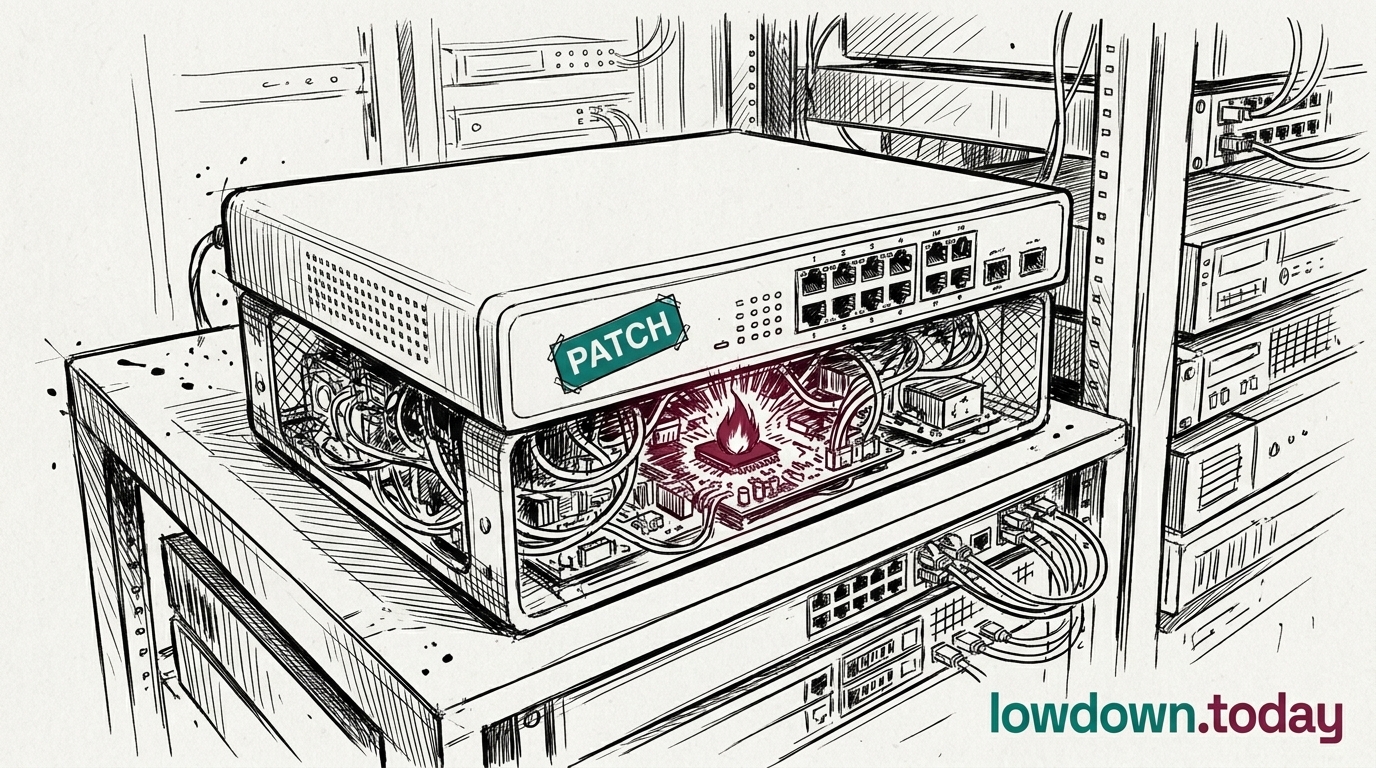
CISA and the UK's National Cyber Security Centre named FIRESTARTER on 24 April: a backdoor hidden in the startup code of Cisco firewalls that survives every security patch. One unnamed US government agency applied all the patches on schedule and was still infected six months later.

The only way to remove it is a full power-down and cold restart, turning every routine patch job into a physical maintenance event. For any organisation running Cisco firewalls, the patch record alone no longer confirms the device is clean. 

Sources:CISA

An unnamed US federal agency was confirmed still hosting FIRESTARTER in March 2026, six months after applying the September 2025 Cisco patches.

Sources profile:This story draws on neutral-leaning sources

CISA disclosed that one unnamed US government agency applied all the right Cisco patches in September 2025 and was still hosting the FIRESTARTER back door six months later, confirmed in March 2026. The agency had done everything the patch process required.

The six-month gap shows that applying a patch and removing a compromise are no longer the same thing for this class of attack. The checklist still works; it just no longer proves what people assumed it did. 

Sources:CISA

On 23 April, sixteen national cyber agencies named Flax Typhoon and Integrity Technology Group as operators of Raptor Train and KV Botnet, formally accepting that indicators vanish faster than blocklists ingest them.

Sources profile:This story draws on neutral-leaning sources

Sixteen national cyber agencies, including the US, UK, Germany, the Netherlands, Japan and Australia, co-signed a document on 23 April formally stating that the lists defenders use to block hackers go out of date faster than anyone can update them. They named Flax Typhoon and a Chinese company called Integrity Technology Group as operators of a network of over 200,000 hijacked home routers.

The significance is the admission itself: sixteen governments publicly signed off that the standard hacker-blocking approach is no longer good enough against state-backed attackers. 

Sources:NCSC UK

Norway's Police Security Service (PST) confirmed on 23 April that Norway is a Salt Typhoon victim, taking the public country count past nine.

Sources profile:This story draws on neutral-leaning sources

Norway's domestic security service, PST, confirmed on 23 April that Norway is a victim of the Salt Typhoon hacking campaign, which targets telecoms companies to intercept phone and internet traffic. The confirmation pushed the public count of affected countries past nine.

PST timed the announcement to the publication of the sixteen-agency advisory, a signal that other countries on the advisory's signatory list may follow with their own confirmations now the document is in print. 

Sources:NCSC UK

On 20 April, CISA added three Cisco Catalyst SD-WAN Manager CVEs to the KEV catalogue with a three-day federal remediation deadline of 23 April.

Sources profile:This story draws on neutral-leaning sources

CISA added three security flaws in Cisco's SD-WAN Manager, the system that controls branch-office routers, to its emergency patch list on 20 April and gave federal agencies until 23 April, a three-day window and the shortest deadline issued in this period.

For any organisation running Cisco's network management software, the three-day window signals confirmed real-world hacker activity rather than a theoretical risk. It lands on the same Cisco product family that is already under scrutiny for the FIRESTARTER implant

Sources:CISA

Mandiant disclosed on 23 April that UNC6692 deploys the SNOW malware ecosystem via Microsoft Teams IT-support impersonation against law firms and BPOs.

Sources profile:This story draws on neutral-leaning sources

Mandiant published research on 23 April describing a hacker group called UNC6692 that sends fake IT support messages inside Microsoft Teams to trick law firm and outsourcing company employees into running malicious software. Once run, the software steals credentials and company files.

The attack works because Teams is designed for easy collaboration, not for verifying whether an IT support contact is real. The technique exploits company trust in their own communication tools rather than any software flaw. 

Federal prosecutors unsealed charges on 28 April against Peter Stokes, 19, alleged Scattered Spider member arrested at Helsinki airport on 10 April attempting to board a flight to Japan.

Sources profile:This story draws on neutral-leaning sources

Peter Stokes, a 19-year-old dual US-Estonian national, was arrested at Helsinki airport on 10 April while trying to board a flight to Japan. US prosecutors unsealed charges on 28 April alleging he took part in at least four breaches as a member of Scattered Spider, a hacking group responsible for dozens of corporate intrusions.

The arrest shows the FBI can reach Scattered Spider members who travel through co-operating countries. Stokes is the second alleged member arrested outside the US in six months. 

Beazley shareholders approved Zurich Insurance's $10.9 billion all-cash takeover on 22 April; Zurich raised CHF 3.9 billion to part-fund the largest cyber-insurance acquisition of 2026.

Sources profile:This story draws on neutral-leaning sources

Beazley's shareholders voted on 22 April to accept a £8.1 billion cash offer from Zurich Insurance, the largest cyber insurance deal of 2026. Beazley is the Lloyd's market's leading specialist cyber insurer, and the deal moves its decade of claims experience and incident-response operation into Swiss ownership.

Regulatory approval from the UK's Prudential Regulation Authority and Financial Conduct Authority is still required. The key question is whether UK regulators will attach conditions to the transfer of Beazley's claims data out of UK control. 

Sources:The Insurer

Airbus signed a definitive agreement to acquire Ultra Cyber from Cobham, bringing UK MoD sovereign cryptography programme work inside a European defence prime.

Sources profile:This story draws on neutral-leaning sources

Airbus has agreed to buy Ultra Cyber from Cobham, bringing UK government cryptography and cyber-defence contract work under European control. Ultra Cyber holds secret-level security clearances for Ministry of Defence programmes.

The UK government's National Security and Investment Act gives ministers powers to block or attach conditions to the deal. The outcome of that review will set a precedent for whether European NATO allies are treated as sufficiently trusted owners of UK classified defence technology. 

Sources:PrivSource

NCSC launched SilentGlass on 22 April: the first commercial hardware to carry NCSC branding, manufactured with Sony UK Technology Centre and licensed to Goldilock Labs.

Sources profile:This story draws on neutral-leaning sources

NCSC, the UK government's cybersecurity agency, launched SilentGlass on 22 April: a physical device that blocks attacks delivered through HDMI and DisplayPort cables. It is the first commercial product to carry the NCSC brand. Sony UK Technology Centre makes it; Goldilock Labs sells it globally.

The launch sets a template for UK government cybersecurity IP entering the commercial market under licence, in the same week that two other UK cyber assets moved into foreign ownership. 

Sources:NCSC UK

Official SAP npm packages, 73 OpenVSX VS Code extensions and a 1.1 million-download PyPI package were all compromised inside thirteen days at the end of April.

Sources profile:This story draws on neutral-leaning sources

Three separate attacks hit software developer tools in thirteen days at the end of April. Official SAP packages in the npm registry, 73 VS Code editor plugins, and a Python package downloaded 1.1 million times per month were all found distributing malware. Developers who used these tools in the attack windows may have had credentials stolen.

The attacks required no mistake by developers: the malware arrived inside packages that appeared completely legitimate. The developer's own toolkit became the attack surface. 

ENISA released National Capabilities Assessment Framework 2.0 on 22 April; 19 EU member states remain under reasoned opinions for partial NIS2 transposition.

Sources profile:This story draws on neutral-leaning sources

ENISA, the EU's cybersecurity agency, released a new scorecard on 22 April to measure how well each of the 27 EU member countries has implemented the NIS2 cybersecurity law. The answer is poorly: only 14 countries had done so by mid-2025, and 19 are under formal EU non-compliance proceedings.

NIS2 requires companies in critical sectors to meet minimum security standards and report incidents. In most of the EU, the law that would enforce those requirements at national level does not yet exist. 

Sources:ENISA
Closing comments

Direction: sideways at nation-state tier, upward at criminal tier. The FIRESTARTER mechanism is a persistence-and-patience play by UAT-4356, not an escalation trigger; no new CVE has expanded its reach since September 2025. The sixteen-agency advisory introduces a new sanctions and disclosure surface but does not itself create a military tripwire. The named decision point that would tip this upward: if Shadowserver or Censys publishes ASA/FTD anomaly counts showing FIRESTARTER mass-exploitation beyond the single confirmed federal agency, CISA would face pressure to issue a mandatory eviction order across all federal network-edge Cisco deployments, with consequential disruption to agency connectivity. At criminal tier, the Stokes extradition timeline from Helsinki to Chicago is the lever; if US prosecutors secure extradition before the next Scattered Spider breach, the deterrence signal will be measurable.

Different Perspectives
NCSC
NCSC
NCSC co-signed the FIRESTARTER advisory, anchored the sixteen-agency China-nexus document, and launched SilentGlass in the same week, deploying attribution, coalition signalling, and commercial IP licensing as a single integrated policy posture. For UK operators, NCSC guidance on FIRESTARTER now carries ICO Article 32 GDPR enforcement weight, not merely best-practice status.
CISA
CISA
CISA maintained a 1.2-CVE-per-day KEV addition rate and issued a three-day Cisco SD-WAN remediation deadline while facing the proposed $707 million FY27 cut; an unnamed US federal agency was the confirmed FIRESTARTER victim. Operational tempo has not slowed, but 1,585 unfunded KEV entries now stand against a shrinking agency headcount.
Cisco
Cisco
Cisco accepted that UAT-4356 is government-backed without issuing formal nation-state attribution, repeating the hedged language used after ArcaneDoor in 2024; customers are left to translate that hedge into procurement and audit decisions.
Flax Typhoon / Integrity Technology Group
Beijing's standing denial of Volt Typhoon and Salt Typhoon attribution was extended to the sixteen-agency advisory; Tsinghua University's Centre for International Security and Strategy publicly framed the attribution narratives as US strategic communication rather than evidence-grounded findings.
Zurich Insurance
Zurich Insurance
Zurich raised CHF 3.9 billion to part-fund the $10.9 billion Beazley acquisition, treating Beazley's Full Spectrum Cyber proposition as the operational chassis for a global cyber primary book; UK Lloyd's-market expertise now sits under Swiss consolidated ownership.
ENISA
ENISA
ENISA released the National Capabilities Assessment Framework 2.0 on 22 April to give member-state authorities a maturity scoring tool for NIS2 compliance, with 19 EU member states still under reasoned opinions for partial transposition against a fine ceiling of 2 per cent of worldwide turnover.


