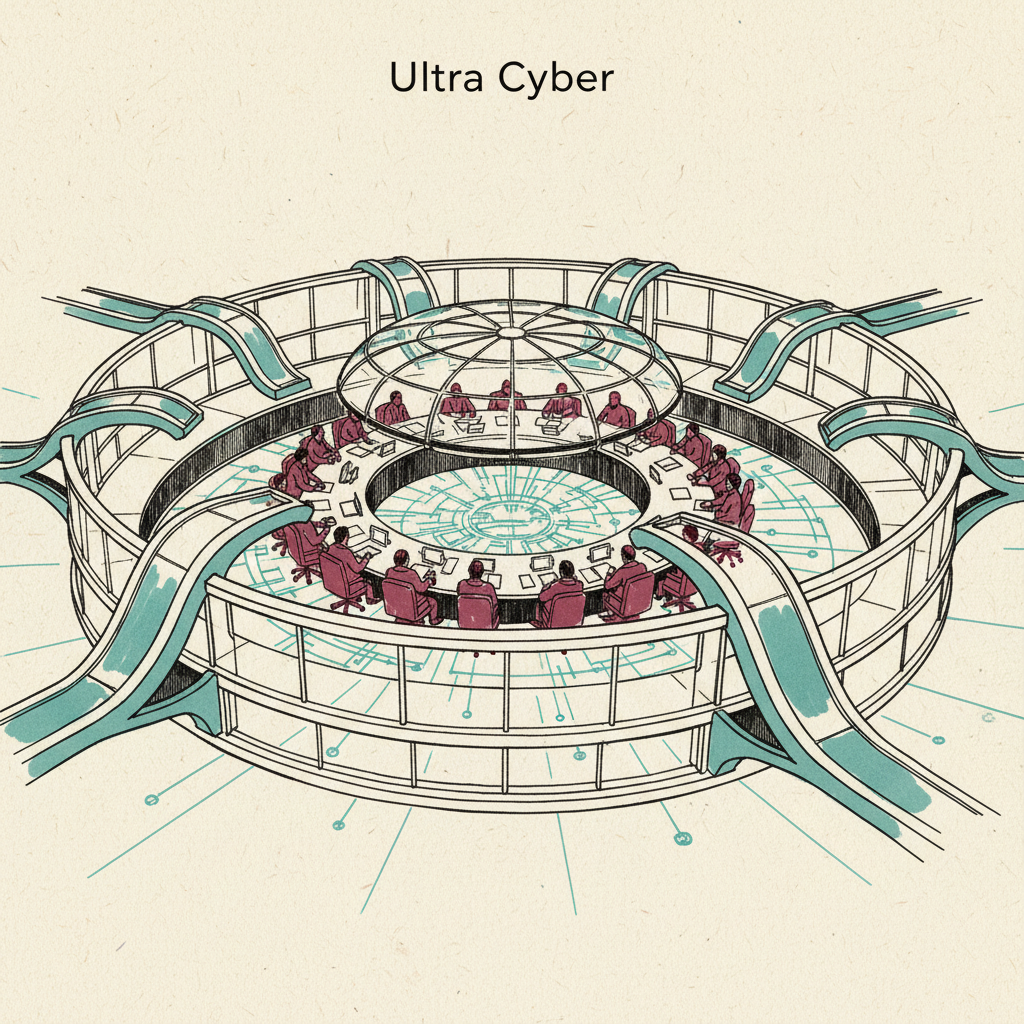
Should UK MoD-cleared cryptography require a sovereignty-of-control condition before it can transfer to a continental prime?
Timeline for Ultra Cyber
Agreed to transfer to Airbus ownership with PRA and MoD clearance review pending
Cybersecurity: Threats and Defences: Airbus signs for Ultra Cyber from CobhamMentioned in: Beazley shareholders clear Zurich's £8.1bn bid
Cybersecurity: Threats and DefencesMentioned in: NCSC ships SilentGlass, its first commercial product
Cybersecurity: Threats and DefencesBackground
Ultra Cyber is a UK-based sovereign cybersecurity company specialising in cryptography and data-security systems for UK Ministry of Defence programmes. It originated within the wider Ultra Electronics group before Cobham acquired it as part of a broader portfolio deal. Its cryptography work sits within the UK's defence-industrial supply chain at a clearance level requiring MoD vetting for personnel and facilities, making it one of the most sensitive UK cyber-industrial assets by classification tier.
Airbus signed a definitive agreement in April 2026 to acquire Ultra Cyber from Cobham, moving UK MoD-cleared cryptography capability inside a European continental defence prime for the first time. The acquisition will trigger both a Prudential Regulation Authority financial review and a UK Ministry of Defence security-clearance review of the change of control — the latter being structurally novel, given no direct precedent for MoD-cleared cryptography passing to a non-UK ultimate owner under the NSIA regime.
The Airbus acquisition of Ultra Cyber from Cobham raises the core sovereignty question of whether MoD-cleared cryptography should carry a control condition when changing hands to a foreign industrial prime. The National Security and Investment Act gives ministers the mechanism to impose conditions; the Ultra Cyber deal tests whether that mechanism will be actively used for cyber-specific capability rather than only for physical hardware.
The transaction completes a week in which two UK cyber-industrial assets — Ultra Cyber and Beazley's incident-response intelligence — moved outside UK consolidated ownership, while NCSC simultaneously launched SilentGlass as the one UK-retaining deal of the three. For prime contractors across the UK defence-industrial base, the MoD's response to the Airbus review will set precedent.