Skip to content
Welcome, thoughtbot's Giant Robots listeners!Start here
Autonomous Systems: Land & Sea
7OCT

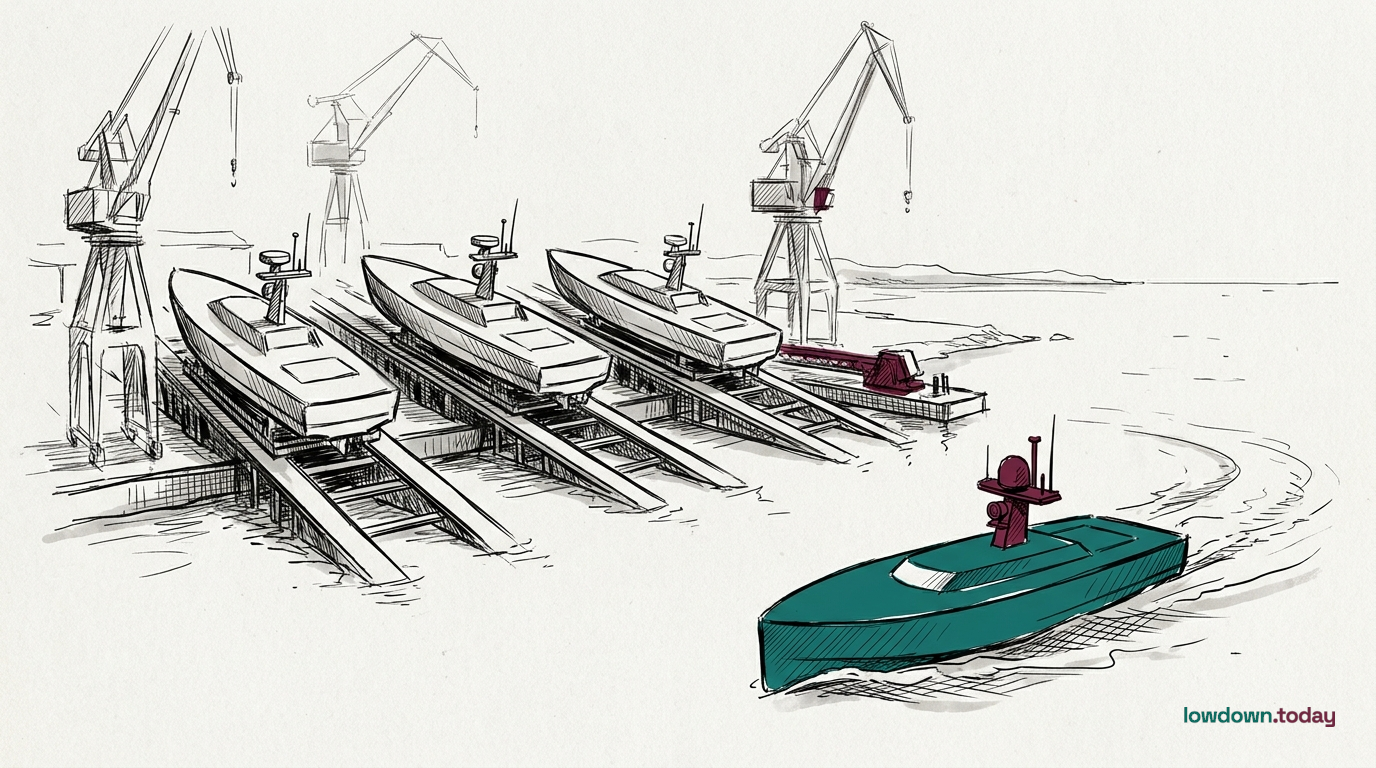
MoD: no data left the robot boats

3 min read
12:59UTC

The Ministry of Defence said on 10 August that no MoD data or systems had been accessed, compromised or transmitted externally, and stripped the cameras of internet connectivity.

TechnologyDeveloping
Key takeaway

The MoD found no evidence of compromise, cut the cameras off, and would not discuss the supplier.

The Ministry of Defence said on 10 August that a routine cyber vulnerability assessment had identified an issue affecting a sub-system on a Kraken uncrewed surface vessel, and that a thorough investigation found no evidence of MoD data or systems being accessed, compromised or transmitted externally⁠1. It stripped the cameras of internet connectivity and declined to say whether it had acted against the third-party component supplier⁠2.

The Telegraph describes what the cameras did; the department describes what its own investigation found afterwards. Neither account displaces the other, and neither states how many vessels were affected or over what period the cameras were connected. The Chinese embassy in London and the Beijing foreign ministry had not addressed the matter publicly by 12 August, and the ministry's English transcripts for 10, 11 and 12 August carry no question on it⁠3.

The Conservative opposition asked the Government to audit its equipment for hidden Chinese components, and The Telegraph's reporting names no individual Member of Parliament⁠4. Six months earlier, on 4 February, the Commons Business and Trade Committee reported on Britain's economic-security policy. Its chair, Liam Byrne, warned that "Allies fear Britain is becoming the weak link. Ministers must prove them wrong and take steps now to strengthen our defences."⁠5 That inquiry covered the whole economy, not uncrewed boats.

Britain sized this industry before it audited the parts going into it. Lloyd's Register, the National Physical Laboratory and the National Shipbuilding Office published the first official measurement of UK maritime autonomy on 4 June, at £600m of annual turnover and about 5,000 jobs including the supply chain. That measurement tells ministers what the sector earns. It counts no components and names no suppliers, and the cameras arrived under a third party's assurance letter.

Deep Analysis

In plain English

After The Telegraph's story broke, the Ministry of Defence confirmed what happened: a routine security check on its robot boats found the camera fault, and a deeper investigation found no evidence anyone in China had actually accessed Royal Navy data or systems. The cameras have been cut off from the internet so they can no longer send that heartbeat signal. What the MoD has not said is whether it has stopped buying from whoever made the camera in the first place.

Deep Analysis
Root Causes

The Royal Navy runs routine cyber vulnerability assessments across its autonomous fleet, which is how the camera fault was caught before an actual breach. But routine assessment is a detection mechanism, not a prevention one; it finds compromised components after they are already deployed on operational vessels.

The same week Navy Commercial published a market notice asking industry how to build a Platform Authority for maritime uncrewed systems , covering governance, engineering and certification support. That notice is itself an admission that no single body currently owns component-level assurance for uncrewed platforms, which is why a compromised camera reached deployed vessels before anyone caught it.

Escalation

No escalation signalled. The MoD's language (no evidence of compromise) is a containment statement, not an admission of ongoing risk, and the remediation (stripping connectivity) has already been applied.

What could happen next?
  • Consequence

    The MoD's silence on supplier action leaves industry unable to assess whether Kraken Technology Group faces any commercial consequence, which matters given the firm's rapid scaling to a $1bn valuation.

First Reported In

Update #11 · Chinese cameras in the Navy's robot boats

Euractiv· 12 Aug 2026
Read original →
Causes and effects
This Event
MoD: no data left the robot boats
The department closed the connection and left open whether supplier attestation should have caught the components in the first place.
Different Perspectives
DNV and Fassmer
DNV and Fassmer
Signed a memorandum at SMM in Hamburg, announced on 10 September, to seek an approval in principle for autonomous naval vessels. DNV's Rasmus Stute said autonomy is "becoming one of the key pillars in defence".
Belgian Ministry of Defence
Awarded Exail Robotics Belgium €9.87m on 14 September, without competition, for three TRIDENT systems carrying the K-STER C mine-disposal vehicle for Ukraine. It had tendered separately in July for twelve tethered ROVs, not yet bought.
IRGC Navy (Iran)
IRGC Navy (Iran)
IRGC spokesman Hossein Mohebbi said the IRGC Navy seized a US Kingfish mine-hunting vehicle in the Strait of Hormuz on 27 September, valuing it at several million dollars. US Central Command calls the claim "clearly desperate"; no verified imagery exists.
UK Defence Intelligence and Kraken
Defence Intelligence said the 12 September clash "almost certainly marks the first time" Russian and Ukrainian USVs engaged directly. Kraken meanwhile trialled an unarmed Saab radar picket boat on 5 and 6 October.
Ukrainian forces and ARX Robotics
A Ukrainian Sargan-3000 destroyed a Russian robot boat on 12 September, and the first ARX GEREON ground robots reached Ukraine on 29 September. The Sargan-3000 carries a mounted gun.
Indian Register of Shipping
Certified Accurate Industrial Controls' ISACA collision-avoidance software to IMO standards after five audited milestones and 2,500 hours of trials. The firm plans to use it converting six Indian Navy patrol boats.