Skip to content
You can now search across every topic, entity and event.What's new
Autonomous Systems: Land & Sea
12AUG

Ukraine codifies 50 robot models in six months

2 min read
14:17UTC

Ukraine's defence ministry approved 50 new ground-robot models in the first half of 2026, against 60 for all of last year, the confirmable measure of a programme moving faster than its disputed unit targets.

TechnologyDeveloping
Key takeaway

Ukraine is approving new robot designs at nearly double last year's rate, firmer than any disputed unit count.

Ukraine's Ministry of Defence codified 50 new ground-robotic-complex models in the first half of 2026, against 60 for all of 2025, inside a wave of roughly 1,000 codifications running more than 50% ahead of last year. Codification approves a design for service, so the figure measures how fast new robot types clear the gate, not units fielded, and no closed tally has been published against the 25,000-unit H1 target set in April .

The firmer H1 numbers are narrower: the Defence Procurement Agency signed 19 manufacturer contracts worth about UAH11bn (around $250m), and ground robots ran more than 21,500 logistics and evacuation missions in the first quarter alone. This is the demand that the ARX Industries venture and the Dutch THeMIS line are adding capacity to feed.

For a European planner the codification rate, not the headline target, is the number to benchmark: it is the speed at which a wartime process validates designs that a peacetime one cannot match.

Deep Analysis

In plain English

Ukraine officially approved 50 new types of ground robot for military use in the first six months of this year, compared with 60 in the whole of last year. That does not mean 50 new robots are already on the front, but it shows how fast the country is testing and clearing new designs, far faster than peacetime militaries manage, because the war forces rapid trial and error.

What could happen next?
  • Meaning

    Codification pace, not the unverified 25,000-unit target, is the metric European planners should benchmark iteration speed against.

  • Risk

    A widening approved-type list could fragment the UGV supplier base and complicate NATO interoperability.

First Reported In

Update #5 · Britain names four robot warship classes

lb.ua· 3 Jul 2026
Read original
Causes and effects
This Event
Ukraine codifies 50 robot models in six months
Codification pace is a cleaner benchmark than the unverified 25,000-unit target: it shows how fast the front is validating new robot designs, which is the tempo European makers are building to match.
Different Perspectives
Conservative opposition
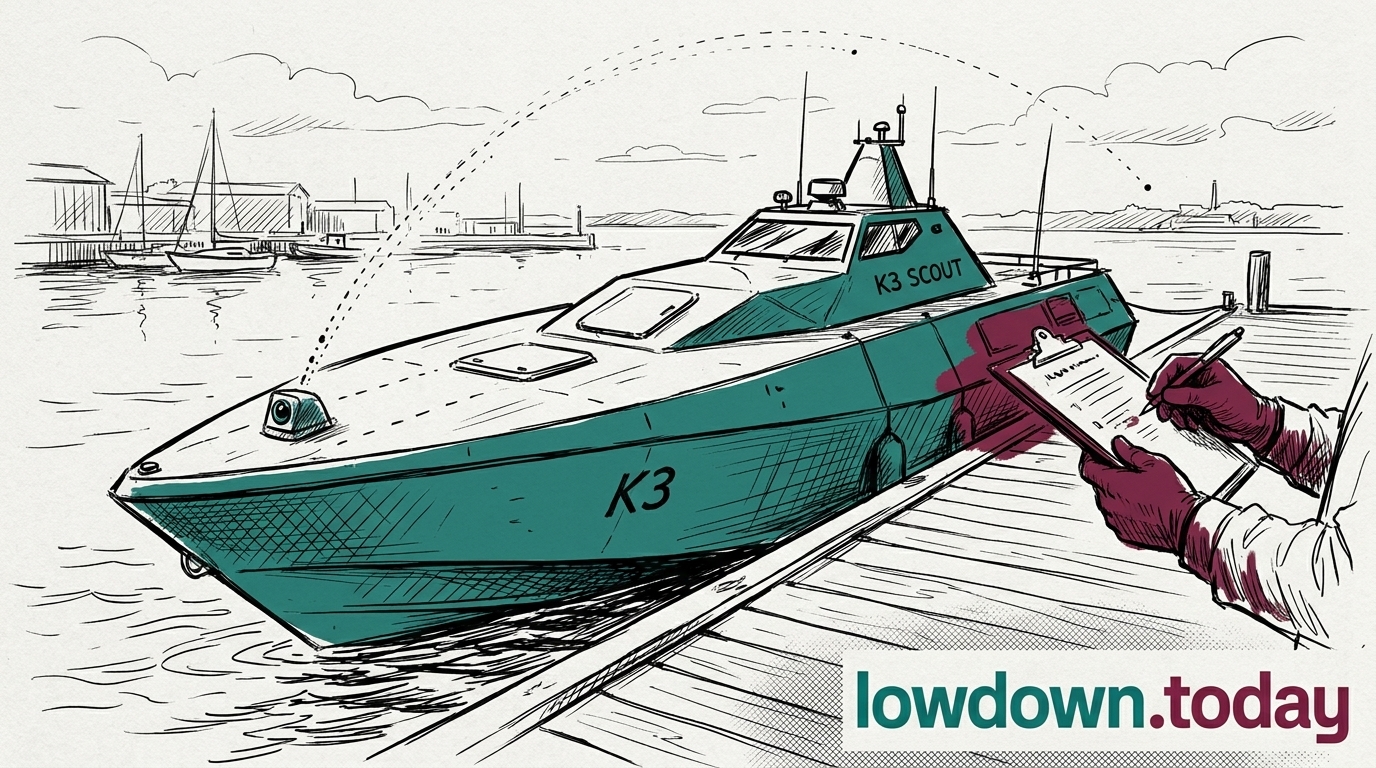
The Conservative opposition called on the Government on 9 August to 'urgently audit' equipment for hidden Chinese components, after the Telegraph's K3 SCOUT report. No named MP has been quoted on the record; the call came at party level, alongside the Ministry of Defence's own 10 August statement that no data had been compromised.
Netherlands Ministry of Defence
The Netherlands Ministry of Defence authorised Dutch Naval Design on 4 August to design 12-metre anti-submarine warfare uncrewed vessels for the Dutch-Belgian frigate programme, and to buy an adapted Compact FLASH dipping sonar from Thales Underwater Systems France. The order commits money and a named supplier while Britain's own certification body remains at the market-engagement stage.
Kraken Technology Group
Kraken Technology Group is a UK maritime-defence company based in Portsmouth that builds the K3 SCOUT, and crossed a $1bn valuation in July on a single-sourced $175m raise. The camera components reached the fleet under a third party's written security assurance, which the Platform Authority, which does not yet exist, was never positioned to check.
Navy Commercial
Navy Commercial
Navy Commercial at Whale Island published two notices on 5 August: 074032-2026, asking industry how to build a Platform Authority to certify uncrewed vessels, and 074351-2026, a GBP10m multi-role USV testbed for the Defence Chief Technology Officer. Responses on the Platform Authority close 19 August, ten days after the cameras were found transmitting to China.
Ministry of Defence
Ministry of Defence
The Ministry of Defence said on 10 August that a routine cyber vulnerability assessment found the camera fault, and a thorough investigation found no evidence that MoD data or systems had been accessed, compromised or transmitted externally. It stripped the cameras of internet connectivity but did not say whether it acted against the supplier.
Thales
Thales
Thales converted its 6 July engaging accord with Exail into a definitive combination agreement on 30-31 July, but the tender offer for Exail's remaining shares now closes by early 2028, later than July's timetable implied. Thales integrates its new undersea prime while still bidding against Kongsberg and DRASS's 2027 target for the AUKUS Pillar II contest.
