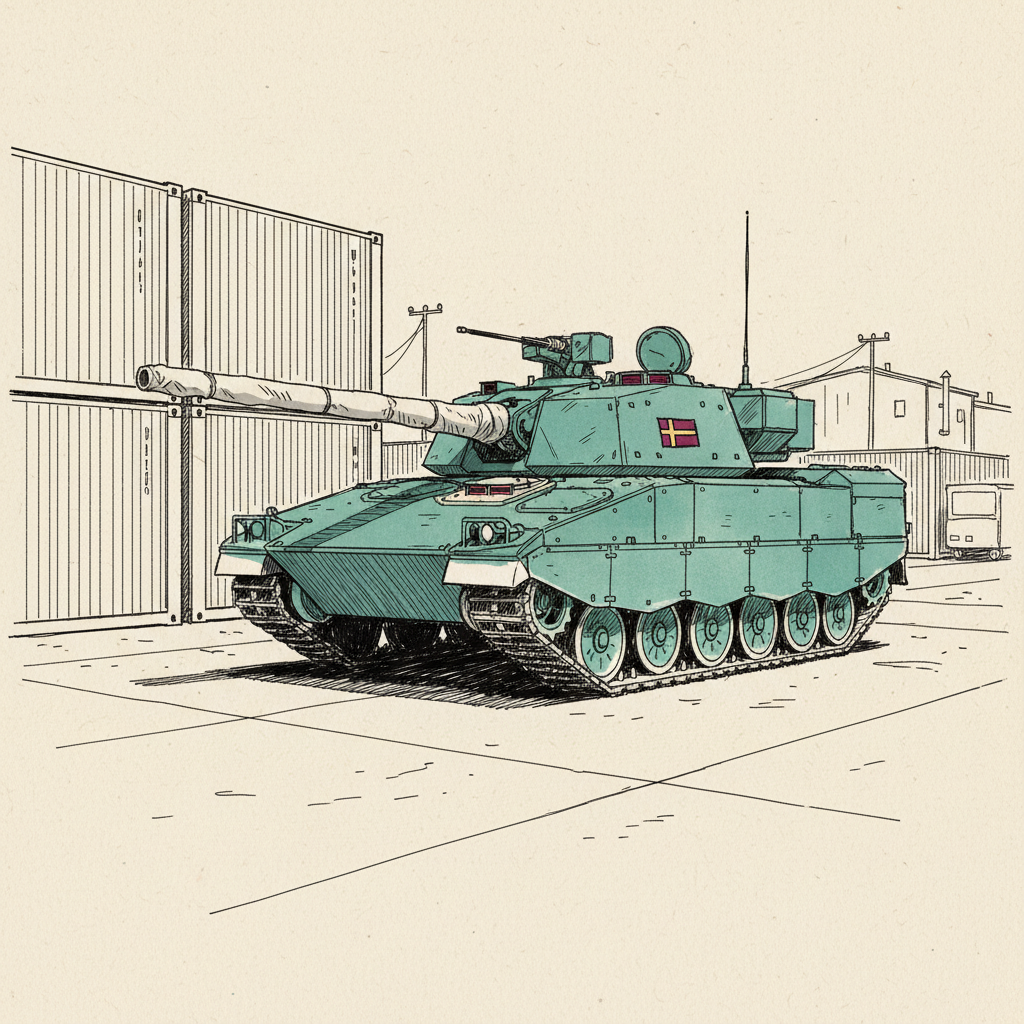
LVKV 90
Swedish self-propelled anti-aircraft cannon deployed to Latvia as a counter-drone stopgap in 2026.
Last refreshed: 29 May 2026 · Appears in 1 active topic
Timeline for LVKV 90
Mentioned in: Lithuania buys 48 Merops drone killers
Drones: Industry & DefenceSweden awards Saab 2.6B Swedish kronor C-UAS deal
Drones: Industry & DefenceBackground
The LVKV 90 (Luftvärnskanonvagn 90) is a Swedish self-propelled anti-aircraft cannon system based on the CV90 infantry fighting vehicle chassis, armed with a 40mm Bofors autocannon. It provides a short-range kinetic defeat layer against low-flying aircraft, helicopters, and, increasingly, unmanned aerial systems including drone swarms. The LVKV 90 has been in Swedish Army service since the 1990s and is operated by the Swedish Army's air-defence units.
In the context of the GUTE II programme, the LVKV 90 and the Trackfire remote weapon station serve as the kinetic defeat layer of Saab's Counter-UAS package, working alongside the Giraffe 1X radar for targeting cueing. The 40mm Bofors round is effective against Group 1-3 drone threats at short range, providing a low-cost-per-shot kinetic option between electronic warfare jamming and expensive missile interceptors.
The LVKV 90 represents the broader Nordic philosophy of layered air defence using existing tracked platforms with proven autocannon lethality, adapted for the drone threat environment through sensor integration rather than new vehicle procurement.
What is the LVKV 90 and can it shoot down drones?
How does the LVKV 90 fit into Sweden's counter-drone system?






