Skip to content
You can now search across every topic, entity and event.What's new
Autonomous Systems: Land & Sea
12AUG

Mediazona: 203,300 Russian dead

2 min read
14:17UTC

Mediazona's independently verified count of Russian military dead passes 200,000 while Russia loses 9,000 more soldiers per month than it can recruit — a deficit compounding into a question of how long offensive tempo holds.

TechnologyDeveloping

Mediazona, the independent Russian outlet working with BBC Russian Service, confirmed 203,300 Russian military deaths by 13 March — verified individually through obituaries, social media posts, court records, and regional media 1. The count includes 6,912 officers. The Ukrainian General Staff's separate cumulative estimate reached approximately 1,282,570 Russian casualties by 18 March.

The two figures measure different things and should not be conflated. Mediazona counts only deaths it can individually document — a verified floor, not a total. Many Russian fatalities, particularly among prison recruits and soldiers from remote regions, generate no public record. The Ukrainian General Staff counts all casualties: killed, wounded, captured, and missing. Western intelligence estimates have generally fallen between the two benchmarks. The roughly six-to-one ratio between the Ukrainian cumulative figure and Mediazona's confirmed dead is broadly consistent with standard military casualty distributions where the majority of losses are non-fatal wounds.

Commander-in-Chief Syrskyi placed January's losses at 31,700 Russian personnel against approximately 22,700 recruited — a net monthly deficit of 9,000 2. This updates figures reported earlier in March , which placed the gap at approximately 8,600. At the current rate, Russia must find an additional 108,000 soldiers per year simply to maintain existing force levels — before any expansion. Russia has sustained recruitment through prison conscription, regional signing bonuses, and lowered medical and age entry standards. How long these pipelines can maintain output as the volunteer pool contracts is the central question of Russia's warfighting sustainability.

The 6,912 confirmed officer deaths represent a drain on trained leadership that recruits cannot replace at any speed. Russian military doctrine concentrates tactical authority at the battalion and company level among career officers; each killed removes years of experience in combined arms coordination, logistics planning, and unit cohesion. Russia's increasing reliance on small-group infantry assaults — what Ukrainian forces call 'meat waves' — is both symptom and accelerant of this deficit: poorly trained squads require more officer supervision, but fewer officers exist to provide it.

First Reported In

Update #5 · Trump frees 124m barrels; Russia earns €6bn

Mediazona / BBC Russian· 18 Mar 2026
Read original
Causes and effects
This Event
Mediazona: 203,300 Russian dead
The crossing of 200,000 verified Russian dead — alongside a confirmed net recruitment deficit of 9,000 per month — raises concrete questions about how long Russia can sustain current offensive intensity without general mobilisation or a fundamental change in force generation.
Different Perspectives
Conservative opposition
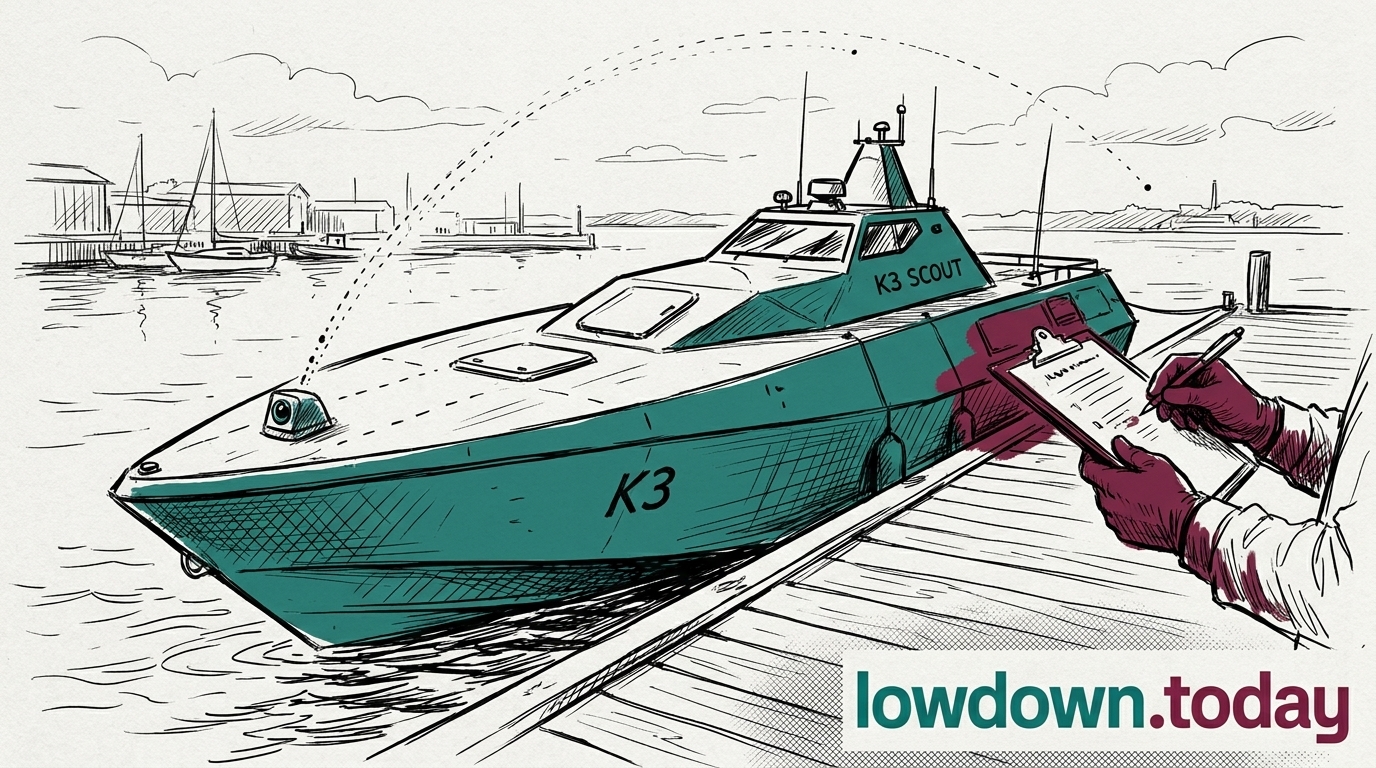
The Conservative opposition called on the Government on 9 August to 'urgently audit' equipment for hidden Chinese components, after the Telegraph's K3 SCOUT report. No named MP has been quoted on the record; the call came at party level, alongside the Ministry of Defence's own 10 August statement that no data had been compromised.
Netherlands Ministry of Defence
The Netherlands Ministry of Defence authorised Dutch Naval Design on 4 August to design 12-metre anti-submarine warfare uncrewed vessels for the Dutch-Belgian frigate programme, and to buy an adapted Compact FLASH dipping sonar from Thales Underwater Systems France. The order commits money and a named supplier while Britain's own certification body remains at the market-engagement stage.
Kraken Technology Group
Kraken Technology Group is a UK maritime-defence company based in Portsmouth that builds the K3 SCOUT, and crossed a $1bn valuation in July on a single-sourced $175m raise. The camera components reached the fleet under a third party's written security assurance, which the Platform Authority, which does not yet exist, was never positioned to check.
Navy Commercial
Navy Commercial
Navy Commercial at Whale Island published two notices on 5 August: 074032-2026, asking industry how to build a Platform Authority to certify uncrewed vessels, and 074351-2026, a GBP10m multi-role USV testbed for the Defence Chief Technology Officer. Responses on the Platform Authority close 19 August, ten days after the cameras were found transmitting to China.
Ministry of Defence
Ministry of Defence
The Ministry of Defence said on 10 August that a routine cyber vulnerability assessment found the camera fault, and a thorough investigation found no evidence that MoD data or systems had been accessed, compromised or transmitted externally. It stripped the cameras of internet connectivity but did not say whether it acted against the supplier.
Thales
Thales
Thales converted its 6 July engaging accord with Exail into a definitive combination agreement on 30-31 July, but the tender offer for Exail's remaining shares now closes by early 2028, later than July's timetable implied. Thales integrates its new undersea prime while still bidding against Kongsberg and DRASS's 2027 target for the AUKUS Pillar II contest.
