Skip to content
You can now search across every topic, entity and event.What's new
Autonomous Systems: Land & Sea
12AUG

Mediazona: 206,200 Russian dead

1 min read
14:17UTC

Mediazona's verified count rose by 2,900 in 14 days, a rate of roughly 207 confirmed dead per day, as Russia launched its most intense offensive of 2026.

TechnologyAssessed
Key takeaway

Confirmed Russian deaths accelerated to 207 per day as the spring offensive began.

Mediazona confirmed 206,200 Russian military deaths as of 27 March, up from 203,300 on 13 March : 2,900 confirmed dead in 14 days, a rate of approximately 207 per day 1.

Mediazona's methodology relies on publicly verifiable sources: obituaries, social media posts by relatives, grave registries, and regional media reports. The true death toll is higher; the organisation has consistently stated its figures are a floor, not a ceiling. The Ukrainian General Staff's cumulative casualty estimate of 1,278,430 as of 14 March includes wounded, captured, and killed, and uses a different methodology.

The 207 daily rate coincides with the opening of the spring offensive. Syrskyi reported 619 ground attacks in four days; each engagement carries personnel cost. Russia lost an estimated 30,600 personnel in January against roughly 22,000 recruited, a net monthly deficit of approximately 8,600. The spring offensive's intensified tempo will widen that gap unless recruitment surges to match.

At 207 confirmed dead per day, the Mediazona count will pass 210,000 before mid-April. The question is whether the spring offensive's results justify the rate.

Deep Analysis

In plain English

Mediazona is a Russian independent news outlet that painstakingly counts Russian military deaths using public sources: family announcements, local newspaper obituaries, grave photos shared on social media. Their count reached 206,200 by 27 March. That is a confirmed minimum — the real number is higher because not every death gets publicised. The rate has accelerated: 2,900 newly confirmed deaths in just 14 days. That coincides with Russia launching its most intense ground offensive of the year so far.

Deep Analysis
Root Causes

Russia's accelerating death toll reflects three structural pressures converging at once.

The spring offensive's intensified tempo — 619 ground attacks in four days — carries a proportionally higher personnel cost than holding operations. Assault echelons absorb casualties at multiples of defensive rates.

Russia's conscript and mobilised-reservist composition means medical care is structurally weaker than in a professional volunteer force. The leaked 62:38 killed-to-wounded ratio suggests field medical capacity has not scaled with operational tempo.

Monthly recruitment of roughly 22,000 against estimated losses of 30,000+ creates a net manpower deficit that the spring offensive will widen before any strategic result is achieved.

First Reported In

Update #8 · Pentagon diverts funds; 948 drones fired

Mediazona· 27 Mar 2026
Read original
Different Perspectives
Conservative opposition
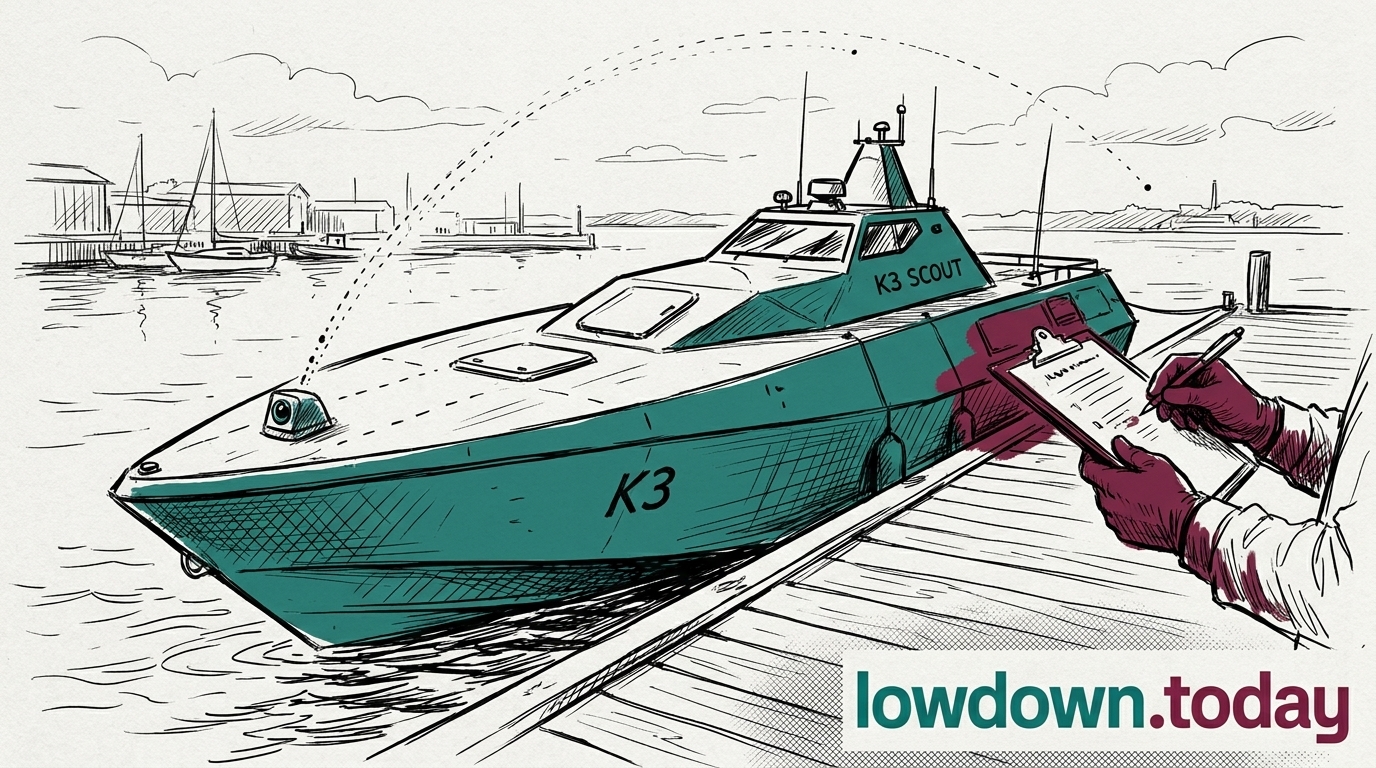
The Conservative opposition called on the Government on 9 August to 'urgently audit' equipment for hidden Chinese components, after the Telegraph's K3 SCOUT report. No named MP has been quoted on the record; the call came at party level, alongside the Ministry of Defence's own 10 August statement that no data had been compromised.
Netherlands Ministry of Defence
The Netherlands Ministry of Defence authorised Dutch Naval Design on 4 August to design 12-metre anti-submarine warfare uncrewed vessels for the Dutch-Belgian frigate programme, and to buy an adapted Compact FLASH dipping sonar from Thales Underwater Systems France. The order commits money and a named supplier while Britain's own certification body remains at the market-engagement stage.
Kraken Technology Group
Kraken Technology Group is a UK maritime-defence company based in Portsmouth that builds the K3 SCOUT, and crossed a $1bn valuation in July on a single-sourced $175m raise. The camera components reached the fleet under a third party's written security assurance, which the Platform Authority, which does not yet exist, was never positioned to check.
Navy Commercial
Navy Commercial
Navy Commercial at Whale Island published two notices on 5 August: 074032-2026, asking industry how to build a Platform Authority to certify uncrewed vessels, and 074351-2026, a GBP10m multi-role USV testbed for the Defence Chief Technology Officer. Responses on the Platform Authority close 19 August, ten days after the cameras were found transmitting to China.
Ministry of Defence
Ministry of Defence
The Ministry of Defence said on 10 August that a routine cyber vulnerability assessment found the camera fault, and a thorough investigation found no evidence that MoD data or systems had been accessed, compromised or transmitted externally. It stripped the cameras of internet connectivity but did not say whether it acted against the supplier.
Thales
Thales
Thales converted its 6 July engaging accord with Exail into a definitive combination agreement on 30-31 July, but the tender offer for Exail's remaining shares now closes by early 2028, later than July's timetable implied. Thales integrates its new undersea prime while still bidding against Kongsberg and DRASS's 2027 target for the AUKUS Pillar II contest.
