Skip to content
Welcome, thoughtbot's Giant Robots listeners!Start here
Autonomous Systems: Land & Sea
12AUG

Kratos lifts guidance, opens Valkyrie talks

1 min read
14:17UTC

Kratos raised its full-year 2026 revenue guidance to $1.7-1.76bn and opened negotiations on a Valkyrie production contract targeting 40 aircraft a year by early 2028.

TechnologyDeveloping

Kratos raised its full-year 2026 revenue guidance to $1.7-1.76bn and opened negotiations on a Valkyrie low-rate initial production contract, targeting 40 aircraft per year by early 2028⁠1. Kratos is a US drone manufacturer; the Valkyrie is its unmanned tactical aircraft, designed to fly alongside crewed fighters as expendable mass.

The move builds on the company's first-quarter beat, which set the basis for both the upgraded outlook and the production talks. Low-rate initial production is the step where a programme transitions from prototype builds to a repeatable manufacturing line, the gate that determines whether Valkyrie reaches squadrons at scale or stalls at demonstrator volumes.

The 40-a-year target is modest against the hundreds of thousands of cheap attack drones the Pentagon is buying elsewhere, but it sits at the opposite end of the market: a larger, reusable airframe rather than a one-way munition. Kratos raising guidance while opening the production conversation points to firming demand for that higher-end tier alongside the attritable-mass push.

Deep Analysis

In plain English

Kratos is a US defence company that makes drones including the Valkyrie, an unmanned jet aircraft that can fly alongside manned fighter jets or carry out strike missions independently. Kratos raised its full-year revenue forecast to between $1.7 and $1.76 billion, and has started formal negotiations for a low-rate initial production contract, the first step before large-scale manufacturing begins. The target is 40 Valkyries per year by early 2028. For comparison, Anduril's factory for a competing aircraft is designed to produce 150 per year, so Kratos faces a production-rate gap. The guidance raise reflects strong demand across Kratos's broader drone portfolio following Pentagon and allied defence spending increases.

First Reported In

Update #11 · Ukraine starts exporting the factory

Tech Crunch· 7 Jun 2026
Read original →
Different Perspectives
Conservative opposition
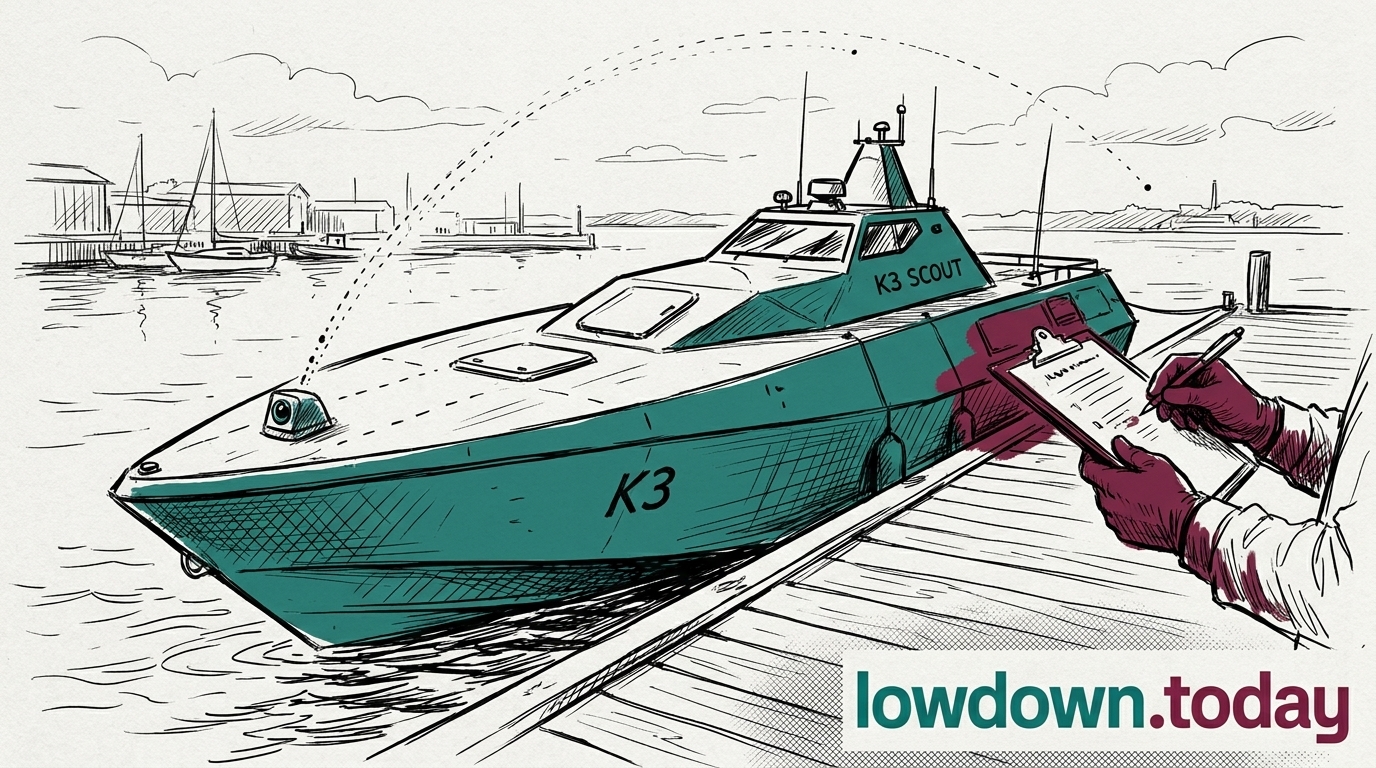
The Conservative opposition called on the Government on 9 August to 'urgently audit' equipment for hidden Chinese components, after the Telegraph's K3 SCOUT report. No named MP has been quoted on the record; the call came at party level, alongside the Ministry of Defence's own 10 August statement that no data had been compromised.
Kraken Technology Group
Kraken Technology Group is a UK maritime-defence company based in Portsmouth that builds the K3 SCOUT, and crossed a $1bn valuation in July on a single-sourced $175m raise. The camera components reached the fleet under a third party's written security assurance, which the Platform Authority, which does not yet exist, was never positioned to check.
Navy Commercial
Navy Commercial
Navy Commercial at Whale Island published two notices on 5 August: 074032-2026, asking industry how to build a Platform Authority to certify uncrewed vessels, and 074351-2026, a GBP10m multi-role USV testbed for the Defence Chief Technology Officer. Responses on the Platform Authority close 19 August, ten days after the cameras were found transmitting to China.
HUMAIN
HUMAIN
HUMAIN and Applied Intuition stated a 2030 target for thousands of autonomous trucks on Saudi logistics corridors. The announcement disclosed no order, fleet baseline or contract value.
Saildrone
Saildrone
Saildrone and Lockheed Martin demonstrated two JAGM launches from a Surveyor-class vessel at RIMPAC. The accepted record identifies no requirement, customer or production configuration behind the demonstration.
Taiwan Legislative Yuan
Taiwan's Legislative Yuan passed the Act at third reading with a small suicide uncrewed boat on the named development list. The NT$240 billion ceiling covers all unmanned domains, and the Act was not promulgated by 4 September.
