Can Kratos close the 40-to-150 production gap with Anduril before Pentagon down-selection?
Timeline for XQ-58A Valkyrie
Targeted for expanded production alongside Firejet
Drones: Industry & Defence: Kratos pours concrete before the ordersEntered second production lot of 12; targeting 40/year by end-2027
Drones: Industry & Defence: Kratos beats Q1, raises guidance, stock falls 5.3%Entered LRIP negotiation targeting 40 aircraft per year by early 2028
Drones: Industry & Defence: Kratos lifts guidance, opens Valkyrie talksBackground
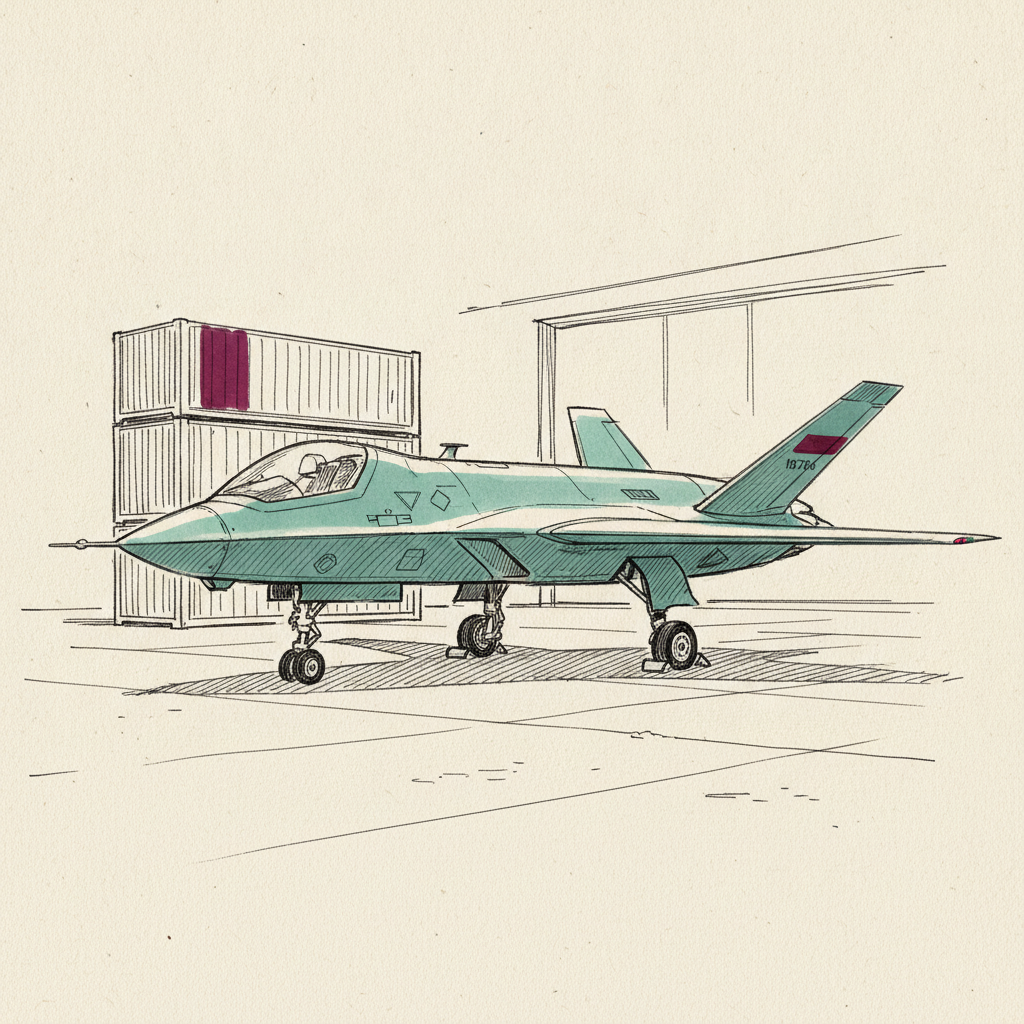
The XQ-58A Valkyrie is a low-cost attritable autonomous combat aircraft (LCAAC) developed by Kratos Unmanned Systems for the US Air Force under the Loyal Wingman and Collaborative Combat Aircraft (CCA) programmes. Designed to fly alongside crewed fighter aircraft as an autonomous wingman, the Valkyrie carries sensors, electronic warfare payloads, or weapons, and is built to be expendable at a fraction of a conventional fighter's cost. The aircraft has a speed of approximately Mach 0.72, a range of approximately 4,500 km, and can carry a 270 kg payload internally.
Kratos opened production on a second lot of twelve XQ-58A aircraft in early 2026 and is targeting approximately 40 Valkyries per year by end-2027. This rate faces direct comparison with Anduril's Arsenal-1 facility in Columbus, Ohio, rated at 150 YFQ-44A Fury aircraft per year already, a 3.75x production gap. The gap has become a central metric in analyst assessments of CCA programme down-selection risk, contributing to a 5.3% stock fall for Kratos after a Q1 beat on revenue.
On 6 July 2026, Kratos broke ground on a 106,000 sq ft expansion at its Oklahoma facility, capacity investment aimed directly at closing the production gap that has weighed on the stock since Q1. The expansion commits capital ahead of confirmed order volume, a bet that the CCA down-selection will reward whichever manufacturer can prove throughput, not just unit cost.
Valkyrie has been used as a testbed for autonomous flight behaviour and Human-Machine Teaming concepts. It participated in DARPA's ACE (Air Combat Evolution) programme dogfighting trials. The Pentagon's $54.6 billion Defence Autonomous Warfare Group budget provides Runway for both platforms in the near term, but analysts expect a production-rate-driven down-selection by the FY2028 budget cycle.
What is the XQ-58A Valkyrie drone?
How does the Valkyrie compare to Anduril's Fury?
Has the XQ-58A Valkyrie been used in live combat?
Is Kratos expanding Valkyrie production capacity?






