Skip to content
Welcome, thoughtbot's Giant Robots listeners!Start here
Autonomous Systems: Land & Sea
12AUG

Japan requests 17 MQ-9B drones for 2027

3 min read
14:17UTC

Japan's defence ministry asked for 292.2 billion yen to buy 17 SeaGuardian drones, four times this year's purchase, and its first interceptor-drone line.

TechnologyAssessed
Key takeaway

Japan requested four times as many SeaGuardian drones for 2027, at a slightly lower unit price.

The Japan Ministry of Defense requested 292.2 billion yen for 17 MQ-9B SeaGuardian long-endurance drones in its fiscal 2027 budget request, published on 31 August⁠1. The SeaGuardian is the maritime version of General Atomics' MQ-9B, built to watch sea lanes for more than a day at a time. The current budget bought four for 76.5 billion yen⁠2. By Lowdown's calculation that is about 17.2 billion yen an aircraft in the request against 19.1 billion now: four times the fleet at a slightly lower unit price.

The request adds 36.3 billion yen for three types of small attack drone and 7.6 billion yen for the ministry's first interceptor-drone line. Base counter-drone equipment falls to 3.8 billion yen plus one unpriced item, from 7.8 billion. Newer anti-swarm work, a microwave weapon and a close-range system mixing missiles, cannon and laser, carries no price yet. The ministry states its aim as becoming "the organisation that makes the most use of unmanned assets in the world"⁠3. These are requests; the cabinet and the Diet decide the final sums.

The interceptor money already has a likely home. Terra Drone, listed in Tokyo, said on 25 August that its Terra B1 was the only interceptor to pass the trial run by the Acquisition, Technology and Logistics Agency (ATLA), Japan's arms procurement agency, which had chosen it from proposals by 38 companies⁠4. ATLA ran a contest in which a single entrant passed, the opposite of the direct awards several European buyers made in September. In June Tokyo placed its first order for American Black Widow drones.

Deep Analysis

In plain English

Each August Japan's defence ministry asks for money for the year ahead, and the government and Parliament decide the final amounts by spring. This year's request puts a large share into drones. The biggest item is a fleet of SeaGuardians, large American drones that can patrol the ocean for more than a day. Japan wants them to track Chinese warships in the Pacific. Smaller sums go to Japanese-made attack drones and to interceptors, small drones that destroy enemy drones. A Japanese company, Terra Drone, says its interceptor was the only one to pass the government's test.

Deep Analysis
Root Causes

Japan's drone industry starts from a weak position at home, with imports dominating the commercial market. The ministry is trying to grow domestic makers by buying expendable drones from them, including a Type I small attack drone whose mass-production contract was signed in March 2026.

China's naval activity in the Pacific drives the other half. Surveillance of sea lanes over long distances needs large drones with endurance that no Japanese maker yet builds, so that money goes abroad.

What could happen next?
  • Opportunity

    Terra Drone is the default candidate for Japan's first interceptor-drone purchases if the line survives the Diet.

  • Consequence

    General Atomics' Japanese MQ-9B order would roughly quadruple in a single budget year.

First Reported In

Update #18 · Four EU states skip tenders on drone defence

Japan Ministry of Defense· 1 Oct 2026
Read original →
Causes and effects
This Event
Japan requests 17 MQ-9B drones for 2027
Japan wants to quadruple its long-endurance drone fleet in a year, and has already tested who might supply its interceptors.
Different Perspectives
Conservative opposition
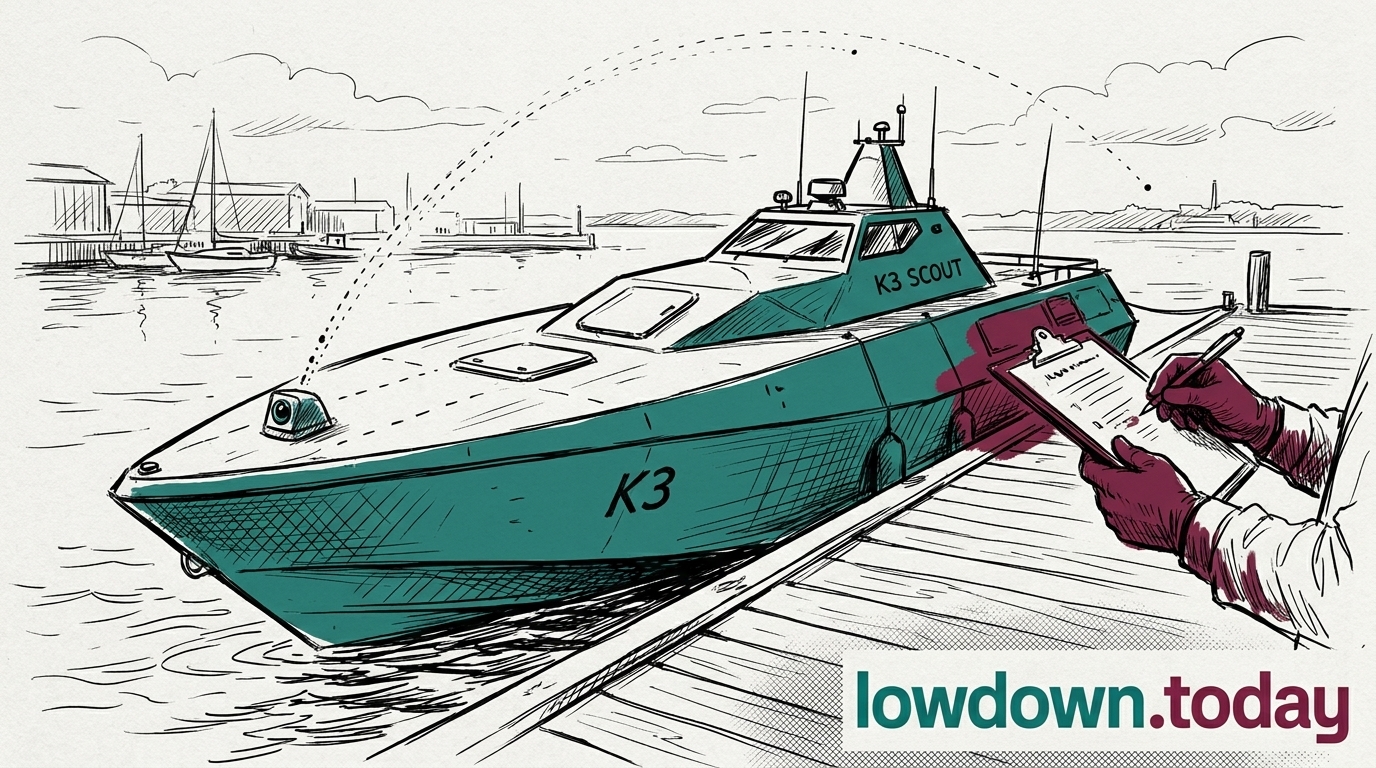
The Conservative opposition called on the Government on 9 August to 'urgently audit' equipment for hidden Chinese components, after the Telegraph's K3 SCOUT report. No named MP has been quoted on the record; the call came at party level, alongside the Ministry of Defence's own 10 August statement that no data had been compromised.
Kraken Technology Group
Kraken Technology Group is a UK maritime-defence company based in Portsmouth that builds the K3 SCOUT, and crossed a $1bn valuation in July on a single-sourced $175m raise. The camera components reached the fleet under a third party's written security assurance, which the Platform Authority, which does not yet exist, was never positioned to check.
Navy Commercial
Navy Commercial
Navy Commercial at Whale Island published two notices on 5 August: 074032-2026, asking industry how to build a Platform Authority to certify uncrewed vessels, and 074351-2026, a GBP10m multi-role USV testbed for the Defence Chief Technology Officer. Responses on the Platform Authority close 19 August, ten days after the cameras were found transmitting to China.
HUMAIN
HUMAIN
HUMAIN and Applied Intuition stated a 2030 target for thousands of autonomous trucks on Saudi logistics corridors. The announcement disclosed no order, fleet baseline or contract value.
Saildrone
Saildrone
Saildrone and Lockheed Martin demonstrated two JAGM launches from a Surveyor-class vessel at RIMPAC. The accepted record identifies no requirement, customer or production configuration behind the demonstration.
Taiwan Legislative Yuan
Taiwan's Legislative Yuan passed the Act at third reading with a small suicide uncrewed boat on the named development list. The NT$240 billion ceiling covers all unmanned domains, and the Act was not promulgated by 4 September.
