Skip to content
You can now search across every topic, entity and event.What's new
Autonomous Systems: Land & Sea
12AUG

France scraps two drones for mass buys

3 min read
14:17UTC

France cancelled the Safran Patroller and the multinational Eurodrone programme on 8 April, redirecting approximately EUR 600 million to roughly 40 small tactical systems including Delair/KNDS Damocles loitering munitions.

TechnologyDeveloping
Key takeaway

France killed Eurodrone and pivoted to mass attritable drones, ending its pre-Ukraine doctrine.

France cancelled both the Safran Patroller tactical drone and the multinational Eurodrone programme in an updated military programming law presented on 8 April, redirecting approximately EUR 600 million toward small tactical drones and low-altitude MALE systems. Roughly 40 tactical drone systems will be ordered in 2026. Delair, in collaboration with KNDS, is delivering the first batch of Damocles loitering munitions.

The Patroller programme had been delayed for years. Its cancellation frees budget for attritable tactical MASS, a doctrinal shift validated by Ukraine's FPV-dominant front lines . The simultaneous Eurodrone cancellation kills the main vehicle for European drone industrial convergence, leaving Germany (Helsing HX-2, EUR 1.46 billion framework) and the UK (Corvus/NYX) to pursue separate national paths.

The cancellation of two flagship programmes at once is the clearest European break with the pre-Ukraine procurement model. Before February 2022, the doctrine prioritised large, exquisite platforms that took a decade to develop and entered service in single-digit quantities. Ukraine's front has demonstrated that attritable MASS at EUR 300 to EUR 5,000 per unit, not EUR 30 million platforms, determines who holds ground. France is the first major European military to codify that lesson in law, and the EU AGILE programme has no mechanism to prevent the resulting national fragmentation.

Deep Analysis

In plain English

France was building a large, expensive surveillance drone (Patroller, costing hundreds of millions) and was part of a European project to build an even bigger drone (Eurodrone). After watching how drones are used in Ukraine, France decided to cancel both and instead buy roughly 40 smaller, cheaper drones and some loitering munitions (flying bombs that circle until they find a target). The logic is that cheap drones you can lose in large numbers beat one expensive drone you cannot afford to risk. France is the first major European country to make this switch official.

Deep Analysis
Root Causes

France's cancellation reflects three structural forces: the Ukraine war's operational data demonstrating that FPV-type attritable drones at low unit costs outperform expensive persistent platforms in force-on-force combat; France's defence budget constraint, with the military programming law requiring difficult prioritisation choices; and the Eurodrone's schedule slippage and cost growth, which made it an easy cut.

France's EUR 600 million pivot from Patroller and Eurodrone to Damocles loitering munitions and 40 tactical systems reflects both operational learning from Ukraine and fiscal pressure under the military programming law.

What could happen next?
  • Consequence

    France's cancellation accelerates the breakup of the Eurodrone consortium model. Germany (Helsing HX-2) and the UK (Project NYX, Corvus) are already pursuing separate national paths. The pan-European MALE drone as a coordination vehicle for the defence industry is effectively dead. Individual nations will procure attritable systems nationally, with occasional bilateral workshare, rather than through multinational programmes.

First Reported In

Update #10 · NATO shoots down drone over Estonia

Aerotime· 29 May 2026
Read original
Different Perspectives
Conservative opposition
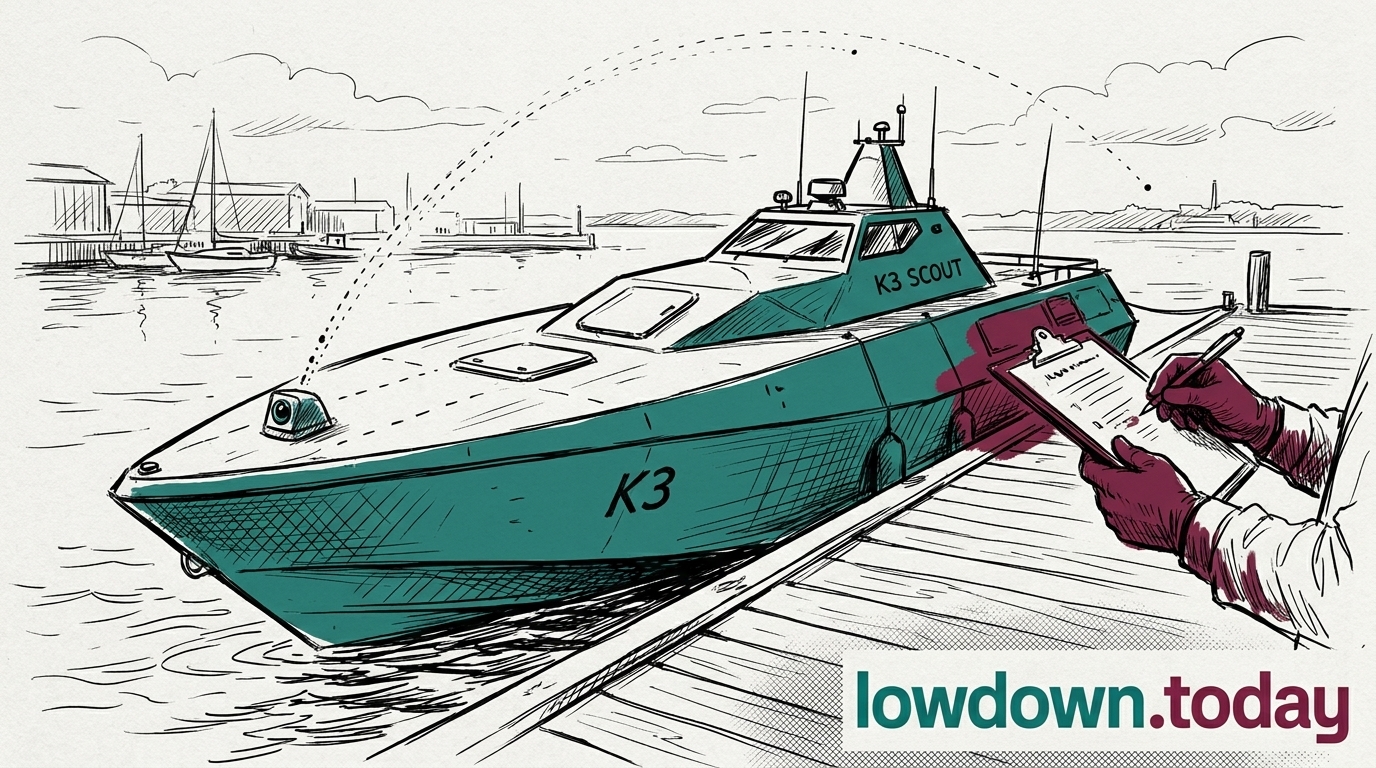
The Conservative opposition called on the Government on 9 August to 'urgently audit' equipment for hidden Chinese components, after the Telegraph's K3 SCOUT report. No named MP has been quoted on the record; the call came at party level, alongside the Ministry of Defence's own 10 August statement that no data had been compromised.
Netherlands Ministry of Defence
The Netherlands Ministry of Defence authorised Dutch Naval Design on 4 August to design 12-metre anti-submarine warfare uncrewed vessels for the Dutch-Belgian frigate programme, and to buy an adapted Compact FLASH dipping sonar from Thales Underwater Systems France. The order commits money and a named supplier while Britain's own certification body remains at the market-engagement stage.
Kraken Technology Group
Kraken Technology Group is a UK maritime-defence company based in Portsmouth that builds the K3 SCOUT, and crossed a $1bn valuation in July on a single-sourced $175m raise. The camera components reached the fleet under a third party's written security assurance, which the Platform Authority, which does not yet exist, was never positioned to check.
Navy Commercial
Navy Commercial
Navy Commercial at Whale Island published two notices on 5 August: 074032-2026, asking industry how to build a Platform Authority to certify uncrewed vessels, and 074351-2026, a GBP10m multi-role USV testbed for the Defence Chief Technology Officer. Responses on the Platform Authority close 19 August, ten days after the cameras were found transmitting to China.
Ministry of Defence
Ministry of Defence
The Ministry of Defence said on 10 August that a routine cyber vulnerability assessment found the camera fault, and a thorough investigation found no evidence that MoD data or systems had been accessed, compromised or transmitted externally. It stripped the cameras of internet connectivity but did not say whether it acted against the supplier.
Thales
Thales
Thales converted its 6 July engaging accord with Exail into a definitive combination agreement on 30-31 July, but the tender offer for Exail's remaining shares now closes by early 2028, later than July's timetable implied. Thales integrates its new undersea prime while still bidding against Kongsberg and DRASS's 2027 target for the AUKUS Pillar II contest.
