Skip to content
Welcome, thoughtbot's Giant Robots listeners!Start here
Autonomous Systems: Land & Sea
12AUG

Alabuga recruits drone brigade on Telegram

2 min read
14:17UTC

FDD on 24 April reported Russia's Alabuga Polytech recruiting a new unmanned-systems brigade through Telegram since mid-April, targeting gamers, with fourteen-year-olds assembling Geran-2 airframes at roughly $2,000 a month.

TechnologyDeveloping
Key takeaway

Alabuga's labour-cost structure underwrites Geran-2 scaling; chip supply is the lever Western export controls have not pulled.

The Foundation for Defense of Democracies (FDD), a US think tank that advocates for tighter sanctions on Russia and Iran, published an analysis on Friday 24 April finding that Alabuga Polytech, the technical college attached to Russia's Geran-2 assembly complex, has been recruiting via Telegram for a new unmanned-systems brigade since mid-April, with adverts targeting video gamers⁠1. Factory director Timur Shagivaleev stated the facility now produces nine times its original target, per FDD analysis. Alabuga is the Russian assembly site for the Geran-2, the domestically built derivative of Iran's Shahed-136 loitering munition.

Teenagers as young as fourteen, recruited directly from the ninth grade, assemble Geran-2 airframes at roughly 150,000 roubles (around $2,000) per month; Coda Story documents African workers brought in under the same scheme starting at $550 per month. CNN previously documented 5,700 drones produced January to September 2024; Ukrainian defence intelligence puts first-half 2025 output near 18,000. Bundeswehr (German Armed Forces) General Christian Freuding has warned of potential 2,000 Geran-2 launches in a single night, the upper bound the supply chain is now sized against.

The recruitment line is the supply-side companion to the Center for Strategic and International Studies (CSIS) finding on US chip dependence. CSIS reported that 69% of the memory hardware and 57% of the processors in Russia's AI-enabled drones came from US firms; Alabuga is scaling a workforce on Telegram while its airframes still run on Western processors that have not yet been cut off. Cost-imposition logic visible in the $300 Molniya-2 versus the $50,000 Lancet scales because the workforce is structured around teenagers and African contract workers rather than skilled engineers. Export controls on Central Asian and Gulf re-export intermediaries, not Section 232 tariffs on Chinese hardware, are assessed as the lever most likely to constrain supply.

The legal and reputational layer matters. Teen labour as young as fourteen introduces ESG and humanitarian-law concerns for any Western component supplier whose chips end up at Alabuga. Telegram-based recruitment of gamers signals a domestic operator pipeline alongside the manufacturing one, pushing the workforce question one step further: the kill-chain is being built around a labour pool that did not exist at scale in early 2024. Russia has run wartime youth-labour mobilisations before, and the longer the recruitment continues without targeted disruption the harder it becomes to unwind without coordinated multilateral export action.

Deep Analysis

In plain English

Russia is recruiting workers; including teenagers as young as fourteen and imported African labourers; to assemble Geran-2 attack drones at a factory in Tatarstan, in south-central Russia. The Geran-2 is based on an Iranian design and has been used extensively in strikes against Ukraine. A US think tank found that the factory is now advertising on Telegram for video gamers, suggesting it also wants operators as well as assemblers. The factory's director says output runs nine times the original target. A German military general has warned that Russia may be capable of launching 2,000 of these drones in a single night. The low wages paid to the workforce; as little as $550 per month for imported workers; help explain how Russia keeps the price per drone low enough to sustain that volume.

First Reported In

Update #7 · DAWG jumps 24,000% as Anduril sweeps board

Foundation for Defense of Democracies· 30 Apr 2026
Read original →
Different Perspectives
Conservative opposition
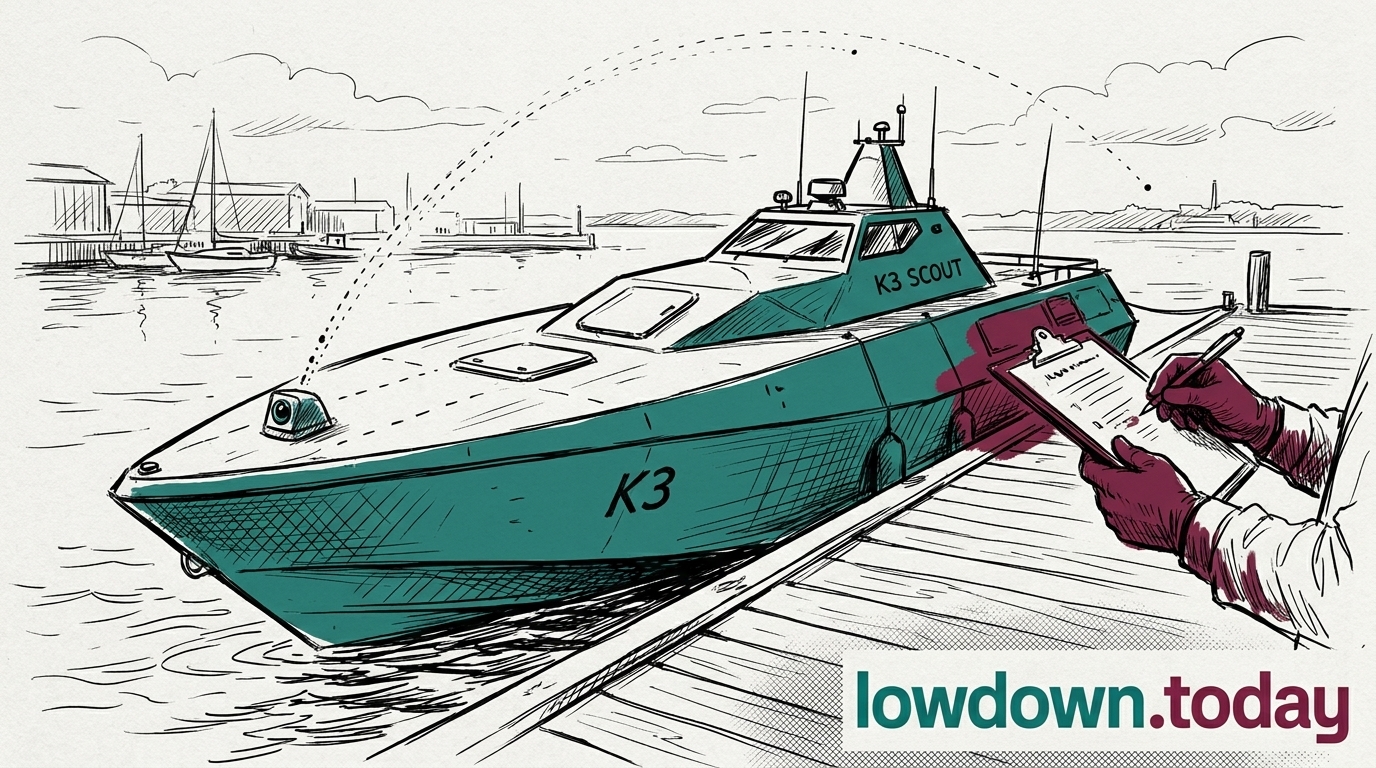
The Conservative opposition called on the Government on 9 August to 'urgently audit' equipment for hidden Chinese components, after the Telegraph's K3 SCOUT report. No named MP has been quoted on the record; the call came at party level, alongside the Ministry of Defence's own 10 August statement that no data had been compromised.
Kraken Technology Group
Kraken Technology Group is a UK maritime-defence company based in Portsmouth that builds the K3 SCOUT, and crossed a $1bn valuation in July on a single-sourced $175m raise. The camera components reached the fleet under a third party's written security assurance, which the Platform Authority, which does not yet exist, was never positioned to check.
Navy Commercial
Navy Commercial
Navy Commercial at Whale Island published two notices on 5 August: 074032-2026, asking industry how to build a Platform Authority to certify uncrewed vessels, and 074351-2026, a GBP10m multi-role USV testbed for the Defence Chief Technology Officer. Responses on the Platform Authority close 19 August, ten days after the cameras were found transmitting to China.
HUMAIN
HUMAIN
HUMAIN and Applied Intuition stated a 2030 target for thousands of autonomous trucks on Saudi logistics corridors. The announcement disclosed no order, fleet baseline or contract value.
Saildrone
Saildrone
Saildrone and Lockheed Martin demonstrated two JAGM launches from a Surveyor-class vessel at RIMPAC. The accepted record identifies no requirement, customer or production configuration behind the demonstration.
Taiwan Legislative Yuan
Taiwan's Legislative Yuan passed the Act at third reading with a small suicide uncrewed boat on the named development list. The NT$240 billion ceiling covers all unmanned domains, and the Act was not promulgated by 4 September.
