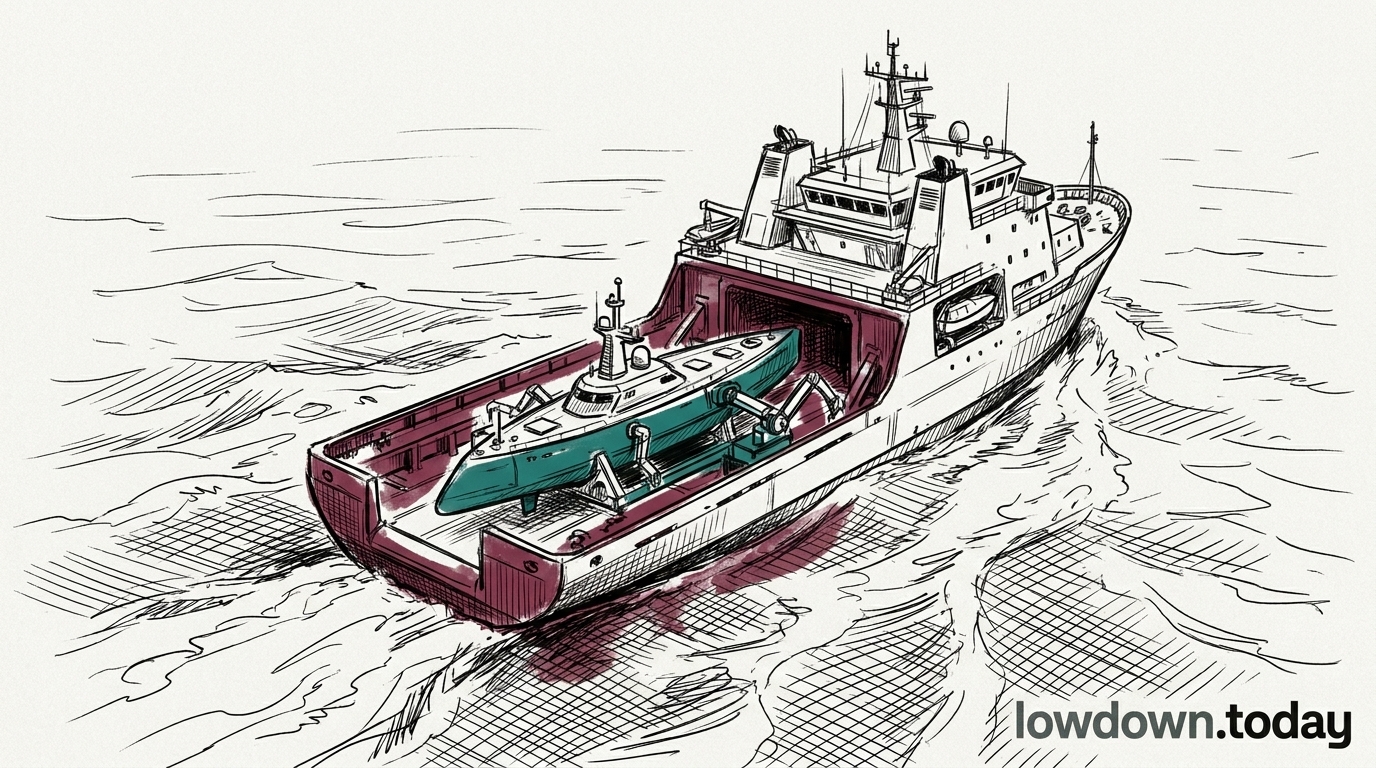
Kraken Technology Group and Capewell airdropped a K3 SCOUT uncrewed surface vessel (USV) from an Airbus A400M transport four times at 1,300 feet into waters up to Sea State 4, the world's first extracted-load airdrop of a USV from an aircraft, across a six-day campaign that ended on 8 July1.
Kraken is a British maritime-autonomy firm; Capewell is a US aerial-delivery specialist. An uncrewed surface vessel is a robot boat that runs mine-hunting or surveillance sensors with no crew aboard. For a defence-procurement buyer, the drop turns strategic airlift into a way to place such a craft hundreds of miles from any friendly port or mother ship. It used Kraken's airdrop kit on Capewell's UMCADS (Universal Maritime Craft Aerial Delivery System) parachute platform, plus a new IN-Release electro-mechanical system that synchronises the parachute separation so the hull enters the water intact and ready to work2.
Mal Crease, Kraken's founder and chief executive, said the K3 SCOUT can be "rapidly deployed directly from a military transport aircraft into contested or difficult-to-access waters ready for operation"3. Mark Lavender of Capewell confirmed the UMCADS platform can carry mission equipment other than boats, widening the sales case beyond a single hull.
The Royal Navy's uncrewed future was, last update, a set of names, Type 91 to Type 94, with no contractors or dates attached. Under Project Beehive, an SME has instead delivered a concrete deployment mechanic: the class of craft the Navy first sailed toward Hormuz in May can now arrive by parachute rather than by sea. Commenters on the naval site Navy Lookout question the K3 SCOUT's range, its ability to defend itself in hostile waters, and the cost of recovering the drop rig; the demonstration ran in home waters, not a contested theatre4.


