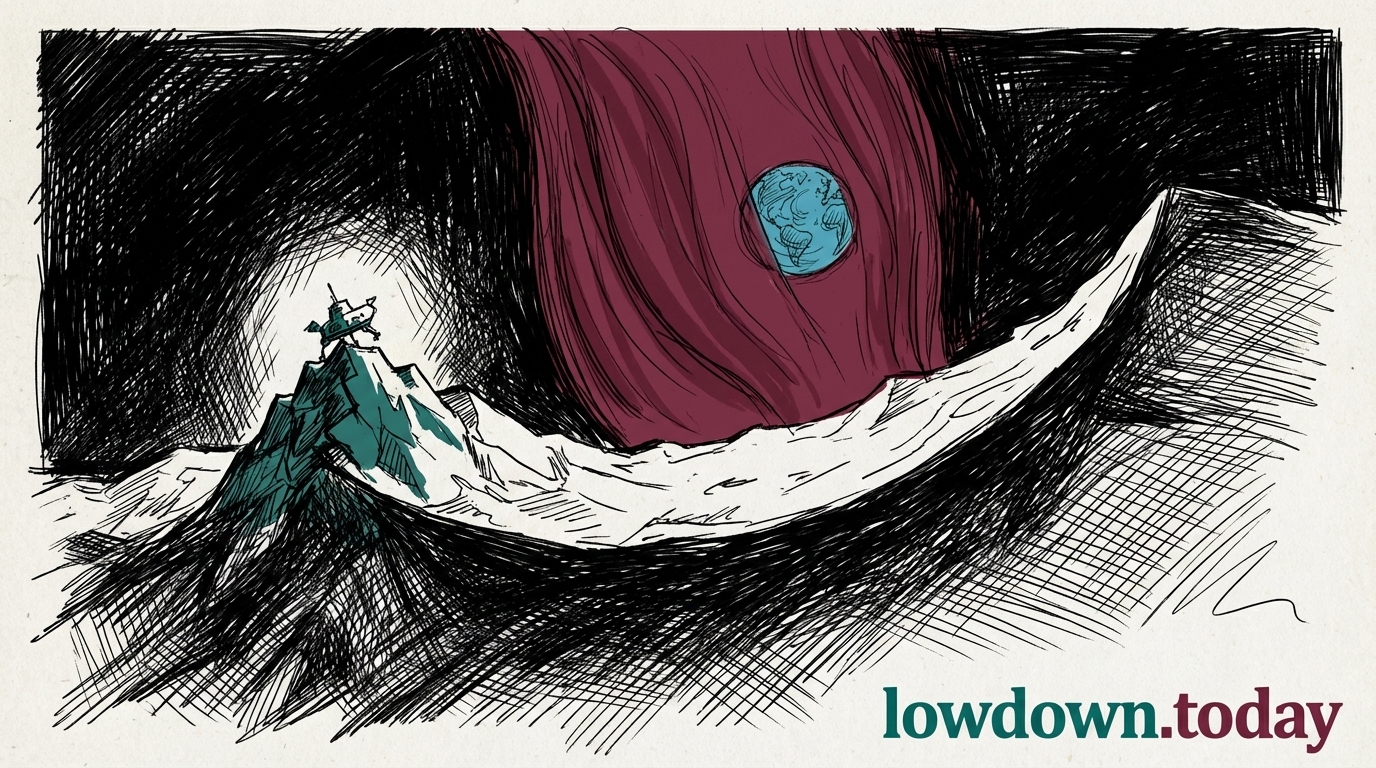
NASA fired Orion's shuttle-heritage OMS-E engine at 7:49 PM EDT on 2 April 2026, executing a 5-minute, 50-second translunar injection burn that committed four astronauts to a lunar flyby1. The engine delivered up to 6,000 pounds of thrust, consuming roughly 1,000 pounds of fuel from a 58,000-pound spacecraft. NASA declared the burn "flawless"2.
The go/no-go decision that controllers had scheduled for approximately 8 PM ET came more than three hours early. Acting Associate Administrator Dr Lori Glaze confirmed the milestone: "Today, for the first time since Apollo 17 in 1972, humans have departed Earth orbit"3.
The burn commits the crew to a free-return trajectory, a gravity-assisted arc that uses the Moon's pull to swing the spacecraft home without a separate engine firing. It is the same principle that brought Apollo 13 back safely in 1970. Lunar flyby is set for 6 April at 23:58 UTC, with closest approach 4,000 to 6,000 miles above the surface4. Splashdown follows on approximately 10 April in the Pacific off San Diego.
The engine that executed this burn is a piece of Space Shuttle hardware from the 1990s. The Shuttle programme ended in 2011. Its engine outlived it by 15 years and counting, and has now sent humans further than any shuttle ever flew.



