Skip to content
Artemis II Moon Mission
2APR

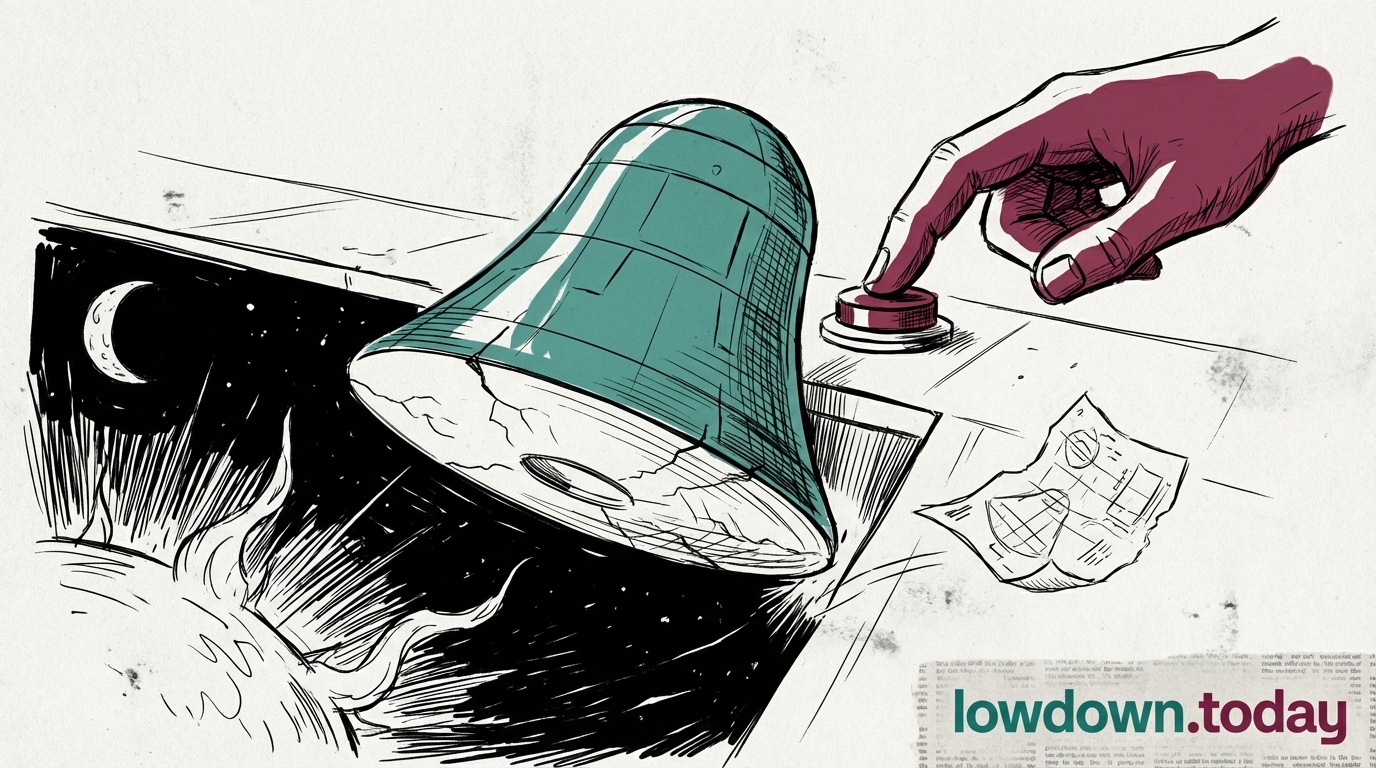
Tonight's Burn Decides Whether Orion Commits to the Moon

2 min read
11:46UTC

Flight controllers will make a go/no-go call at approximately 8 PM ET on the six-minute burn that sends the crew irreversibly toward the Moon.

ScienceDeveloping
Key takeaway

The TLI burn tonight is irreversible; once fired, the crew is committed to the Moon.

NASA flight controllers at Johnson Space Center in Houston have scheduled a go/no-go decision for approximately 8 PM ET today on the translunar injection burn. The firing will last six minutes. Once it executes, the crew cannot turn back 1.

The burn commits Orion to a free-return trajectory, a gravity-assisted arc that uses the Moon's pull to swing the spacecraft home without a separate engine firing for the return. This is the same principle that brought Apollo 13 back safely in 1970, and it is the only abort mode available after TLI. The crew will pass within 4,000 to 6,000 miles of the lunar surface before looping back toward Earth.

Two factors complicate the decision. Active space weather from an X-class solar flare on 31 March persists through the window. And the heat shield that must protect the crew on reentry has never flown this trajectory profile with humans aboard. Controllers will weigh both before giving the go.

The European Service Module will fire its shuttle-heritage engine for the burn. If the call is go, four people will be on an irreversible path to the Moon by approximately 8:15 PM tonight.

Deep Analysis

In plain English

Think of the TLI burn as the moment you leave the motorway slip road and commit to the motorway. Before you hit that point, you can turn back. After it, you are going wherever the road goes. For this spacecraft, once that engine fires for six minutes, the crew is physically committed to swinging around the Moon. There is no engine powerful enough to turn them around mid-journey. Flight controllers are weighing two factors: a solar flare that has made space more radioactive than normal, and a heat shield whose safety depends on a flight path that has never been tested with a crew. If both look acceptable, they give the go.

Deep Analysis
Root Causes

The irreversibility of the TLI burn is a consequence of orbital mechanics rather than design choice. Once the engine fires, the spacecraft's velocity exceeds Earth escape threshold on a lunar trajectory; no practical abort mode exists because returning to Earth under power would require more propellant than the spacecraft carries.

The free-return trajectory mitigates this by using the Moon's gravity as the return engine. NASA selected it for Artemis II precisely because it provides a passive abort mode, but it comes at the cost of flexibility: the crew cannot adjust their trajectory after TLI without additional propellant expenditure.

First Reported In

Update #1 · Artemis II Commits to the Moon With Three Open Questions

NBC News· 2 Apr 2026
Read original
Different Perspectives
ESA
ESA
The European Service Module has operated without anomaly for five consecutive days, with the OMS-E engine's translunar injection precision directly responsible for eliminating both correction burns. ESA's hardware contribution is the mission's highest-performing subsystem.
NASA
NASA
NASA cancelled a second consecutive outbound correction burn and confirmed Orion in lunar gravitational dominance, while declining to publish any crew radiation dose data through a complete G3 storm cycle. Bipartisan congressional rejection of its $18.8 billion FY2027 budget proposal means the agency faces a political fight even as its spacecraft performs above expectations.
Dual-framework nations
Signing both the Artemis Accords and the ILRS framework is rational hedging, not defection; smaller nations maximise access without exclusive commitment. Lunar governance is genuinely multipolar, and the US coalition count of 61 overstates exclusivity.
Boeing / Northrop Grumman
SLS component production spans more than 40 US states, giving the industrial base strong political protection regardless of commercial alternatives. Congressional mandates guarantee contracts through FY2029, insulating the supply chain from technical programme changes.
NASA Office of Inspector General
The IRB heat shield findings should have been published before launch. The Starship HLS is two years behind schedule with a worsening manual control dispute. NASA has no crew rescue capability for lunar surface operations. The programme is proceeding with documented, unresolved risks.
SpaceX
SpaceX
Starship HLS development is ongoing. SpaceX disputes the characterisation of the manual crew control requirement as unresolved, maintaining its autonomous landing architecture meets mission safety objectives. The company has not publicly responded to the OIG's worsening-trend characterisation.