Skip to content
You can now search across every topic, entity and event.What's new
AI: Jobs, Power & Money
28MAR

NY AI layoff law: 162 filings, zero hits

2 min read
19:20UTC

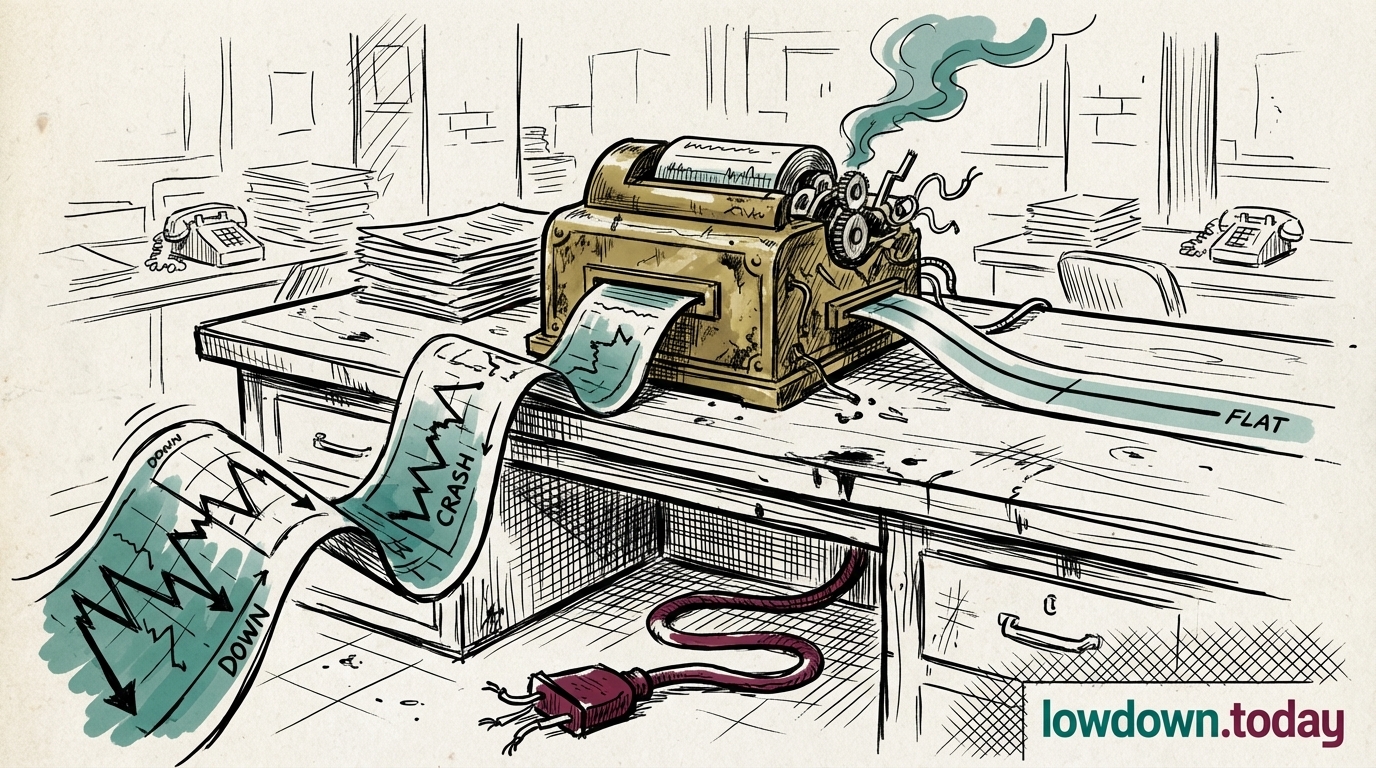
New York required companies to disclose AI's role in mass layoffs. After a year, 162 companies covering 28,300 workers attributed zero cuts to AI.

EconomicAssessed
Key takeaway

Zero of 162 companies disclosed AI as a factor in layoffs despite a legal obligation to do so.

In 2025, New York State updated its Worker Adjustment and Retraining Notification Act to require companies to disclose AI's role in mass layoffs, becoming the first US jurisdiction to mandate such reporting. After nearly a year of operation, the results are in. 1 Zero of 162 companies filing layoff notices attributed cuts to AI or technological automation. Those filings covered more than 28,300 workers, including staff at Amazon and Goldman Sachs.

Non-compliance currently carries a penalty of $500 per day. Proposed legislation would raise that to $10,000 per violation and strip companies of state grants and tax incentives for five years. That tougher bill has not advanced.

Silence on this scale is evidence, not absence. Harvard Business Review reported that only 2% of layoffs followed actual AI deployment . Oxford Economics called AI's layoff role "overstated" . Both relied on corporate claims taken at face value. New York's data shows those claims are legally shielded as well as reputationally incentivised. Companies that cut 28,300 jobs had the opportunity and the obligation to say whether AI played a role. Every one said no. Either AI genuinely drives none of the displacement in the nation's financial capital, or the disclosure framework is failing.

Deep Analysis

In plain English

New York passed a law requiring companies to say whether AI played a role when they do mass layoffs. After nearly a year, 162 companies laid off more than 28,000 people, including workers at Amazon and Goldman Sachs. Not one company said AI was involved. The penalty for lying or not disclosing is $500 a day. For billion-dollar companies, that is a trivial fine. Until the penalty is meaningful, there is no incentive to tell the truth.

Deep Analysis
Root Causes

The $500/day penalty is structurally inadequate. For a company like Amazon or Goldman Sachs, potential exposure of $500 per day during a WARN period is a rounding error against litigation risk or reputational exposure from admitting AI-driven displacement. The incentive structure rewards non-disclosure.

Legal uncertainty also suppresses attribution. The definition of AI-driven job loss has not been tested in court. Companies face asymmetric risk: disclosing AI as a reason invites class actions and union bargaining claims, while non-disclosure carries only a civil penalty. Rational legal counsel will advise against attribution until the definition is litigated.

What could happen next?
  • Consequence

    The New York result will be cited in Congressional debates as evidence that voluntary disclosure frameworks cannot generate honest AI attribution data, strengthening the case for mandatory federal reporting with meaningful penalties.

    Short term · High
  • Risk

    Other states considering WARN Act amendments may model weak penalty structures on New York, producing the same zero-attribution outcome and wasting a decade of potential evidence collection.

    Medium term · Medium
  • Precedent

    New York's failure is the most important data point in the AI disclosure debate: it proves empirically that disclosure laws without credible enforcement produce no data.

    Long term · High
First Reported In

Update #3 · The AI jobs data contradicts itself

Bloomberg Law· 28 Mar 2026
Read original
Different Perspectives
Barclays
Barclays
Barclays economist Pooja Sriram flagged a 28,000-a-month bleed in finance and information roles the same week Microsoft disputed that AI drove its own 4,800 cuts. The bank treats Challenger's AI-attribution share as a lagging indicator against faster erosion visible in raw labour-market data.
European Commission
European Commission
Brussels deferred the Digital Omnibus's Annex III employment-compliance deadline from 2 August 2026 to December 2027, even as California advanced three binding AI-hiring bills the same week. The 17-month delay leaves EU workers without the algorithmic-hiring safeguards the regulation already promises.
OpenAI
OpenAI
OpenAI proposed a 5% US government equity stake worth $42.6bn, structured as a public wealth fund modelled on the Alaska Permanent Fund, with Sam Altman pitching it directly to Trump, Bessent and Lutnick. The offer pre-empts Sanders' rival one-time 50% AI-stock tax, which has not yet reached committee.
India's IT and outsourcing sector
BAT's transfer of 3,500 roles to Accenture on 29 June fits a delivery model Indian IT firms increasingly run: consultancies win Western contracts, then execute through offshore centres. The sector expects more Fit2Win-style transfers, not straight redundancies, as employers absorb AI without cutting outsourced headcount.
European Trade Union Confederation
ETUC says the Council's shift from 'ensure' to 'support' in the AI-literacy duty, confirmed in the Digital Omnibus's final adoption on 29 June, is a collapse of the legal threshold, not a drafting tidy-up. It expects EU workers to face AI-driven hiring and monitoring decisions with a statutory right to explanation that exists in name only.
British American Tobacco's Fit2Win workforce
BAT is cutting 9,000 roles under Fit2Win, transferring 3,500 to Accenture rather than making them redundant, to reach roughly £500m in AI-driven savings by 2027. For affected staff, that distinction decides whether they keep a job at all, just not at BAT.
