Skip to content
You can now search across every topic, entity and event.What's new
AI: Jobs, Power & Money
17JUL

NBER: nine in ten firms untouched by AI

2 min read
14:01UTC

A multinational survey of 6,000 executives found most companies see no employment effect from AI. Inside those same firms, bosses and workers hold opposite forecasts.

EconomicDeveloping
Key takeaway

Bosses expect AI to cut jobs while their own employees expect it to create them.

A survey of nearly 6,000 senior executives across the United States, United Kingdom, Germany, and Australia, published by the National Bureau of Economic Research, found that 90% of firms report no impact on employment or productivity from AI so far. 1 Sixty-nine per cent of the surveyed firms actively use the technology. Nine in ten see nothing happening.

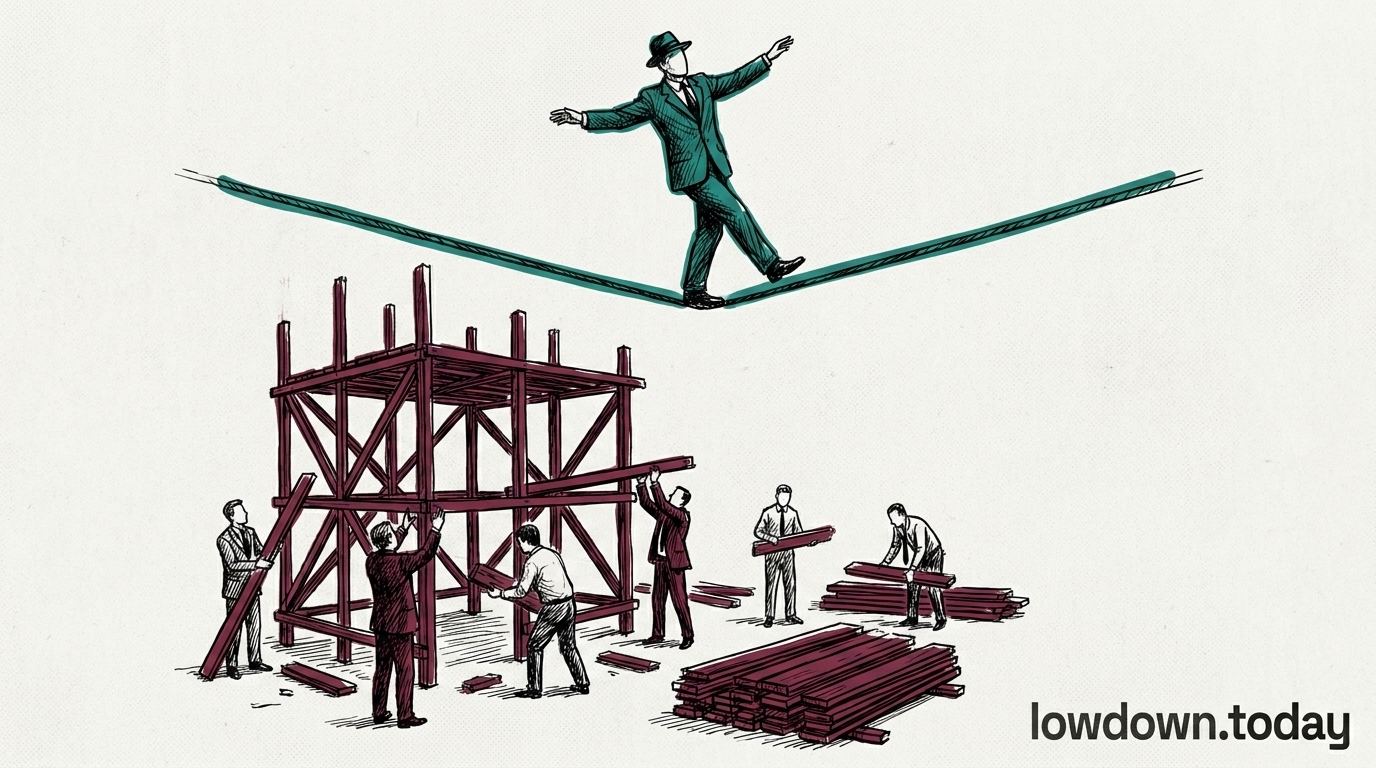
The contradiction sits inside the forecasts. Executives at these firms predict a 0.7% employment decline over the next three years. Employees at the same companies predict a 0.5% increase. 2 One group expects cuts. The other expects growth. They work in the same buildings, use the same tools, and hold irreconcilable views of what comes next.

During the 1990s offshoring wave, management planned relocations years before workers learned their roles would move overseas. Approximately 3.4 million US manufacturing jobs were lost between 1995 and 2005. Workers could not prepare because they did not know. The NBER data, spanning four countries with different labour market systems, suggests this gap is structural, not cultural . If executives act on private bearish forecasts without informing staff, displacement will arrive as a shock rather than a managed transition.

Deep Analysis

In plain English

A research body surveyed nearly 6,000 bosses across the US, UK, Germany, and Australia and asked whether AI has yet affected hiring or productivity at their companies. Nine in ten said no. But the same bosses predict employment at their firms will fall slightly over the next three years. Workers at those same companies predict it will rise slightly. Someone is wrong. Given that bosses set hiring plans, their forecast is more likely to be self-fulfilling.

Deep Analysis
Root Causes

Information asymmetry within firms is the structural cause. Executives have access to strategic planning documents, vendor capability assessments, and board-level restructuring discussions that do not reach workers. The 1.2-percentage-point forecast gap (0.7% decline vs 0.5% increase) is more consistent with deliberate non-disclosure than with genuine disagreement.

The 69% active AI adoption rate combined with the 90% null employment impact suggests a deployment phase that is currently affecting task structure without reducing headcount. The NBER finding by Humlum and Vestergaard that LLM adoption produces occupational switching without net changes in hours or earnings supports this reading: impact is happening below the level of employment statistics.

Measurement lag is also structural. Employment surveys capture headcount but not task composition or hiring freeze effects. The Dallas Fed found displacement operating primarily through collapsed job-finding rates among workers under 25, a mechanism invisible to standard employment impact questions.

What could happen next?
  • Risk

    The executive-employee forecast gap may widen as deployment accelerates, producing a shock dynamic similar to 1990s offshoring where workers had no preparation time.

    Medium term · Medium
  • Consequence

    Policymakers relying on current employment statistics will underestimate displacement risk because the primary mechanism is hiring suppression, not firing, which appears later in official data.

    Short term · High
  • Meaning

    The 90% null result at 69% adoption rates confirms the technology is in a pre-deployment productivity phase; the employment shock, if it arrives, will be sudden rather than gradual.

    Long term · Medium
First Reported In

Update #3 · The AI jobs data contradicts itself

NBER (Yotzov, Barrero, Bloom, Bunn, Davis et al)· 28 Mar 2026
Read original
Causes and effects
This Event
NBER: nine in ten firms untouched by AI
The largest cross-country executive survey reveals a dangerous information gap: employers expect job losses while their own workers expect gains.
Different Perspectives
Stanford's 'We Must Act Now' signatories
More than 200 academics, including 16 Nobel laureates, published a 13 July letter warning of AI-driven labour disruption, citing Daron Acemoglu's NBER estimate that AI's total factor productivity gain stays under 0.66% over ten years. The letter's own cited economics sit well below Goldman Sachs Research's 1.5-percentage-point estimate published the same week.
Germany / the Bundesrat
Germany's Bundesrat acted on the EU AI Act's employment provisions on 10 July, more than a year ahead of the Act's 2 December 2027 enforcement deadline. Germany is moving on statutory AI-employment disclosure while the US Congress and Federal Reserve have no equivalent instrument.
Indian IT services sector (TCS, HCLTech, Wipro)
TCS cut 19,271 roles and HCLTech cut 3,292 in the same reporting week that Wipro's headcount rose by 888 under its own zero-fresher-hiring pledge for FY27. The divergence shows attrition, not layoffs, is how India's outsourcers absorb AI-driven project compression while their net headcount numbers stay ambiguous.
Federal Reserve
Federal Reserve
Barr said on 14 July there is little evidence of AI displacement, citing a 43-versus-10 adoption gap by education; Cook said the next day the dire predictions have not come to fruition, her text carrying none of the bond-spread language she used in May. The Fed reads AI's labour effect through national aggregates, where four banks' cuts remain statistically invisible.
Barclays
Barclays
Barclays economist Pooja Sriram flagged a 28,000-a-month bleed in finance and information roles the same week Microsoft disputed that AI drove its own 4,800 cuts. The bank treats Challenger's AI-attribution share as a lagging indicator against faster erosion visible in raw labour-market data.
European Commission
European Commission
Brussels deferred the Digital Omnibus's Annex III employment-compliance deadline from 2 August 2026 to December 2027, even as California advanced three binding AI-hiring bills the same week. The 17-month delay leaves EU workers without the algorithmic-hiring safeguards the regulation already promises.
