Skip to content
You can now search across every topic, entity and event.What's new
AI: Jobs, Power & Money
17JUL

Three in four never file claims

2 min read
14:01UTC

The workers AI displaces are precisely the categories the unemployment system cannot see.

EconomicAssessed
Key takeaway

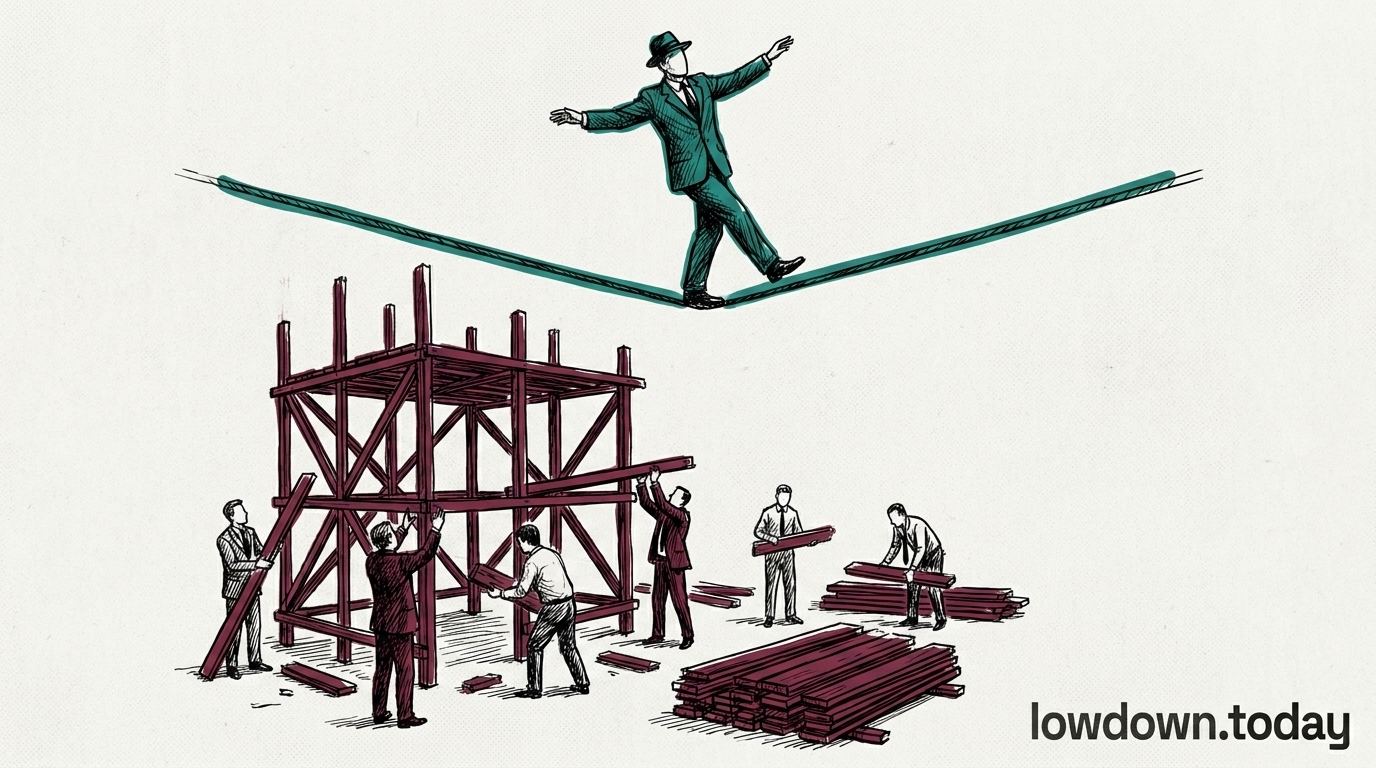
Three quarters of displaced workers never appear in the claims data policymakers depend on.

Fortune and Columbia University research confirmed that roughly 75% of unemployed Americans never file for unemployment insurance 1. Severance packages delay filing. Recent graduates lack sufficient work history to qualify. Contractors are categorically ineligible.

Initial jobless claims fell to 202,000 for the week ending 28 March, a 10-month low 2. New York's updated WARN Act, the world's first law requiring companies to disclose AI's role in mass layoffs, produced zero AI attributions from 162 companies covering 28,300 workers after nearly a year . The nine-senator coalition pushing for expanded BLS data collection is demanding better measurement from agencies whose existing tools are structurally blind to what they are meant to measure.

The National Bureau of Economic Research survey confirmed another dimension: executives use AI only 1.5 hours per week on average, yet project a 0.7% employment decline over three years . Workers at the same firms expect a 0.5% increase. Those planning the cuts and those absorbing them hold irreconcilable forecasts.

Deep Analysis

In plain English

In the US, when you lose your job you can apply for unemployment benefits. Those application numbers are published weekly and are one of the most widely watched economic indicators. Politicians and journalists use them to judge whether the job market is in trouble. The problem is that about 75% of people who are unemployed never apply. If you get a severance package, you often wait until it runs out. If you are a freelancer or contractor, you are not eligible. If you just graduated and have not worked long enough, you cannot apply. These are exactly the kinds of people most likely to be affected by AI job displacement: well-paid tech workers with severance, contractors, and new graduates. They are invisible to the data that policymakers rely on.

Deep Analysis
Root Causes

The US unemployment insurance system was designed in 1935 for industrial workers in continuous employment. It requires sufficient recent earnings, excludes the self-employed and contractors, and has not been updated to reflect the rise of gig work, project-based employment, or high-earning knowledge workers who receive severance packages on exit.

The specific worker profile that AI is displacing in 2026 fits the non-filing demographic almost precisely. Senior software engineers at Oracle and Salesforce with severance packages will wait months before filing. Recent graduates without two years of employment history cannot file.

Contractors and freelancers are categorically ineligible. The system's design was never a problem when the workers it could not see were a minority. It becomes a structural failure when the invisible cohort is the one at the centre of the displacement wave.

What could happen next?
  • Policymakers relying on jobless claims as their primary AI displacement signal will persistently under-respond to the scale of the problem, delaying support programmes until the financial distress of displaced tech workers becomes visible through consumer credit defaults rather than benefit filings.

First Reported In

Update #4 · AI leads US layoffs as cuts go uncounted

Bloomberg· 4 Apr 2026
Read original
Different Perspectives
Stanford's 'We Must Act Now' signatories
More than 200 academics, including 16 Nobel laureates, published a 13 July letter warning of AI-driven labour disruption, citing Daron Acemoglu's NBER estimate that AI's total factor productivity gain stays under 0.66% over ten years. The letter's own cited economics sit well below Goldman Sachs Research's 1.5-percentage-point estimate published the same week.
Germany / the Bundesrat
Germany's Bundesrat acted on the EU AI Act's employment provisions on 10 July, more than a year ahead of the Act's 2 December 2027 enforcement deadline. Germany is moving on statutory AI-employment disclosure while the US Congress and Federal Reserve have no equivalent instrument.
Indian IT services sector (TCS, HCLTech, Wipro)
TCS cut 19,271 roles and HCLTech cut 3,292 in the same reporting week that Wipro's headcount rose by 888 under its own zero-fresher-hiring pledge for FY27. The divergence shows attrition, not layoffs, is how India's outsourcers absorb AI-driven project compression while their net headcount numbers stay ambiguous.
Federal Reserve
Federal Reserve
Barr said on 14 July there is little evidence of AI displacement, citing a 43-versus-10 adoption gap by education; Cook said the next day the dire predictions have not come to fruition, her text carrying none of the bond-spread language she used in May. The Fed reads AI's labour effect through national aggregates, where four banks' cuts remain statistically invisible.
Barclays
Barclays
Barclays economist Pooja Sriram flagged a 28,000-a-month bleed in finance and information roles the same week Microsoft disputed that AI drove its own 4,800 cuts. The bank treats Challenger's AI-attribution share as a lagging indicator against faster erosion visible in raw labour-market data.
European Commission
European Commission
Brussels deferred the Digital Omnibus's Annex III employment-compliance deadline from 2 August 2026 to December 2027, even as California advanced three binding AI-hiring bills the same week. The 17-month delay leaves EU workers without the algorithmic-hiring safeguards the regulation already promises.
