Yaroslavl
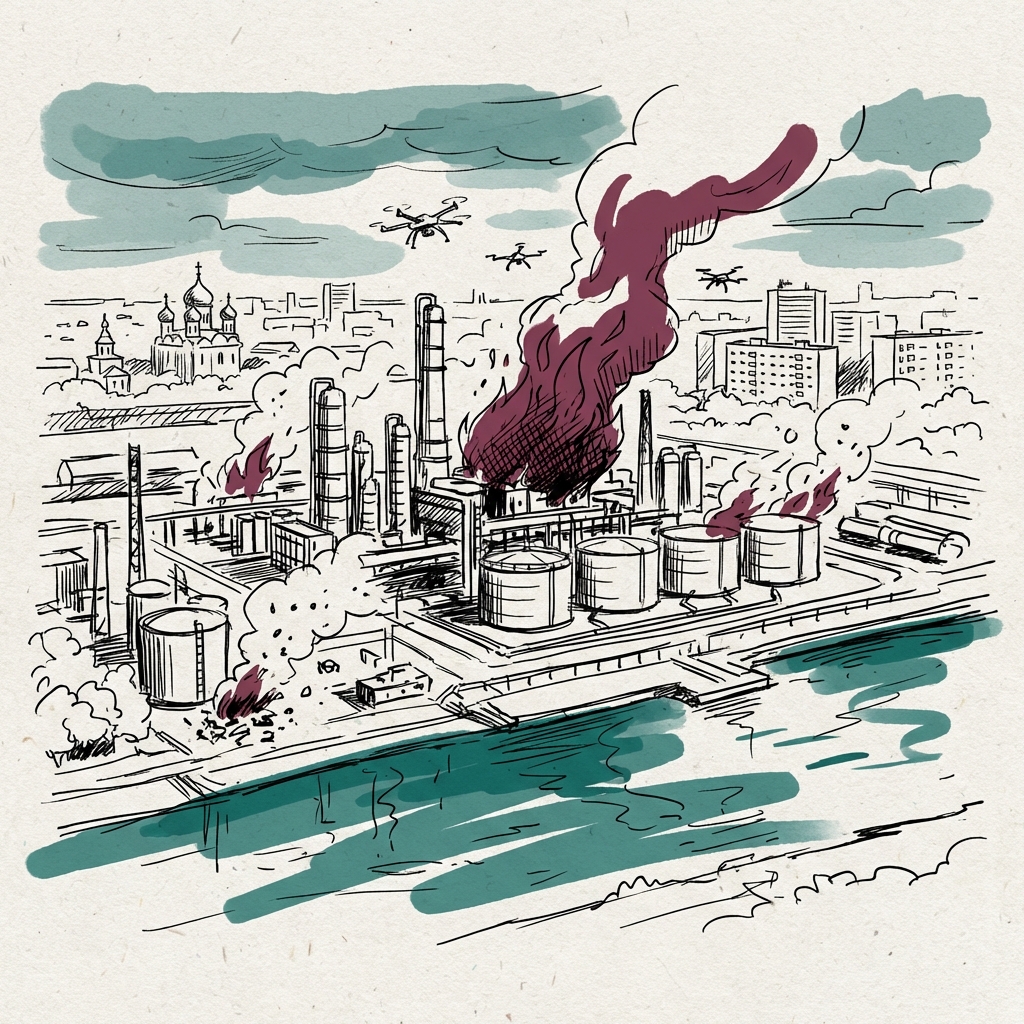
Volga city north-east of Moscow, home to the Slavneft-YANOS refinery, a Ukrainian drone target.
Defence Minister Yevhen Khmara counted Yaroslavl's YANOS refinery in October as one of the plants knocked out by Kyiv's drone campaign, after Ukraine struck it in March and again in May.
Last refreshed: 12 October 2026 · Appears in 1 active topic
Can the YANOS refinery recover between Ukrainian drone strikes?
Timeline for Yaroslavl
Mentioned in: Ukraine strikes Yandex AI data centres
Russia-Ukraine War 2026Mentioned in: Novak admits drones are cutting Russian oil
European Oil MarketsRubio signals end of Russian oil waivers
European Oil MarketsSyzran Hit, Quarter of Refining Halted
Russia-Ukraine War 2026Mentioned in: Russia bans gasoline exports to July
Russia-Ukraine War 2026Background
Yaroslavl is a city of about 600,000 people on the Volga, some 260km north-east of Moscow. It is home to Slavneft-YANOS, one of Russia's five largest oil refineries, which Rosneft and Gazprom control in equal shares through Slavneft.
The refinery has made the city a Ukrainian target. FP-1 attack drones struck YANOS on 28 March 2026, starting fires in at least three separate sections, and a child was killed in the city. Russia banned petrol exports from 1 April, with Yaroslavl among the refineries facing knock-on shutdowns, and on 20 May Reuters listed it among the central Russian refineries whose operations strikes had halted or reduced.
Its distance from the border shows the reach of Ukraine's long-range drones. A plant that sits closer to Moscow than to Ukraine has become part of the front line of the energy war.
Yaroslavl's refinery remains a repeat target
YANOS is one of the plants Kyiv counts when it measures its campaign. On 4 October Ukraine claimed its drones had disabled 51% of Russian oil refining, and Khmara named the Yaroslavl refinery among the sites behind the figure. The Associated Press could not verify the total.
The pattern of return strikes is aimed at repair crews as much as at the plant. YANOS was hit on 28 March and again in May. On 1 October Vladimir Putin conceded to the Valdai Discussion Club that Ukraine had partially damaged Russia's economy. His Decree 686 of 28 September then restricted public data on refinery output, so the state of the Yaroslavl plant can no longer be checked against official figures.
Moscow named Yaroslavl in its first admission
Yaroslavl gave Moscow its example when it first admitted the damage. On 4 June Deputy Prime Minister Alexander Novak acknowledged that Ukrainian drone strikes were reducing Russian oil output, and he cited the Yaroslavl refinery, a 300,000-barrel-a-day plant hit in May, as the named case.
The admission came as Russia widened export bans to protect the home market, adding jet fuel to petrol. It was the first time a senior Russian official tied lost output to a specific struck plant, and YANOS is one of the country's five largest.
Yaroslavl's refinery remains a repeat target
Has the Yaroslavl refinery been hit again in 2026?
Moscow named Yaroslavl in its first admission
Did Russia admit drone strikes cut its oil output?
Reference
Who owns the YANOS refinery?
What is the YANOS refinery and where is it?
How far is Yaroslavl from Ukraine?
Where is Yaroslavl Russia?
What is the YANOS refinery in Yaroslavl?
What share of Russian refining capacity has been hit by Ukrainian drones?
Was Yaroslavl attacked by Ukraine in 2026?

