University of Michigan
US research university providing solar storm forecasting models tested on Artemis II.
The University of Michigan deployed two solar storm forecasting models on Artemis II on 1 April 2026, the first live test of predictive models built to give astronauts up to 24 hours' warning before a dangerous radiation storm.
Last refreshed: 22 September 2026 · Appears in 5 active topics
Can Michigan's models give crews 24 hours' warning of a lethal solar storm?
Timeline for University of Michigan
Mentioned in: Jobless claims hit a 57-year low
AI: Jobs, Power & MoneyMentioned in: DOJ appeals its Michigan voter-file loss
US Midterms 2026Mentioned in: Mbappe penalty puts France in last eight
2026 FIFA World CupFaced a union demand to bar AI from employment decisions
AI: Jobs, Power & Money: California binds AI hiring, EU defersMentioned in: Resale Drops Below Face on 76 of 78 US Games
2026 FIFA World CupBackground
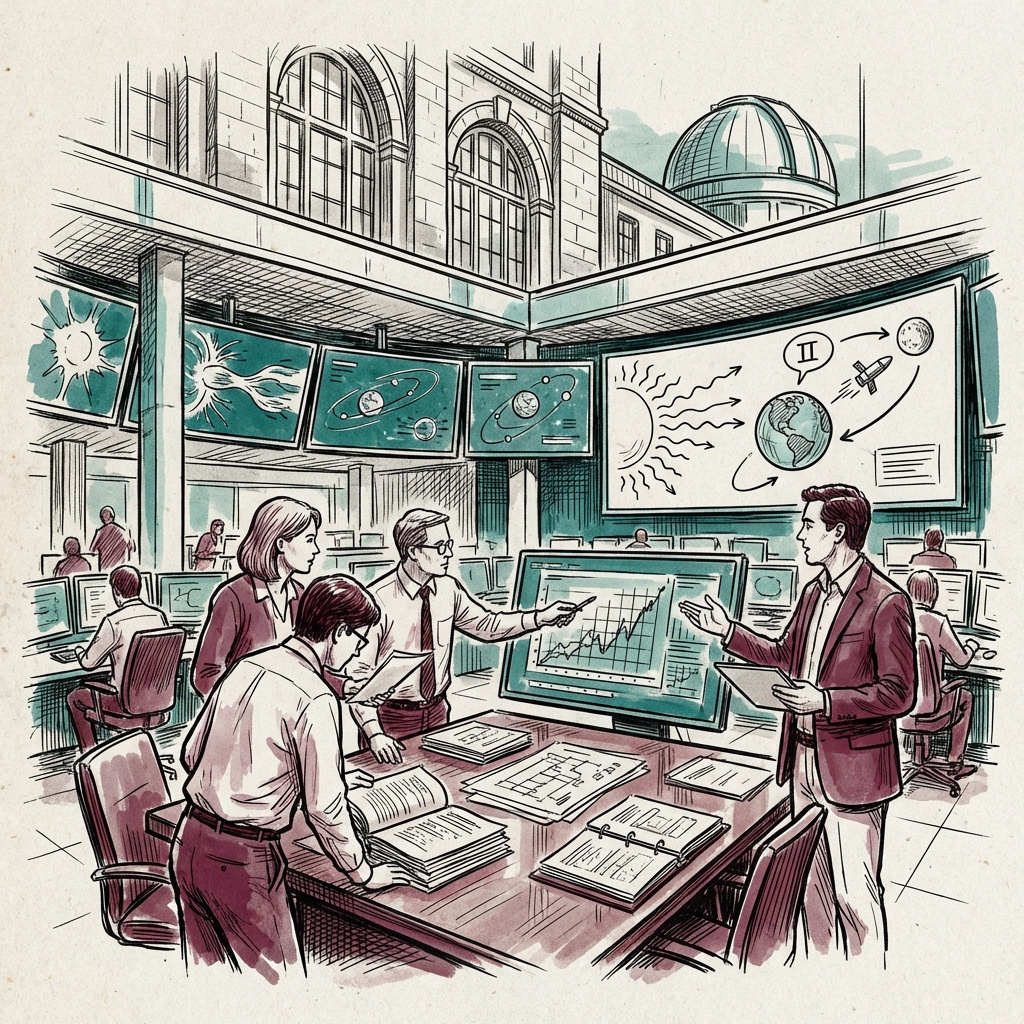
The University of Michigan is providing two solar storm forecasting models undergoing their first operational test during the Artemis II translunar transit. One model uses imagery from the SDO and SOHO spacecraft to generate daily solar particle event probability scores; the other is a physics-based simulation capable of issuing up to 24 hours' advance warning of a major storm, though it requires 3,000 processing units on a NASA supercomputer to run.
The University of Michigan is a major public research university in Ann Arbor, Michigan, consistently ranked among the world's top institutions for engineering and space Science. Its involvement in Artemis II centres on its Space Weather Laboratory, which has spent years developing predictive models for solar energetic particle events. The Artemis transit represents the first time humans have ventured FAR enough from Earth for these models to be tested in conditions that matter for CREW safety, rather than simulated scenarios.
Only the top 5% of solar particle events produce radiation exposure sufficient to cause nausea-level symptoms in unprotected CREW. The Michigan models aim to distinguish routine events from those requiring CREW shelter in Orion's storm shelter area. Success during Artemis II would validate the models for use on Artemis III and future Lunar Gateway rotations, where astronauts may be days away from emergency Earth return.
What is the University of Michigan doing on Artemis II?
How much warning can NASA get before a solar storm hits Artemis II?
What percentage of solar storms are dangerous to astronauts?
How do the Michigan solar storm models work?



