Tengiz
Giant Kazakh oilfield; Chevron's primary CPC export asset, implicated by Ukraine's Novorossiysk strike.
Last refreshed: 4 June 2026
With Tengiz production running through Russia, can Chevron actually insulate its biggest asset from the Ukraine war?
Timeline for Tengiz
Mentioned in: OPEC+ to vote barrels it can't pump
European Oil MarketsMentioned in: State Dept shields Chevron from Kyiv
Russia-Ukraine War 2026Background
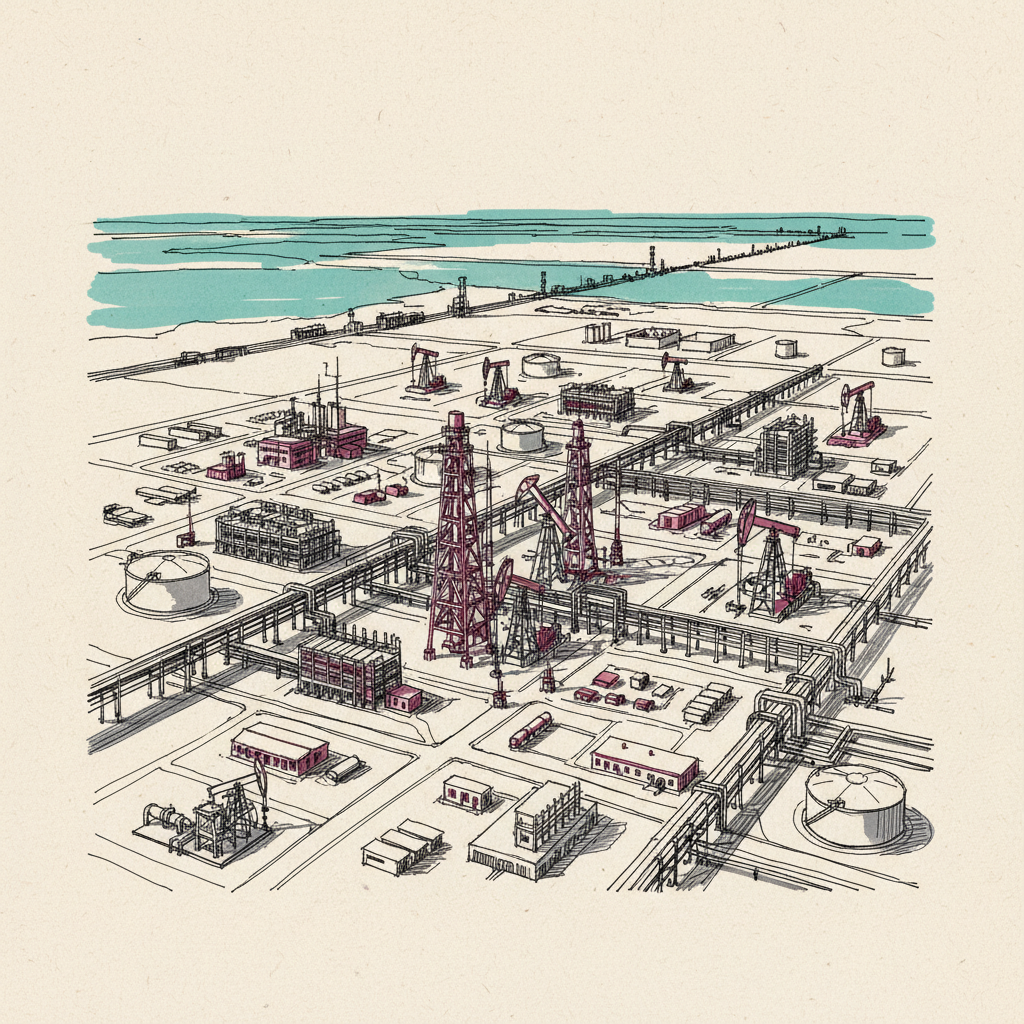
Tengiz is one of the world's largest producing oilfields, located in the Atyrau Region of western Kazakhstan and operated by Tengizchevroil (TCO), a joint venture in which Chevron holds a 50% stake, ExxonMobil 25%, KazMunayGas 20%, and LukArco 5%. Its crude reaches market almost exclusively through the Caspian Pipeline Consortium (CPC) pipeline to the Novorossiysk terminal on the Black Sea. The field was discovered in 1979 and Chevron acquired its stake in 1993 following a landmark deal with Kazakhstan at independence. At peak, Tengiz produces roughly 700,000 Barrels Per Day, placing it among Chevron's top five assets globally.
Ukraine's 6 April 2026 strike on the CPC terminal at Novorossiysk directly disrupted Tengiz export flows and prompted the US State Department to warn Kyiv off further attacks. The Tengiz production chain runs through Russia, placing Kazakhstan in an awkward position: Astana cannot export the bulk of its crude without Russian transit, regardless of its official neutrality in the Ukraine conflict. Chevron's 50% stake makes Tengiz a core US commercial interest.
In the European oil markets context, Tengiz is the primary driver of Kazakhstan's chronic OPEC+ quota over-compliance. As of June 2026, Kazakhstan was running 322kbd above its OPEC+ quota, almost entirely attributable to Tengiz CPC pipeline production that cannot be throttled without breaching TCO's joint-venture operating agreements. This structural over-production has been a persistent friction point within OPEC+ and is cited as one reason the cartel struggles to enforce collective discipline ahead of the 7 June 2026 ministerial meeting.
Why is Tengiz oilfield involved in the Ukraine war?
Who owns the Tengiz oilfield in Kazakhstan?
Why is Kazakhstan always over its OPEC+ quota?
What is the CPC pipeline and why does it matter for Tengiz?
How much does Tengiz produce per day?

