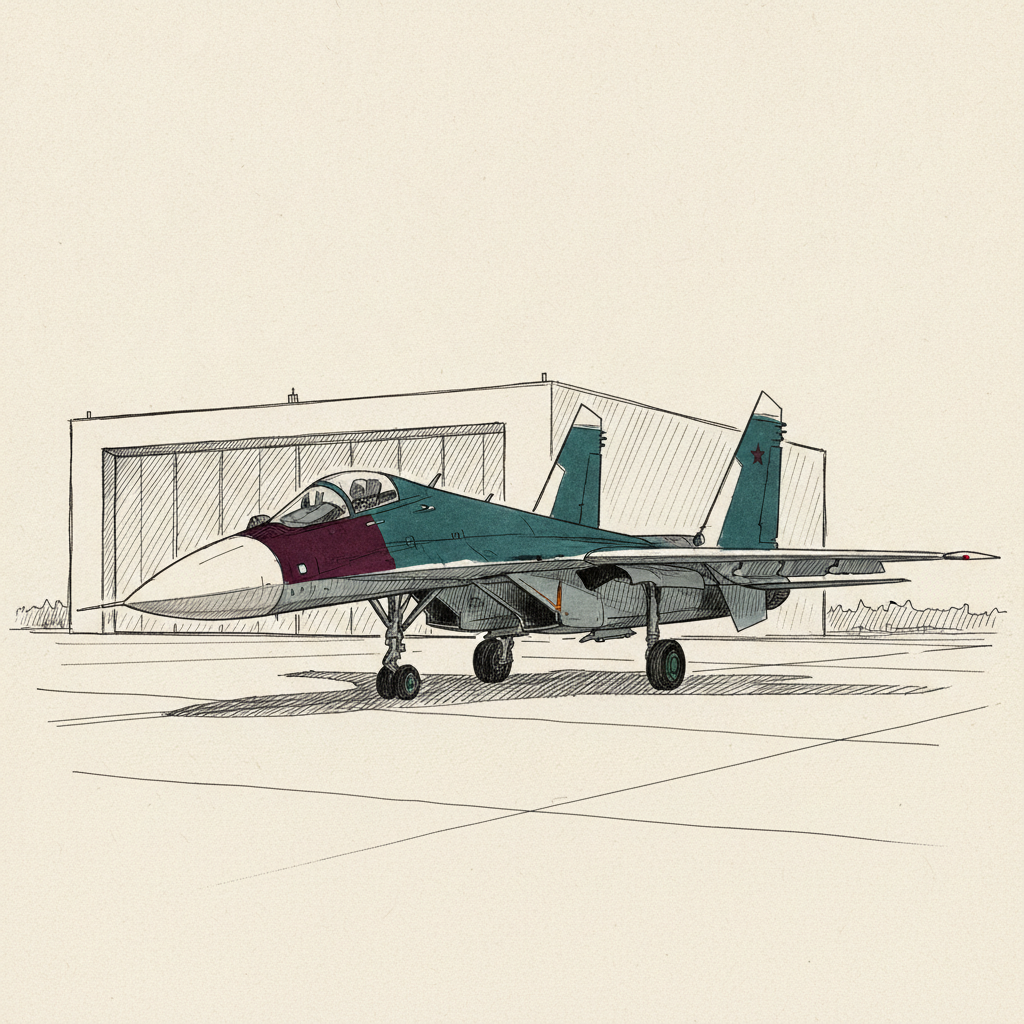
Sukhoi Su-34
Russian fighter-bomber and a main carrier of guided glide bombs.
Ukraine's General Staff said Neptune missiles damaged all six Su-34M fighter-bombers at Borisoglebsk air base before 15 October 2026; Reuters verified destruction at the airfield but not the aircraft claim.
Last refreshed: 18 October 2026 · Appears in 1 active topic
Can Ukraine ground the Su-34s that drop glide bombs on its cities?
Timeline for Sukhoi Su-34
Kyiv ends energy truce, hits Ryazan refinery
Russia-Ukraine War 2026Background
The Sukhoi Su-34 is a Russian two-seat fighter-bomber whose crew sit side by side. It is built at the Chkalov Novosibirsk Aviation Plant, first flew in 1990 and entered Russian service in 2014. The upgraded Su-34M followed from 2022.
In the war in Ukraine it is a main carrier of glide bombs fitted with UMPK guidance kits. Released 50-60km from their targets, the bombs keep the aircraft outside the range of most Ukrainian air defences, which makes the type central to Russia's pressure on front-line towns.
That role makes its bases a priority target. In October 2026 Kyiv claimed six Su-34Ms damaged in a single missile strike on an air base in Voronezh region.
Su-34s lose safety on the ground
Before dawn on 15 October 2026 Ukraine fired Neptune missiles at Borisoglebsk, a Russian air base that housed six Su-34M aircraft. The General Staff said all six suffered "damage of varying degrees". Satellite pictures from that day, checked by Reuters, showed a damaged airfield, though Reuters could not confirm harm to the jets themselves.
For the Su-34 force this is a reach problem. The jets release glide bombs 50-60km from their targets, beyond most Ukrainian air defences, so their bases are where Kyiv can hit them. The stakes are concrete: glide bombs killed 23 people in a Zaporizhzhia apartment block on 10 October.
What is the Su-34 used for in Ukraine?
How many Su-34s did Ukraine hit at Borisoglebsk?






Written with AI from Lowdown's published reporting. Not individually reviewed by an editor. Updated 18 October 2026. Editorial standards.