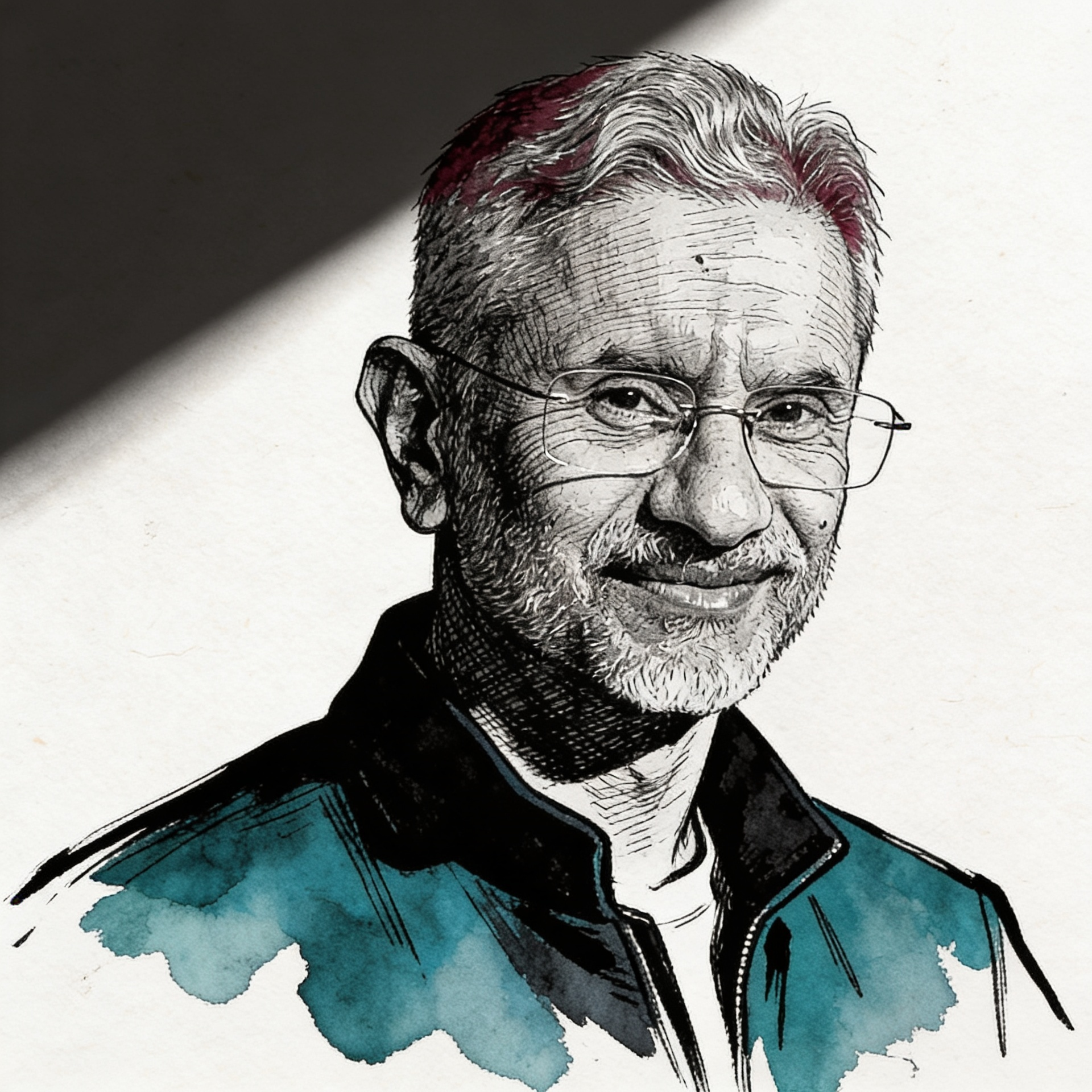
Subrahmanyam Jaishankar
India's External Affairs Minister; chaired the 14-15 May 2026 BRICS foreign ministers meeting hosting Araghchi and Lavrov.
Last refreshed: 28 July 2026 · Appears in 1 active topic
Why is India hosting Iran and Russia while Trump meets Xi, and what does Delhi want from both?
Timeline for Subrahmanyam Jaishankar
Phoned Secretary of State Rubio on 13 June to lodge a strong protest over the MT Settebello strike
Iran Conflict 2026: India takes Settebello deaths to G7Received Araghchi's Hormuz passage disclosure on BRICS Delhi sidelines
Iran Conflict 2026: Araghchi tells Jaishankar Iran guides Indian shipsChaired BRICS Delhi meeting that ended without joint declaration
Iran Conflict 2026: UAE blocks BRICS Iran statement after Gulf drone strikesChaired the BRICS Foreign Ministers meeting in Delhi on 14-15 May
Iran Conflict 2026: Araghchi flies to Delhi as Minab168Co-hosted the BRICS foreign ministers meeting in New Delhi, providing India's diplomatic platform for Iran to build non-Western backing
Iran Conflict 2026: Araghchi flies to BRICS Delhi 14-15 MayBackground
Subrahmanyam Jaishankar has been India's External Affairs Minister since 2019, a veteran diplomat WHO served as Foreign Secretary and as India's ambassador to the United States and China. On 14-15 May 2026, he chaired the BRICS foreign ministers meeting in New Delhi, a session that brought together Iran's Abbas Araghchi and Russia's Sergey Lavrov on the same two days that Donald Trump was meeting Xi Jinping in Beijing. Jaishankar has held four high-level calls with Araghchi since the Iran war began on 28 February.
India's position in the Iran conflict is shaped by three direct material interests: stable crude supply (India is one of Iran's largest oil buyers), the safety of Indian crews on Iranian-routed tankers, and Indian firms named in prior OFAC designations for trading with Iran. These interests make India a less-than-reliable conduit for US pressure on Tehran, as Jaishankar's willingness to host Araghchi on the same days as the Trump-Xi summit demonstrates. India has historically maintained Strategic autonomy across great-power conflicts; the Delhi meeting is the BRICS institutional expression of that doctrine.
Jaishankar is a prolific Foreign Policy author and noted for his willingness to articulate India's Non-alignment in direct terms — his 2020 book 'The India Way' argued explicitly for multipolarity and hedging across blocs. His chairing of the Delhi BRICS session gives Iran a non-Western multilateral platform at precisely the moment the US is attempting to use the Trump-Xi summit to convert China into a pressure lever on Tehran.
On 15 May 2026 — the second day of the BRICS foreign ministers' session he was chairing — Jaishankar met Iranian Foreign Minister Araghchi bilaterally in New Delhi. In that meeting Araghchi confirmed that approximately 13 Indian-flagged vessels were queued at Hormuz, that Iranian military personnel were guiding already-cleared ships through mine and obstacle zones, and that Iran and Oman had opened maritime security consultations. Araghchi also disclosed to Jaishankar that Iran had given India bilateral guidance — the first public confirmation of a state-specific Iran passage briefing disclosed outside the Iranian or Indian official record.
The disclosure matters because it confirms India's de facto participation in Iran's bilateral guided-passage system: Indian flagged vessels are not paying PGSA yuan tolls but are instead in the state-to-state track, where Iran accepts political engagement in lieu. Jaishankar's receipt of this briefing from Araghchi places India on record as a participant in the bilateral guidance architecture without formal endorsement.
The BRICS session Jaishankar chaired ended without a joint declaration on the Iran conflict; India-as-chair issued a Chair's Statement only, reflecting the Iran-UAE deadlock over competing condemnation clauses. Jaishankar has now held five documented high-level contacts with Araghchi since the war began.
Who is Subrahmanyam Jaishankar?
What is India's position on the Iran war in 2026?
Why is India hosting Iran's foreign minister while the US pressures Iran?
Who is Jaishankar and why is he involved in the Iran conflict?
What did Iran tell India about Hormuz at the May 2026 BRICS meeting?
Why is India involved in Iran's bilateral guided-passage system?
Did the BRICS foreign ministers' meeting in Delhi produce a joint statement on Iran?



