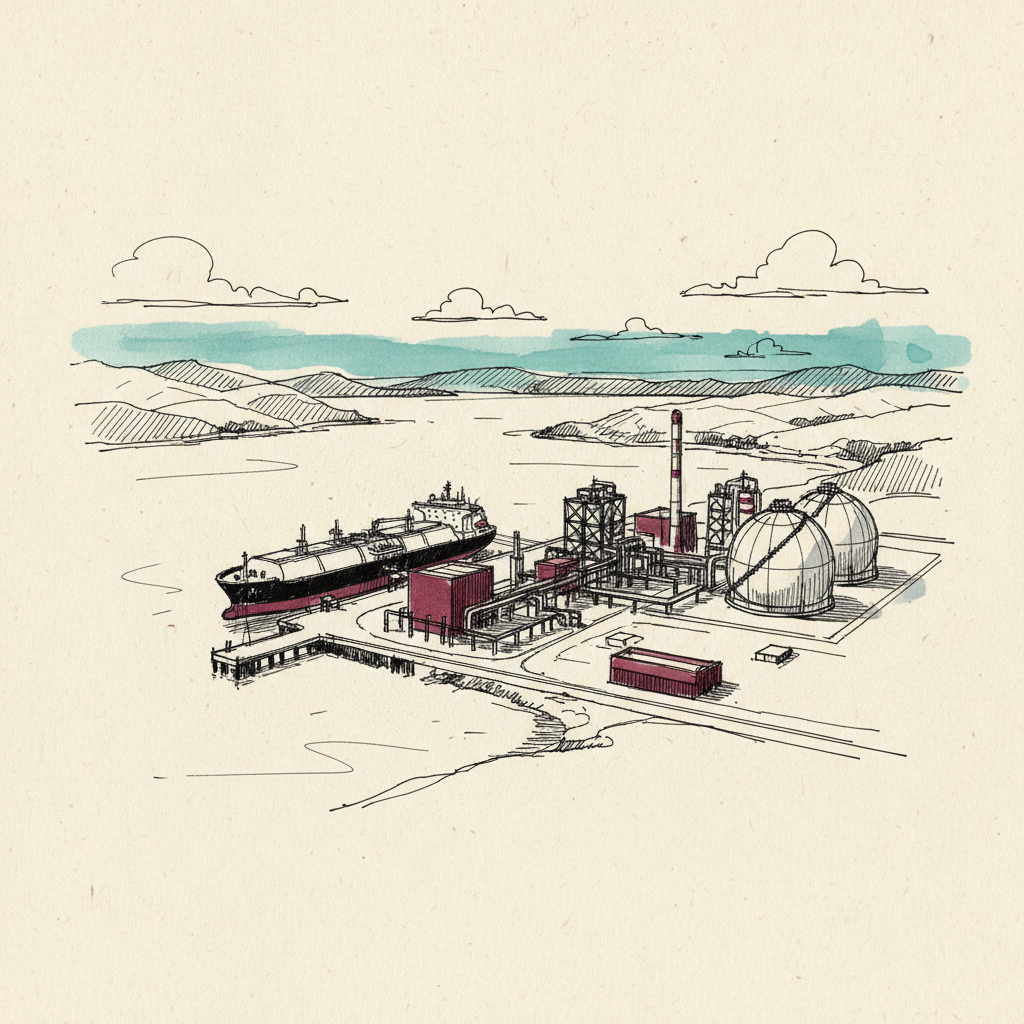
South Hook LNG
QatarEnergy-operated LNG import terminal in Milford Haven, Wales.
Last refreshed: 29 May 2026 · Appears in 1 active topic
Timeline for South Hook LNG
Mentioned in: TTF holds €46-47 range; NBP reaches parity
European Energy MarketsMentioned in: Central EU hub premiums top €2/MWh above TTF
European Energy MarketsBackground
South Hook LNG Terminal, located at Milford Haven in Pembrokeshire, Wales, is the largest LNG receiving terminal in Europe and a cornerstone of UK gas supply security. Owned by a joint venture of QatarEnergy (70%) and ExxonMobil (30%), it has a regasification capacity of 15.6 million tonnes per annum (mtpa) and can supply up to 21 bcm of natural gas annually into the UK's National Transmission System. A planned capacity expansion, targeted for completion by late 2025, was projected to raise total import capacity towards 20 mtpa. The terminal can meet approximately 25% of UK natural gas demand, making it the single most critical LNG import facility in Britain.
South Hook was built as the dedicated receiving terminal for the Qatargas II project, one of the largest integrated LNG ventures ever undertaken. The first cargo arrived in 2009. The terminal's ownership reflects the upstream supply chain: QatarEnergy and ExxonMobil hold equity in the Qatargas II liquefaction trains, with South Hook providing the guaranteed European landing point. This vertical integration has underpinned the UK's LNG import strategy for over 15 years.
As European energy markets restructured after Russia's invasion of Ukraine, South Hook's throughput became more critical to British energy security. The terminal also appears in the context of Iran-linked sanctions discussions, given QatarEnergy's position as Iran's neighbour and competitor in The Persian Gulf gas market. The UK's POST-Brexit energy security debate frequently references South Hook as the reason Britain is less exposed to Russian pipeline gas than most EU members.
Who owns South Hook LNG terminal in Wales?
How much of UK gas does South Hook supply?
Where is the South Hook LNG terminal located?
Why is South Hook LNG important to UK energy security?


