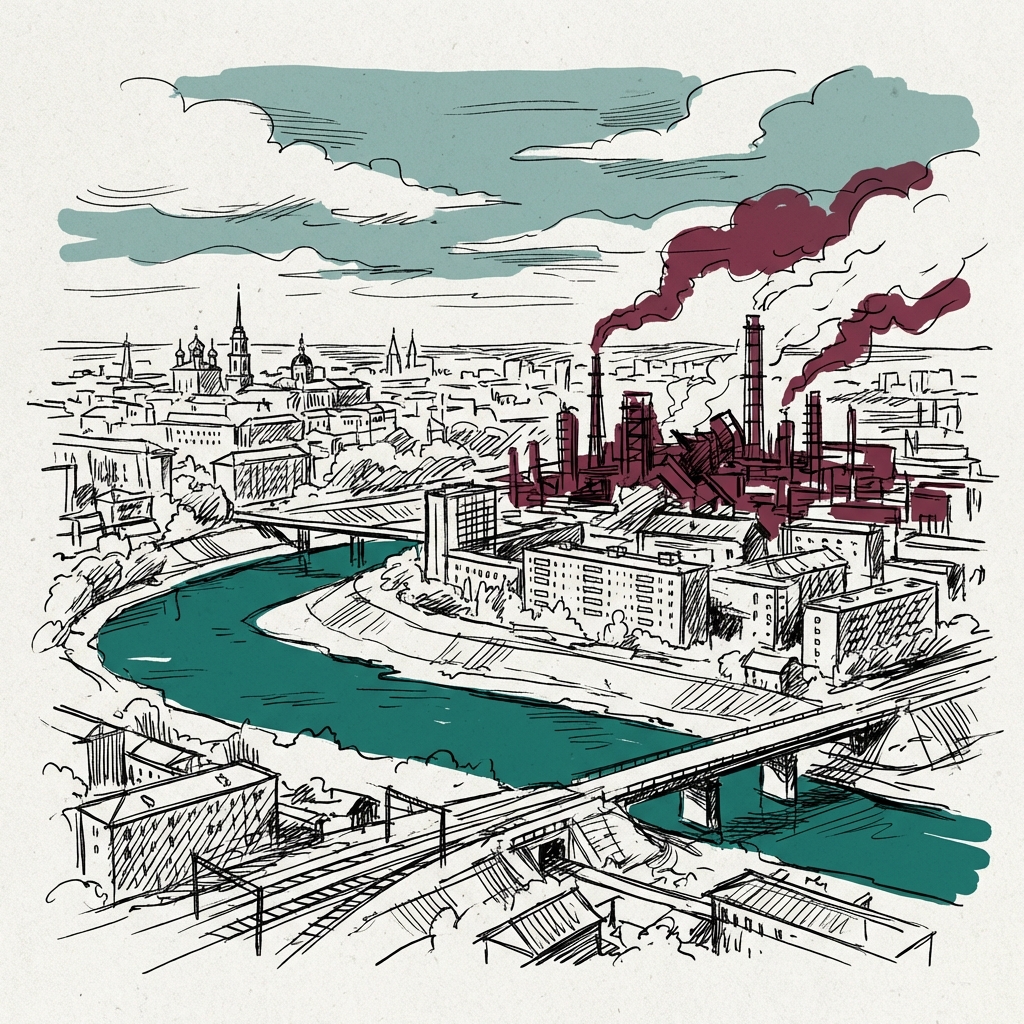
Ryazan
Russian regional capital south-east of Moscow, home to Rosneft's Ryazan oil refinery.
On 8 October Ryazan region lost the Sasovo data centre to a Ukrainian drone strike, which housed most of Yandex's AI-training computing power, widening the region's exposure from fuel to computing.
Last refreshed: 12 October 2026 · Appears in 1 active topic
How many of Ryazan region's sites are now on Ukraine's target list?
Timeline for Ryazan
Mentioned in: Ukraine strikes Yandex AI data centres
Russia-Ukraine War 2026Mentioned in: Syzran Hit, Quarter of Refining Halted
Russia-Ukraine War 2026Mentioned in: EU 20th package hits crypto and Kyrgyzstan
Russia-Ukraine War 2026Mentioned in: Russia bans gasoline exports to July
Russia-Ukraine War 2026Background
Ryazan is a regional capital of about 540,000 people some 200km south-east of Moscow. It is home to the Ryazan refinery, one of Russia's largest, which the state oil company Rosneft has owned since 2013.
Its closeness to Moscow and its refinery have put it within range of Ukraine's long-range drones since 2024. In 2026 the refinery was among the central Russian plants whose operations Ukrainian strikes halted or cut.
The region's exposure widened beyond fuel in October 2026, when drones hit the Yandex data centre at Sasovo, home to two of the company's three AI-training supercomputers. Ryazan region now holds two kinds of strategic asset, energy and computing, that Kyiv treats as legitimate targets.
The region's target list now includes computing
Ryazan region entered a new category of target on 8 October. Ukrainian drones knocked out the Yandex data centre at Sasovo, which housed two of the three supercomputers the company uses to train artificial intelligence models. Volodymyr Zelenskyy called it a mirror response.
The strike came days after Kyiv claimed on 4 October that its drones had disabled 51% of Russian oil refining, a figure the Associated Press could not verify. Until Sasovo, Ryazan's exposure in the war had been its Rosneft refinery. A data centre is a different kind of target: it tests whether civilian technology firms with links to the state are now fair game in Ukraine's long-range campaign.
Ryazan's refinery joined the central shutdowns
The Ryazan refinery felt the strike campaign through the spring. After Ust-Luga stopped taking fuel oil and petrol and the Kirishi refinery shut, Russia banned petrol exports from 1 April to 31 July, and refineries at Yaroslavl, Moscow and Ryazan faced knock-on shutdowns.
On 20 May Reuters reported that Ukrainian strikes had halted or reduced operations at nearly every major refinery in central Russia, Ryazan among them, alongside Kirishi, Moscow, Yaroslavl, Syzran and Kstovo. Ryazan was one of six named plants, the cluster that supplies Moscow and the central regions.
What is the Ryazan refinery?
Was the Ryazan refinery attacked?
Why did Russia ban gasoline exports in 2026?
How far is Ryazan from the Ukraine border?
Why does Ukraine target inland Russian refineries?
What did Ukraine hit in Ryazan region in October 2026?

