Regulation (EU) 2026/261
EU regulation banning short-term Russian pipeline gas imports; took legal effect 17 June 2026.
Last refreshed: 3 July 2026 · Appears in 3 active topics
Does the June 2026 pipeline ban actually stop Russian gas entering the EU?
Timeline for Regulation (EU) 2026/261
Mentioned in: Klungkung charges to reach Nusa Penida
Nomads & CommunitiesTook effect on 18 March 2026, banning short-term Russian pipeline and LNG imports
European Energy Markets: ACER says the Russian-gas ban has not bittenMentioned in: Where the 2027 Russian-gas repricing sits
European Energy MarketsThe ban's own text makes it porous
European Energy MarketsSlovakia loses CJEU stay on ban
European Energy MarketsBackground
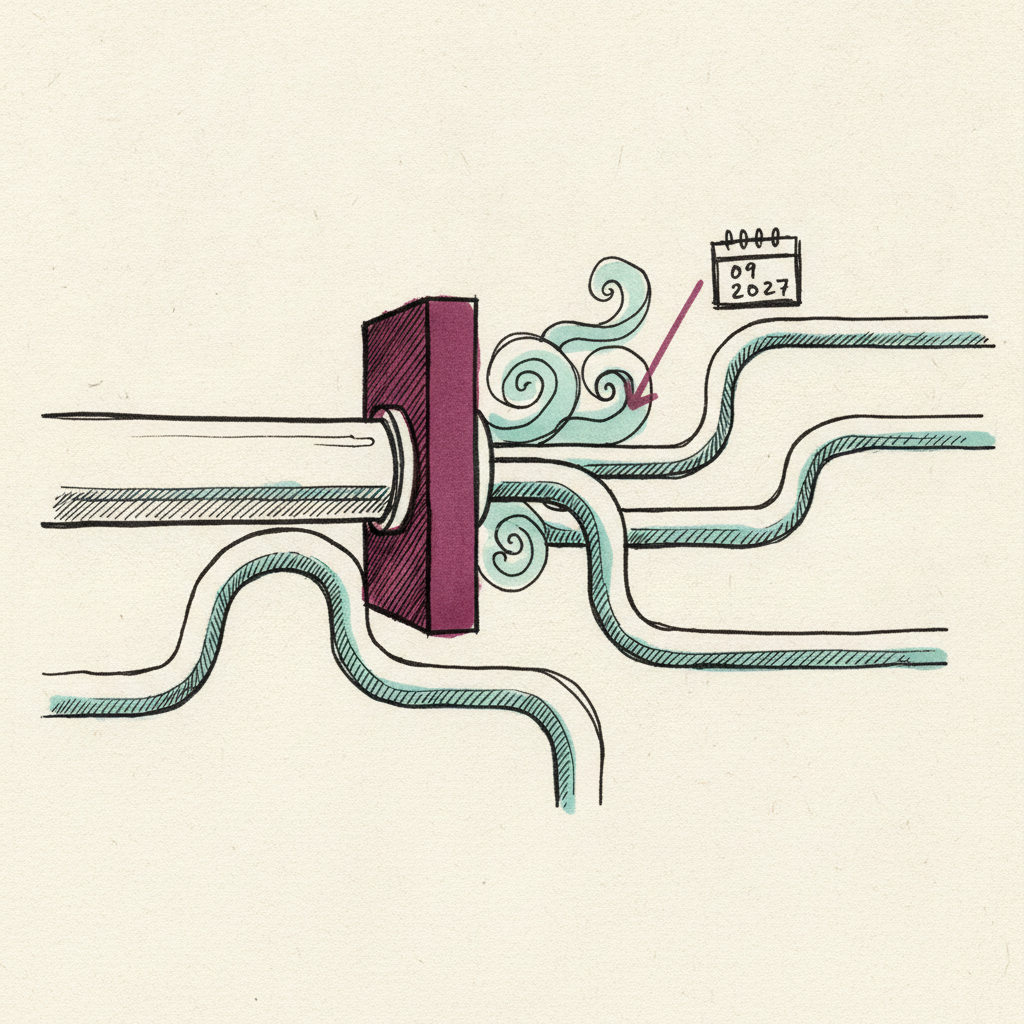
Regulation (EU) 2026/261 is the European Union's primary legal instrument prohibiting short-term pipeline natural gas imports from Russia. It bound on 17 June 2026 for contracts concluded before 17 June 2025, while exempting long-term contracts until 30 September 2027. The observed market reaction to binding was muted: TTF settled at €41.12/MWh, extending its sub-€46 slide rather than spiking, and no CJEU interim stay materialised for Slovakia. CEGH day-ahead widened to €1.62/MWh above TTF on 17 June as a one-session supply-uncertainty premium, then compressed back toward flat on 18 June, confirming the widening as transient rather than structural.
The regulation's enforcement architecture is narrower than its headline date suggests. Long-term contracts account for the bulk of TurkStream physical flow into Central Europe, leaving that volume legally intact for fifteen months beyond binding. Implementing Decision (EU) 2026/335 further reduces scope by exempting six origins from prior authorisation. The BOTAS blend at the Kipi crossing, where Turkish-mixed gas enters the EU grid, represents the most significant porous gap in enforcement: origin determination at that point is technically contested, and the Commission has not yet issued definitive guidance. Slovakia is the sole live CJEU annulment Challenger after Hungary's Tisza government dropped its relief application; the case proceeds on the merits, a multi-year track.
The regulation is significant as the EU's first binding legal prohibition on Russian pipeline gas rather than a voluntary phase-down target. It establishes the enforcement framework that will determine whether the EU achieves pipeline-supply independence before the long-term contract exemption expires in autumn 2027. The muted price impact at binding suggests the market had already priced the ban's limited near-term reach, treating the long-term exemption window as structurally durable.
ACER's first mandated monitoring report, published 1 July 2026, confirmed that narrow reach: Russian gas still supplied roughly 12% of EU demand, with Russian LNG imports up 17% year-on-year and pipeline imports up 5% since the ban bound, against a 65% fall through Turkiye's Strandzha-1 entry point. The report mapped 45-55 bcm/year of contracts still running under exemptions until the full ban takes effect in November 2027.
What does EU Regulation 2026/261 actually ban from 17 June?
Why are long-term Russian gas contracts exempt from the EU ban until 2027?
Is Slovakia or Hungary challenging the EU Russian gas import ban in court?
What legal basis did the EU use to pass the pipeline gas ban?
Did the EU gas import ban actually take effect in June 2026?
Why did gas prices not rise when the EU Russian pipeline ban came into force?
What is the BOTAS blend loophole in the EU gas ban?
Did Regulation (EU) 2026/261 actually cut Russian gas imports?


Written with AI from Lowdown's published reporting. Not individually reviewed by an editor. Updated 3 July 2026. Editorial standards.