Protection and Indemnity (P&I)
Mutual marine insurance clubs that provide liability cover for shipowners, including war-risk exclusion provisions that suspend cover in designated high-risk zones.
Last refreshed: 25 June 2026 · Appears in 1 active topic
Why is P&I cover still withdrawn even as hull war-risk premiums fall back towards normal?
Timeline for Protection and Indemnity (P&I)
Mentioned in: First sailors die in the tanker war
Iran Conflict 2026Declined to reinstate war-risk cover until navigable channels are swept and the PGSA-OFAC conflict is resolved
Iran Conflict 2026: Insurers cut the price, not the riskMentioned in: Freight rate holds as Brent caves
European Oil MarketsMentioned in: War-risk cover sets a hidden cost floor
European Oil MarketsBackground
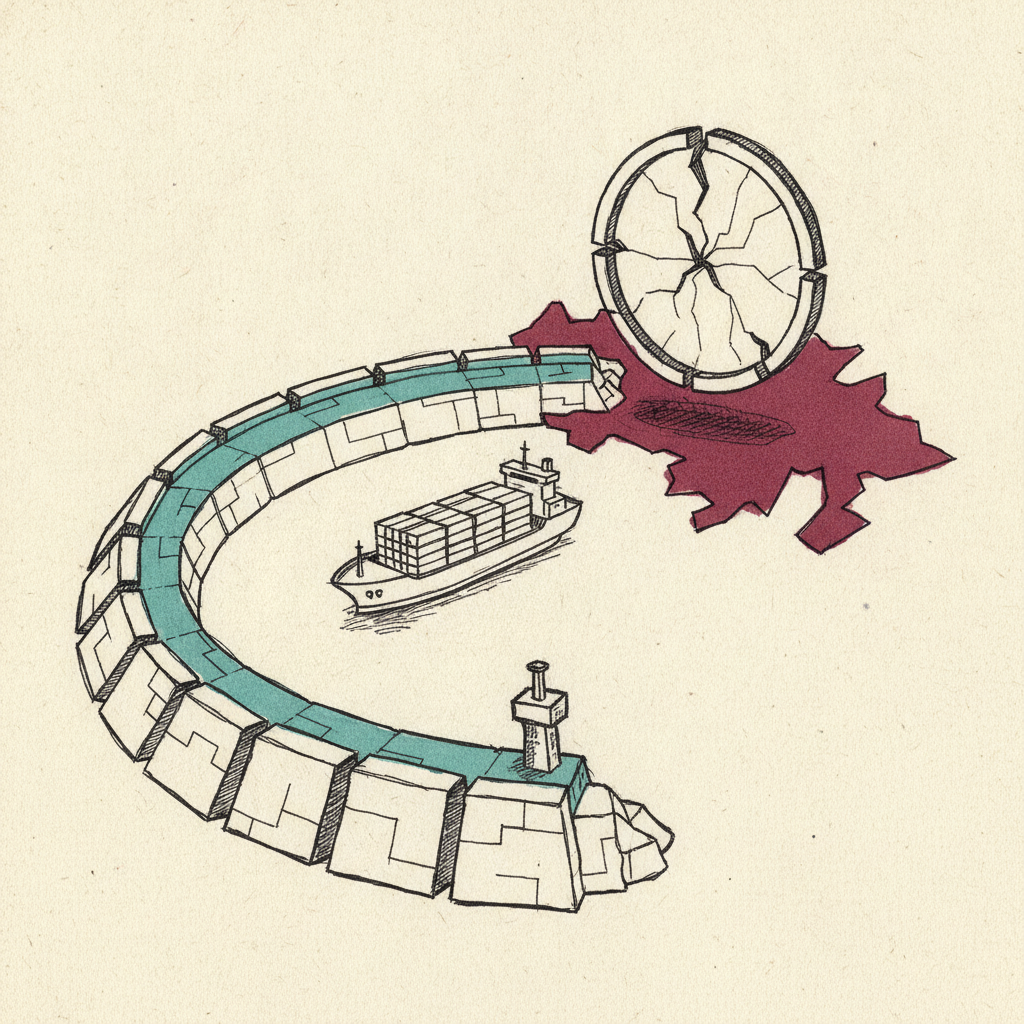
Protection and Indemnity clubs are the structural reason the Strait of Hormuz stayed closed to commercial shipping long after the Iran-US Ceasefire. P&I clubs are mutual non-profit associations owned by their shipowner members that provide third-party liability insurance — covering pollution, cargo loss, crew injury, and collision — alongside war-risk cover. In March 2026, Gard and NorthStandard — the two largest P&I clubs by tonnage — issued cancellation notices for Gulf, Hormuz, and Iranian waters effective midnight 5 March. Combined with three clubs that had withdrawn earlier in the week, every major P&I club cancelled war-risk cover, leaving more than 150 vessels at anchor in the Gulf of Oman with no legal basis to transit.
The thirteen leading P&I clubs are grouped in the International Group of P&I Clubs, which collectively insures roughly 90% of the world's oceangoing tonnage. The clubs are domiciled primarily in London, Oslo, and Luxembourg. Their war-risk exclusions are governed by the Institute War and Strikes Clauses and are separate from hull and machinery cover issued by Lloyd's and company market underwriters. Unlike hull insurers, P&I clubs underwrite pooled catastrophic risk across the entire Group; a major loss in Hormuz would be shared across the Group's reinsurance arrangement, which is why all clubs moved simultaneously once the first two acted.
By 25 June, London hull underwriters had halved war-risk premiums to roughly two per cent of vessel value — responding to the Islamabad memorandum — but P&I war-risk cover had not been reinstated. The distinction matters: a vessel can buy hull cover at the new lower rate but cannot sail without P&I liability cover. The DFC's reinsurance facility failed partly because it could not bridge the OFAC compliance gap that keeps London P&I clubs from accepting Iranian transit data. The P&I cover gap is the remaining structural bottleneck even as hull costs fall.