Plymouth
Devon port city whose naval economy is attracting new defence manufacturing investment.
Reform UK's group on Plymouth City Council lost two more members in September 2026, when Mark Hadfield and Andrew Crumplin moved to Restore Britain, a month after deputy group leader Carol Ney quit the party.
Last refreshed: 7 October 2026 · Appears in 2 active topics
Can Helsing's plant broaden Plymouth's naval and maritime economy?
Timeline for Plymouth
Mentioned in: Labour takes Hirst and Amble from Reform
UK Local Elections 2026Mentioned in: Three more of Reform's May intake quit
UK Local Elections 2026Mentioned in: UK weekly tech funding falls 72%
UK Startups and InnovationMentioned in: Oshen triples its ocean robot line
UK Startups and InnovationMentioned in: Farage wins Clacton back by 12,784 votes
UK Local Elections 2026Background
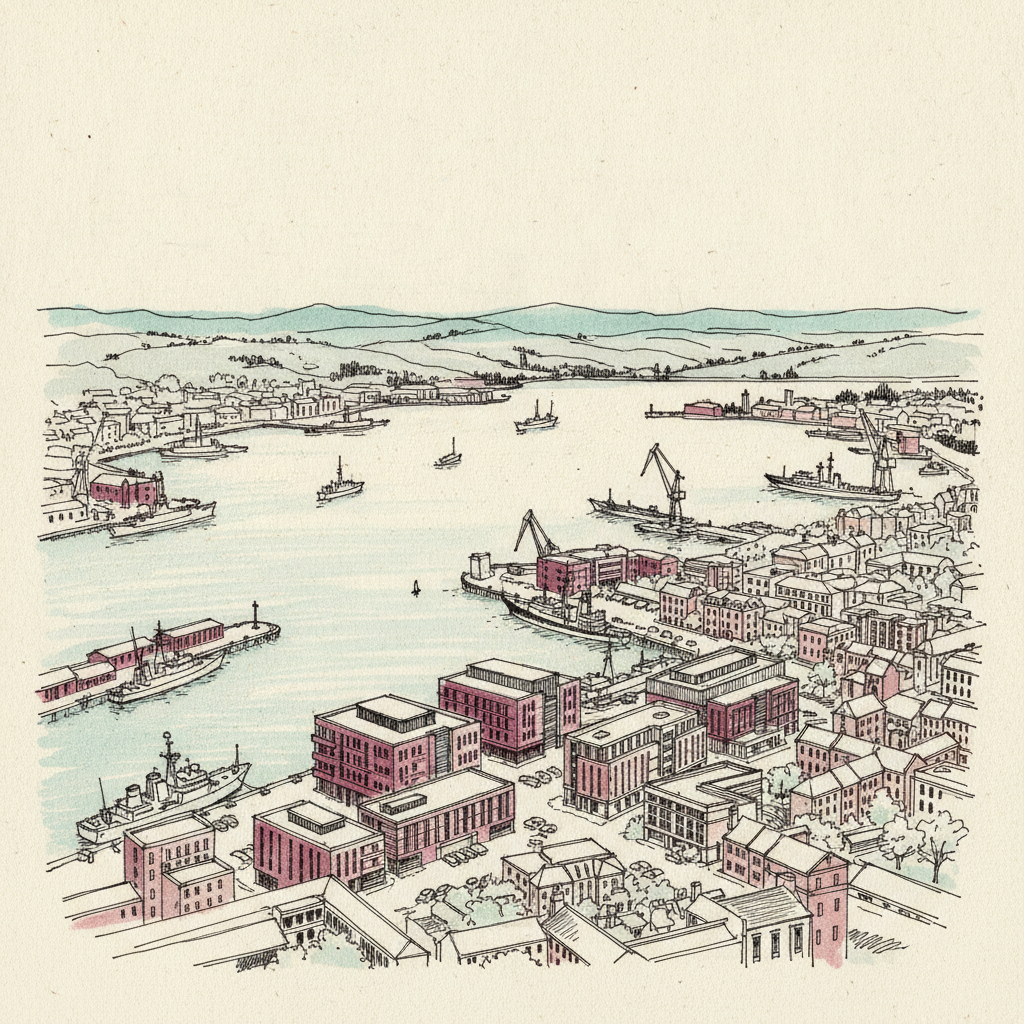
Plymouth is a port city on the south coast of Devon, governed by Plymouth City Council, a unitary authority. Its economy has long rested on the Royal Navy, with HMNB Devonport, one of Europe's largest naval bases, alongside maritime and Marine-technology firms.
That base now draws defence manufacturing. Helsing, the Munich-based defence company, said on 13 July 2026, after raising $1.8bn, that it would build a £350m plant in the city to make AI-guided underwater surveillance gliders. Local Marine robotics firm Oshen, with fewer than 30 staff, raised £3.65m in August in a round led by Lunar Ventures to triple output of its wind and solar powered C-Star ocean sensors, which it already sells to the Royal Navy, the US Navy and the Met Office.
Its politics have turned volatile since May 2026, as Reform UK's council group has split.
Reform's city council group keeps shrinking
Southway councillor Carol Ney walked out of Reform on 7 August 2026 after group leader Steve Ricketts declined to reprimand a colleague, Vanessa Tyler, over a Facebook post. Chris Sharpe stepped into the deputy post without a vote of the wider group, which council standing orders permit.
The drift continued in September, when Hadfield and Crumplin crossed to Restore Britain, half of the four such switches Mark Pack's tracker recorded nationally that month. A councillor who changes party keeps the seat, so none of these moves forces a by-election in Plymouth. They do leave Reform's local group smaller and riven within months of the May 2026 elections.
What type of local authority is Plymouth?
Who controls Plymouth City Council?
What is Helsing building in Plymouth?
Why is Plymouth important to the Royal Navy?
Where is Plymouth in Devon?


Written with AI from Lowdown's published reporting. Not individually reviewed by an editor. Updated 7 October 2026. Editorial standards.