Skip to content
You can now search across every topic, entity and event.What's new
UK Local Elections 2026
23AUG

Farage wins Clacton back by 12,784 votes

3 min read
19:09UTC

Nigel Farage polled 22,239 votes in Clacton on 13 August and beat a satirical candidate by 12,784, in a by-election five parties refused to fight.

PoliticsAssessed
Key takeaway

Farage retook Clacton by 12,784 votes against a satirical candidate, with no major party on the ballot.

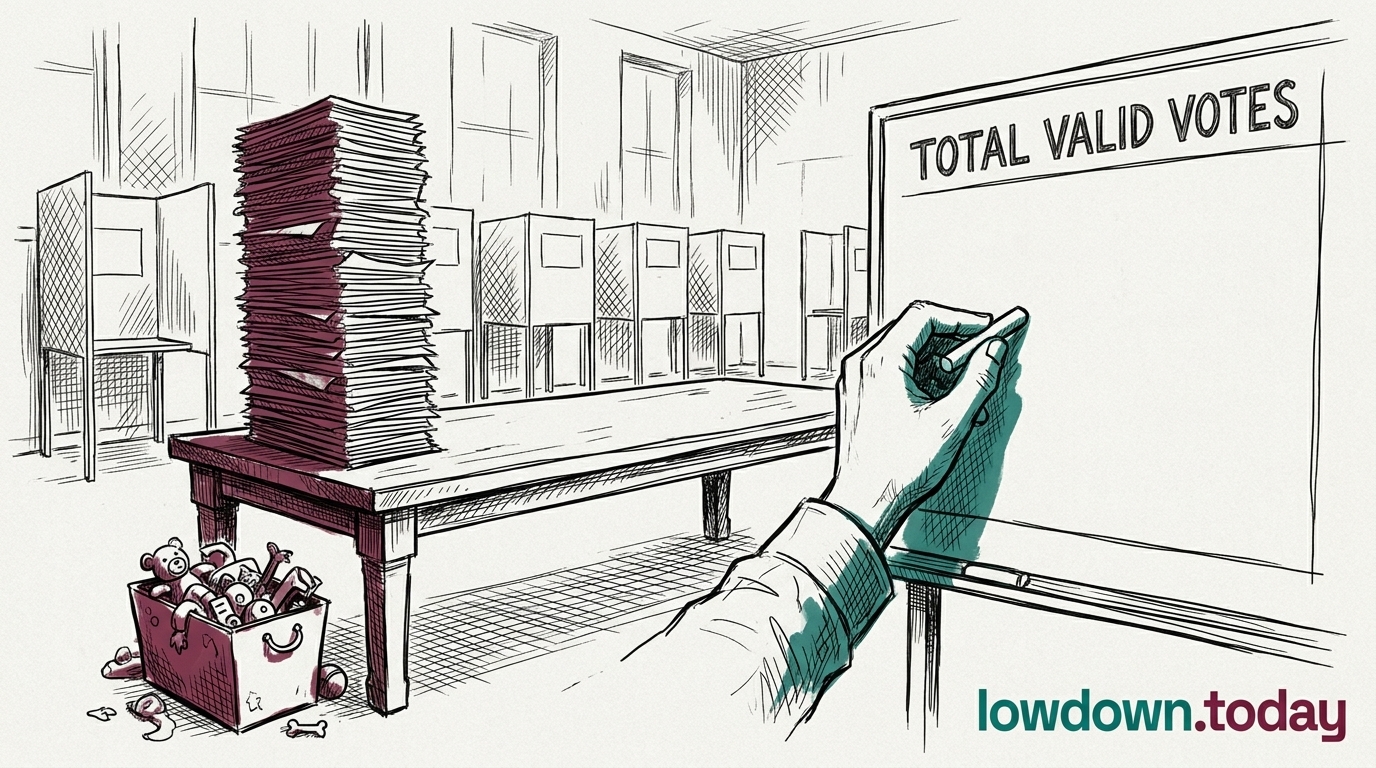
Nigel Farage took 22,239 votes at the Clacton by-election counted overnight on Thursday 13 August, finishing 12,784 ahead of the satirical candidate Count Binface on a turnout of 44.37% 1. Thirty-four names stood, the largest field recorded at a UK parliamentary election, and the other 32 candidates shared 3,417 votes between them.

Clacton is an Essex coastal seat that has returned Farage since July 2024. Every party with the machinery to campaign against him stayed off the paper: the Labour Party, the Conservative Party, the Liberal Democrats, the Green Party and Restore Britain all declined to stand . What remained on the ballot was one Reform UK name and 33 candidates with no national organisation behind them.

Ian Davidson, chief executive of Tendring District Council and the Acting Returning Officer, called it "an unusual and high-profile by-election" whose "record number of candidates" brought "additional practical challenges" 2. He had said on Tuesday 11 August that a paper that long would cost roughly four times a normal one . The field itself had been fixed when nominations closed on Friday 17 July .

Reform UK can point at an absolute figure and it is a real one: 22,239 people went out to vote for Farage in August, with no government at stake and no incumbent to remove. The night could not test how far past 22,239 that vote goes once a party campaigns against it. A contest the opposition declines to enter records the winner's supporters and nobody else's, which is why the four council wards fought over the same fortnight carry more information about the party's standing than the seat it won by 12,784.

Deep Analysis

In plain English

A by-election is a mini-election held to fill a parliamentary seat between general elections, usually because the sitting member of Parliament (MP) has resigned or died. Farage resigned his Clacton seat in July specifically so voters could re-elect him, a legal but unusual manoeuvre. Turnout of 44% means fewer than half of registered voters cast a ballot, well down on the 58.7% who voted in the 2024 general election for the same seat. By-elections almost always see lower turnout than general elections, because there is no chance of changing who governs the country, only who represents one seat. With Labour, the Conservatives, the Liberal Democrats and the Greens all declining to field a candidate, voters who wanted to register a protest against Farage had only smaller parties and independents to choose from. That helps explain both the record 34-name ballot paper and the size of his share of the vote that was cast.

Deep Analysis
Root Causes

Clacton was already Reform's safest seat, the one Farage represented after 2024, so this by-election tested loyalty in safe territory rather than converting a marginal.

Political scientists Karlheinz Reif and Hermann Schmitt described contests like this as 'second-order', driven less by the choice on offer than by whether voters see anything at stake. With no governing party on the ballot to punish, and no marginal outcome in play, the incentive that normally drives a protest vote against an incumbent was simply not present here.

What could happen next?
  • Meaning

    Clacton's headline share is as much a turnout artefact as a support figure, so it will not settle whether Reform's national vote is growing or merely holding.

First Reported In

Update #16 · Reform loses three wards, wins Clacton

Tendring District Council· 23 Aug 2026
Read original
Different Perspectives
Ian Davidson, Acting Returning Officer for Clacton
Davidson's office printed a 90cm ballot paper for the record 34-candidate field, with nothing in electoral law capping candidate numbers or the £500 deposit each pays. He expects the paper's size to raise printing costs and slow the count into the early hours, a strain that follows from the major parties' boycott, not from turnout.
Scottish Labour members
Members now choose between Michael Marra and Joe Fagan after Monica Lennon fell one MP nomination short of the three-MP, three-MSP threshold, a bar set by MPs and union officials rather than the wider membership. Whoever wins takes office having faced only one rival on the members' ballot.
Labour Party
Labour Party
Labour gained Penistone East from Reform on 20 August but lost Harraby South to Reform the same night, a wash that undercuts any claim of momentum. The party can point to beating Reform in a genuinely fought contest, but not to a pattern running only in its favour.
Liberal Democrats
Liberal Democrats
The Liberal Democrats took two of Reform's May wards, Almondbury on 13 August and St Neots Eynesbury on 20 August, the latter on a 29.8-point rise in their own vote share. Both results let the party claim it is the beneficiary when voters turn against Reform, not Labour or the Conservatives.
Reform UK
Reform UK
Reform UK can point to winning Clacton unopposed by the other major parties and to taking Harraby South from Labour, a ward it had never previously contested. That gives the party two results to cite even as three previously held wards changed hands elsewhere in August.
Sinn Féin
Sinn Féin
Sinn Féin's John O'Dowd ruled out a Stormont walkout on 11 August despite calling the DUP increasingly difficult to work with, closing a question Conor Murphy had left open a fortnight earlier. Only Sinn Féin or the DUP can collapse the joint First Minister office, so the denial gives up the party's own leverage in budget talks.