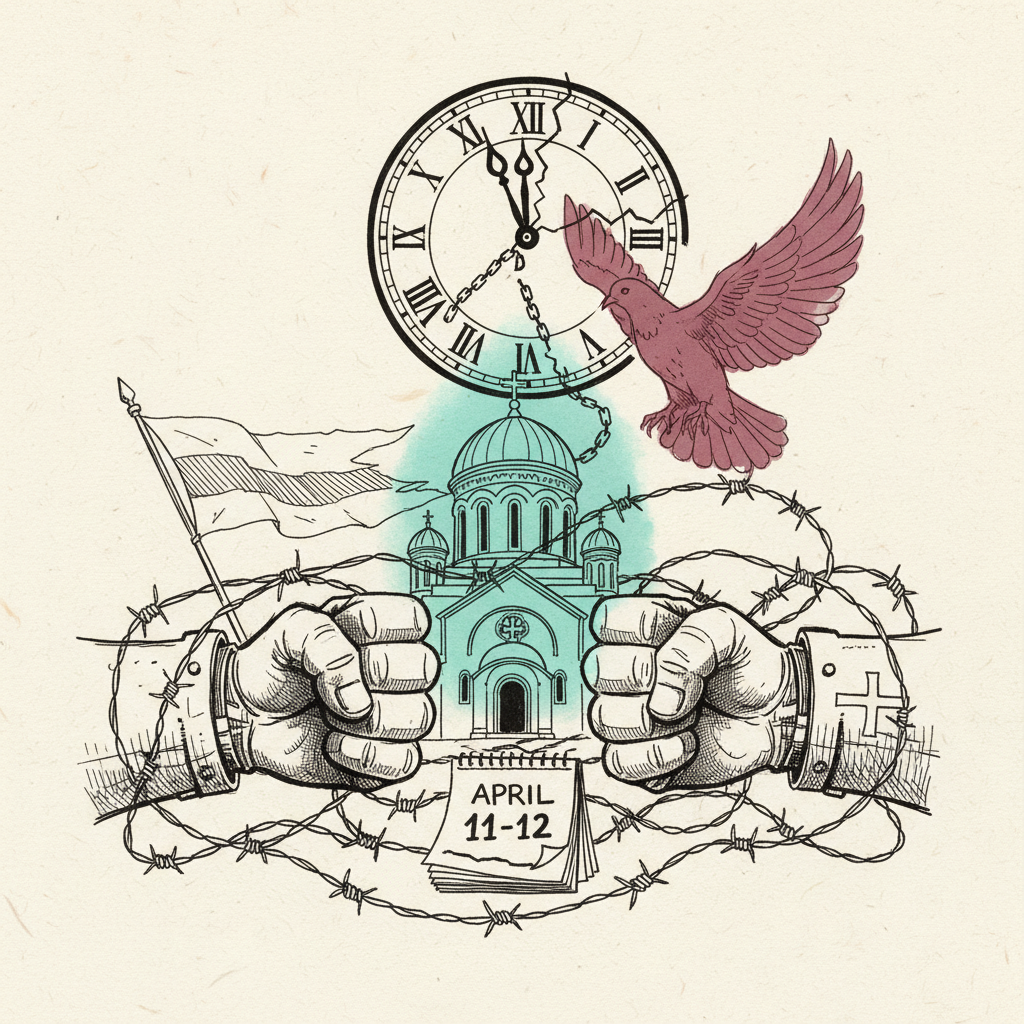
The Easter ceasefire coincides with Hungary's election; is it a military gesture or a Kremlin campaign contribution to Orbán?
Timeline for Orthodox Easter ceasefire
Mentioned in: Three Ukraine ceasefires collapse in eight days
Russia-Ukraine War 2026Expired at midnight 13 April without extension
Russia-Ukraine War 2026: Easter ceasefire expires; violation counts divergePutin calls solo 32-hour Easter truce
Russia-Ukraine War 2026Background
Putin issued a decree on 9 April 2026 declaring a 32-hour Orthodox Easter ceasefire, ordering Defence Minister Andrei Belousov and General Staff chief Valery Gerasimov to halt combat operations across all fronts from 16:00 Moscow time on 11 April until the end of 12 April. Zelenskyy accepted a reciprocal Ceasefire; Ukraine's Dnipropetrovsk regional governor reported two deaths and thirty Russian strikes on 10 April, the day before the Ceasefire formally began.
The Ceasefire was announced unilaterally without pre-arrangement with Washington; Kremlin spokesman Peskov told TASS no prior consultation with Trump had taken place, consistent with the published Kremlin calendar showing no US-Russia contacts 3 to 11 April. The Ceasefire's 32-hour window coincides exactly with Hungarian parliamentary polling day on 12 April, in which Viktor Orbán's Fidesz faces a challenge from Péter Magyar's Tisza Party. Orbán has run his campaign on keeping Hungary out of the Ukraine conflict; a quiet front on his election day provides a visual endorsement.
The 2025 Easter Ceasefire precedent is not encouraging: both sides accused the other of breaking it within hours. Russia declared a similar Easter Ceasefire in 2025; the IAEA and Ukrainian military recorded violations on both sides. The 2026 version is substantially longer (32 hours versus shorter previous pauses) and formally ordered through both the defence ministry and general staff chains.
Why did Russia announce a ceasefire in Ukraine for Easter 2026?
Did Ukraine agree to the Easter ceasefire in 2026?
Is the Russia Easter ceasefire connected to the Hungary election?


