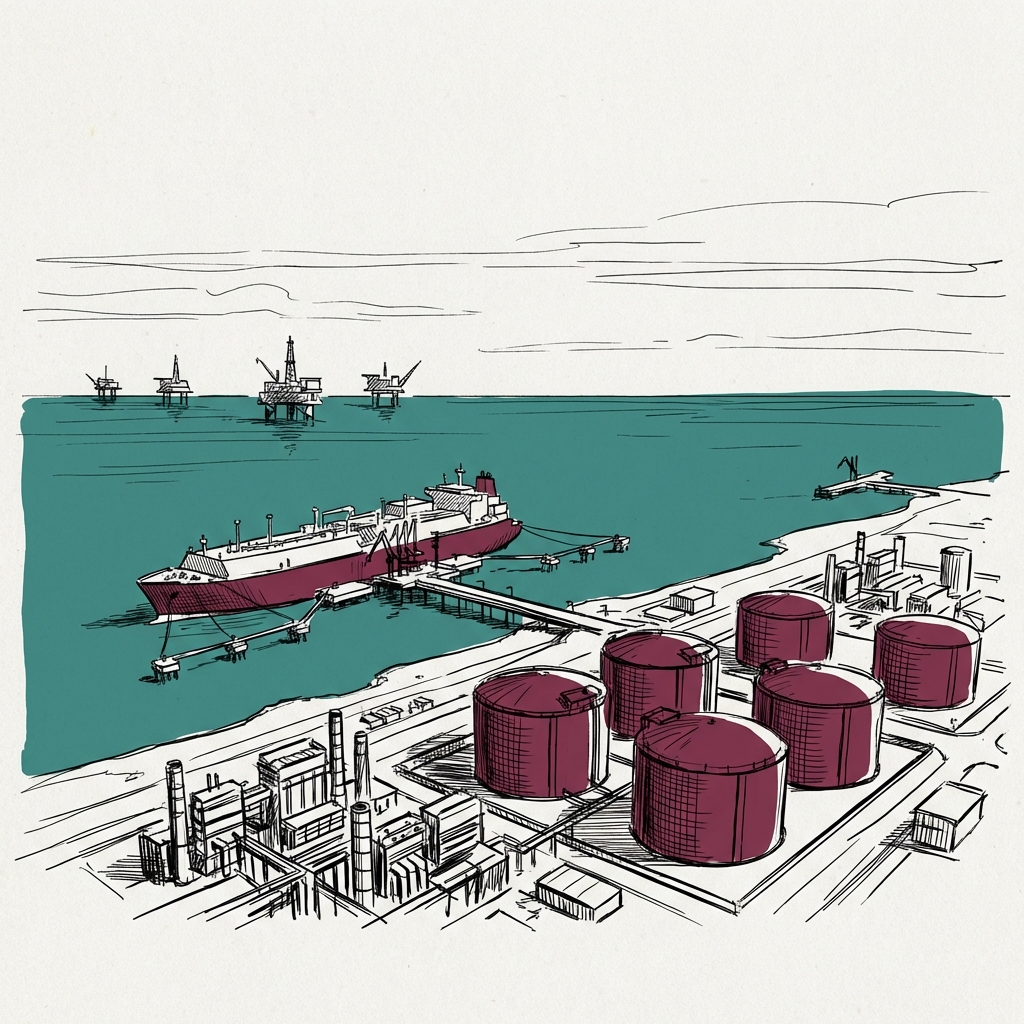
North Dome gas field
Qatar's half of the world's largest natural gas field, shared with Iran's South Pars; underpins all Qatari LNG exports.
On 6 April, an Israeli strike hit Iran's South Pars complex, the other half of the reservoir shared with Qatar's North Dome gas field.
Last refreshed: 22 October 2026 · Appears in 1 active topic
Why does an Israeli strike on Iran's South Pars also threaten Qatar's gas exports?
Timeline for North Dome gas field
Qatar says a defence partnership is near
Iran Conflict 2026Mentioned in: Israel claims 85% of Iran's chemicals
Iran Conflict 2026Mentioned in: Two Qatar LNG trains destroyed for good
Iran Conflict 2026Mentioned in: Qatar: $1bn US radar destroyed at Udeid
Iran Conflict 2026Mentioned in: Iran fires on Al Udeid, Gulf air hub
Iran Conflict 2026Background
North Dome is Qatar's portion of a giant offshore natural-gas reservoir in The Persian Gulf. Iran calls its portion South Pars. The geological structure crosses the maritime boundary, while each state develops its own side. QatarEnergy operates the Qatari field and sends its gas to Ras Laffan for processing and liquefaction.
The field underpins Qatar's LNG export system and therefore much of the state's revenue and international weight. Shared geology creates a long-term production relationship between the two halves. The offshore reservoir is distinct from the wells, pipelines, processing plants and liquefaction trains required to turn its gas into export cargoes.
The shared reservoir faces wartime risk
An Israeli strike hit the South Pars and Asaluyeh complex on 6 April. South Pars is Iran's half of the same geological reservoir Qatar calls North Dome, so damage on the Iranian side placed the shared field inside the war's target set.
The North Dome's gas reaches export markets through Ras Laffan. Two Qatari liquefaction trains were destroyed in March, removing 12.8 million tonnes of annual capacity for several years. The field itself remained productive, but damage downstream limited the amount of its gas Qatar could sell as LNG.
Reference
What is the North Dome gas field?
How much of the world's gas does Qatar's North Dome supply?
Is Qatar's North Dome gas field at risk from the Iran war?



Written with AI from Lowdown's published reporting. Not individually reviewed by an editor. Updated 22 October 2026. Editorial standards.