Mundra
India's largest private port in Gujarat; destination of IRGC-seized vessel Epaminondas, April 2026.
Last refreshed: 23 April 2026 · Appears in 1 active topic
An IRGC seizure en route to Mundra — how exposed is India's biggest port to the Hormuz standoff?
Timeline for Mundra
Mentioned in: India's Chabahar waiver lapses on Sunday
Iran Conflict 2026Mentioned in: India faces three Iran tracks, speaks on one
Iran Conflict 2026Mentioned in: IRGC boards three ships inside Hormuz
Iran Conflict 2026Background
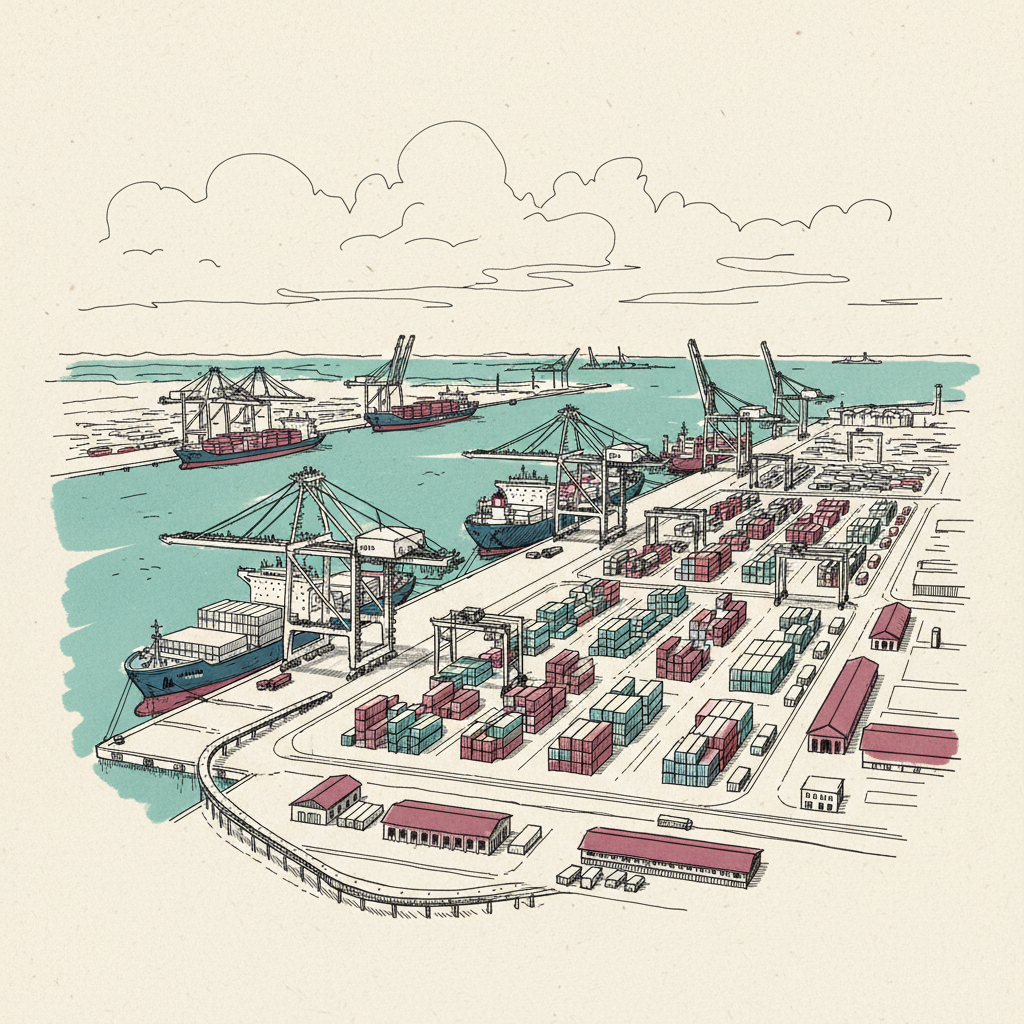
Mundra is India's largest private port, located on The Gulf of Kutch in Gujarat state, operated by Adani Ports and SEZ (APSEZ). It handles approximately 155 million metric tonnes per year and is the single largest port facility on India's west coast, serving as a primary gateway for Indian oil and container imports from The Gulf. The port has deep-water capacity for VLCCs and handles a significant share of India's crude oil imports from OPEC producers.
On 22 April 2026, the bulk carrier Epaminondas was seized by IRGC Naval Forces inside the strait of Hormuz while en route to Mundra with a cargo of iron ore, making it one of three vessels boarded by the IRGC that day. The seizure placed India directly in the escalation chain: an Indian-destined cargo, a vessel under international flag, taken by Iran while a Ceasefire nominally held. New Delhi's response was calibrated — summoning the Iranian ambassador without formal attribution.
Mundra's exposure to Hormuz disruption is structural. More than 60% of India's crude oil imports transit the strait, and Mundra is the primary receiving terminal. APSEZ has emergency diversification options via Paradip on the east coast, but redirecting VLCC traffic around the Cape of Good Hope adds 12-14 days to each voyage and significant cost. The Epaminondas seizure underlined that Indian supply chains face direct Iranian leverage regardless of New Delhi's non-aligned posture.
What is Mundra Port and who operates it?
Why was the Epaminondas ship seized and where was it going?
How does the Iran war affect Indian oil imports?



