MININT
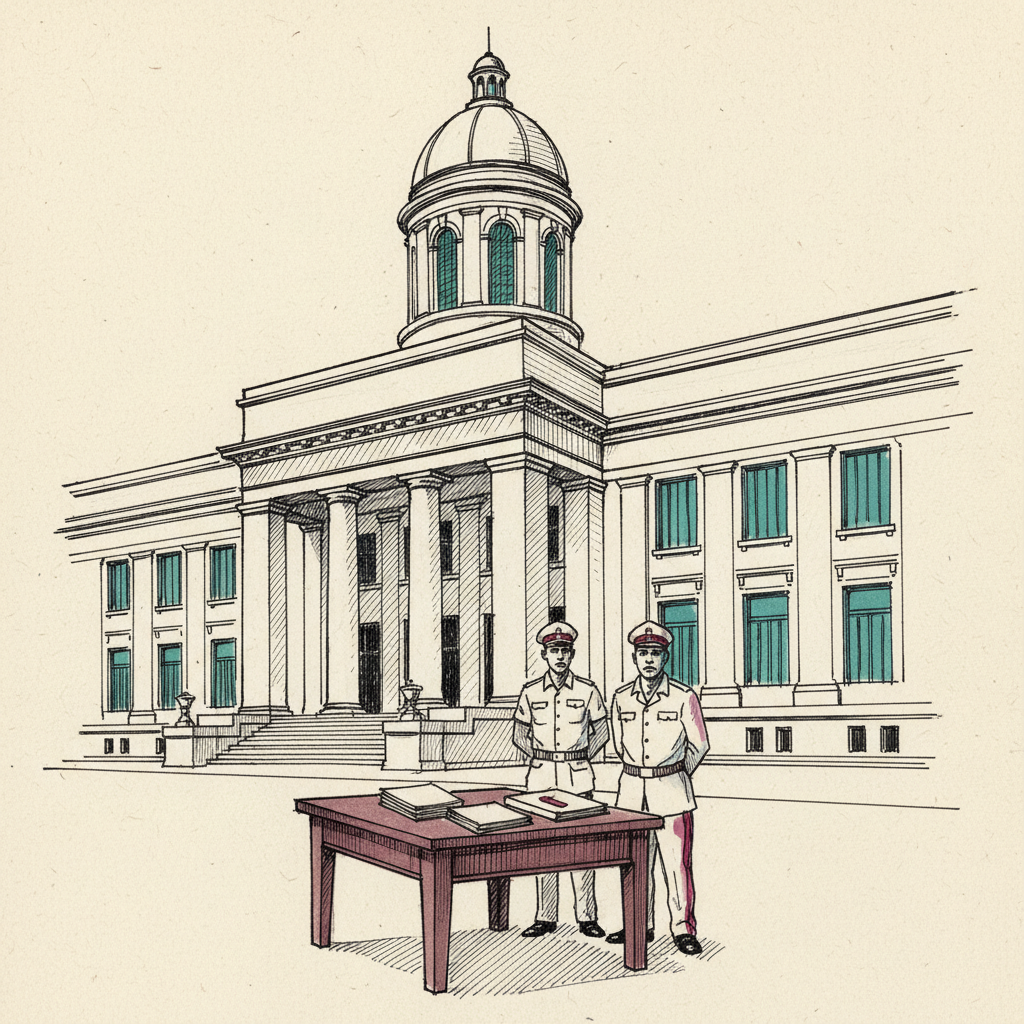
Cuba's Ministry of the Interior; designated under EO 14404; administers State Security and the island's record 1,281 political prisoners.
MININT is Cuba's Ministry of the Interior, running police, prisons and State Security; Prisoners Defenders' 9 July 2026 census recorded 1,306 political prisoners under its custody, up from 1,281 in June.
Last refreshed: 17 July 2026 · Appears in 1 active topic
What does the US designation of MININT mean for Cuba's political prisoners?
Timeline for MININT
Named alongside GAESA and MINFAR as a 50%-ownership trigger entity in FAQ 1258
Cuba Dispatch: Cuba's president lands on OFAC blacklistDesignated as SDN entity under EO 14404
Cuba Dispatch: Sanctions reach Cuba's ministries and partyBackground
MININT, the Ministerio del Interior, runs Cuba's entire internal-security apparatus: The National police, prison system, domestic intelligence, border control and the political surveillance units that bear directly on the treatment of dissidents. Founded in 1961 and modelled on the Soviet KGB, it has operated under Communist Party authority throughout its existence and controls State Security (DSE), the Arm that monitors, detains and interrogates critics of the government.
On 18 May 2026 the US State Department designated MININT under Executive Order 14404, naming it alongside the National Revolutionary Police and the Directorate of Intelligence as the three institutional cornerstones of Cuba's repression infrastructure, extending sanctions from the military conglomerate GAESA to the civilian security state itself. On 4 June 2026 OFAC's FAQ 1258 extended secondary-sanctions exposure to any entity in which MININT holds 50 per cent or more ownership, widening the designation's reach without separate SDN entries for each subsidiary.
Havana has rejected the designation as illegal extraterritorial coercion and offered no concession; the ministry holds no meaningful US-dollar assets, so Washington's move functions as a political signal rather than an immediately biting financial measure. MININT's custodial reach extends into the island's record political-prisoner numbers, making it the institutional throughline behind most Cuban detention cases.
What happened to Cuban activist Otero Alcántara in July 2026?
Does the US sanction on MININT actually freeze Cuban government assets?
What does Cuba's State Security (DSE) do?
Why did the US sanction Cuba's Ministry of the Interior?
What is MININT in Cuba?
How many political prisoners does Cuba currently have?


Written with AI from Lowdown's published reporting. Not individually reviewed by an editor. Updated 17 July 2026. Editorial standards.