How long does Mesa Arizona have before Colorado River water limits its data-centre growth?
Timeline for Mesa
Mentioned in: Cape Town approves five, names none
Data Centres: Boom and BacklashRanked fifth on 18-24 month connection windows and solar PPAs at $20-25/MWh
Data Centres: Boom and Backlash: Finland tops 2026 data centre siting rankingBackground
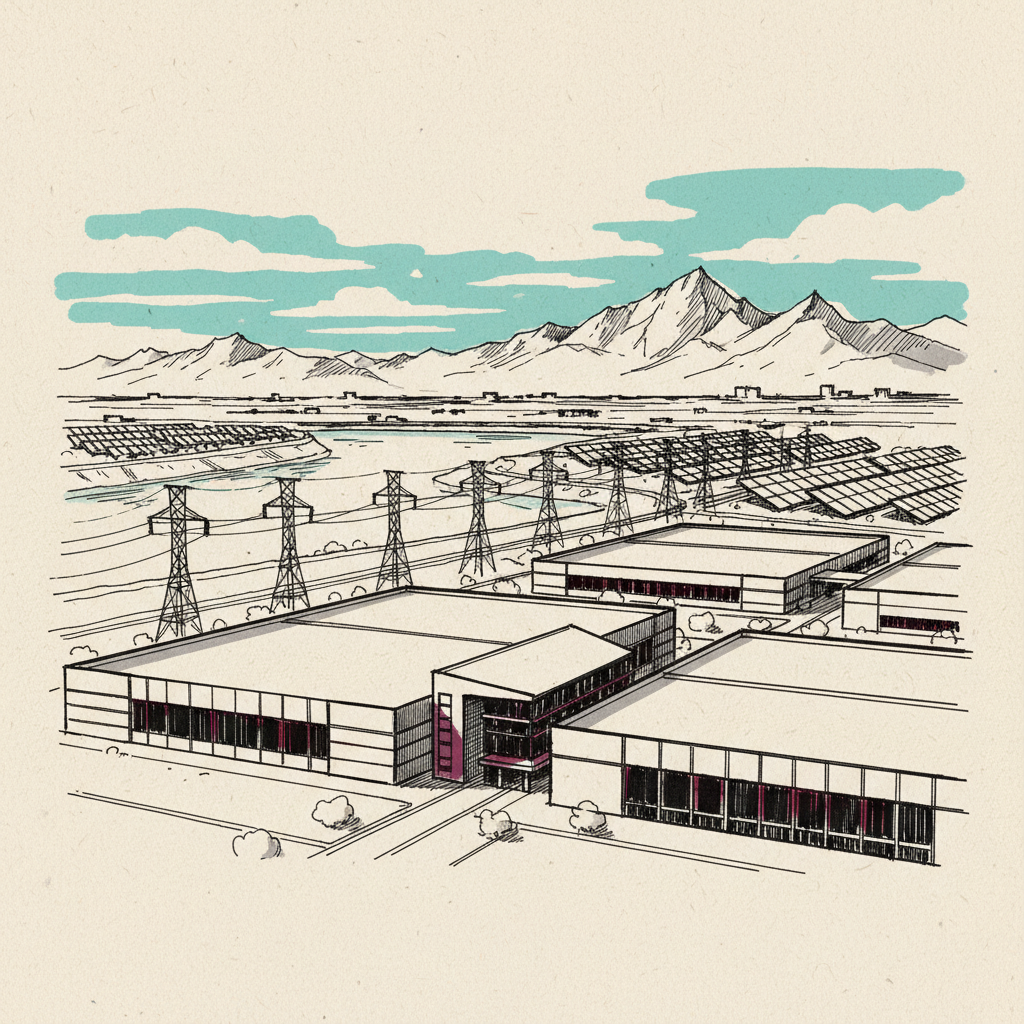
Mesa, Arizona ranks fifth on the global data-centre siting shortlist for 2026, behind Finland, West Texas, Aragón, and Abu Dhabi. APS (Arizona Public Service) and SRP (Salt River Project) — the two utilities serving the Phoenix metro area that includes Mesa — offer 18-24 month large-load connection windows against 36-48 months in Northern Virginia, with solar PPAs (Power Purchase Agreements) at $20-25/MWh, among the lowest utility-scale renewable prices in the US.
Mesa is a city of approximately 510,000 people in Maricopa County, immediately east of Phoenix. It is one of the fastest-growing large cities in the United States and hosts a significant concentration of data-centre operators, including Apple, Microsoft, and major colocation providers. The Phoenix metro area has attracted hyperscale investment for decades due to low land costs, business-friendly state regulation, and proximity to California fibre routes.
The medium-term threat is real: Phoenix sits at WRI "high" to "extremely high" baseline water stress, with Colorado River allocation cuts under active state review. Arizona's agricultural water rights, which partly subsidise industrial water use, are under federal and state pressure. A data-centre campus drawing cooling-tower water in Mesa is contributing to a basin-wide water stress problem that state and federal regulators are beginning to treat as a resource-allocation constraint rather than a permitting formality.
Why are data centres built in Mesa Arizona?
Will water shortages affect data centres in Mesa Arizona?
What major tech companies have data centres in Mesa Arizona?
