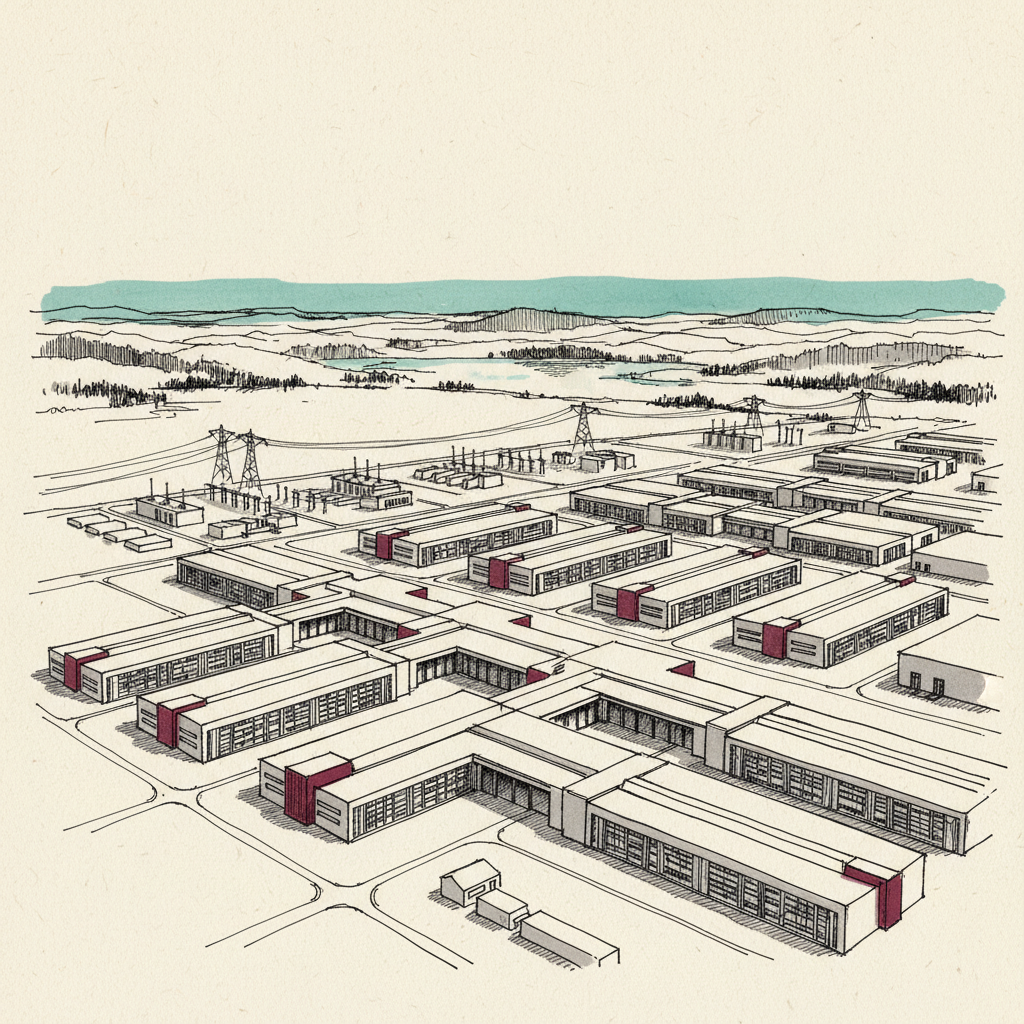
Northern Virginia
Virginia region bordering Washington, DC, with the world's densest data-centre cluster.
On 16 September, Loudoun County began drafting a 12-month halt to new data-centre rezonings, sharpening planning risk across Northern Virginia while leaving 35.7 million square feet of approved construction untouched.
Last refreshed: 24 September 2026
Has the Court of Appeals ruling ended the era of fast-tracked Virginia rezoning?
Timeline for Northern Virginia
Mentioned in: Loudoun drafts a pause on data centres
Data Centres: Boom and BacklashMentioned in: Maryland county caps campuses at 25 MW
Data Centres: Boom and BacklashMentioned in: Prince William denies a 43m sq ft campus
Data Centres: Boom and BacklashMentioned in: Malaysia urged to halt data centres
Data Centres: Boom and BacklashMentioned in: Amazon lifts India bet to $48bn
Data Centres: Boom and BacklashBackground
Northern Virginia is a data-centre cluster spanning Loudoun, Fairfax and Prince William counties. It has more than 5 GW of operational capacity and combines dense network infrastructure with access to Dominion Energy's electricity system. Loudoun alone contained 233 data centres by September 2026.
Its growth drew on a historically permissive county planning system, proximity to major mid-Atlantic internet exchange points and tax incentives. Good Jobs First estimated in February 2026 that Virginia forgoes more than $1bn a year through data-centre tax abatements.
The region matters because established sites, grid connections and approvals are difficult for new entrants to replicate. County-level planning decisions now shape whether that installed advantage supports further growth or channels new investment to other markets. The April 2026 court ruling and related county controls made public process, water and neighbourhood effects central to expansion proposals.
Planning scrutiny reshapes expansion
On 16 September, Loudoun County started work on a proposed 12-month halt to new rezoning applications after a 7-1 board vote. Adoption still required another vote in October, and the proposal excluded 35.7 million square feet already approved. For Northern Virginia, that distinction protects the existing build queue while making its next wave of sites harder to secure.
The proposed pause follows a wider shift in the region's planning climate. On 27 April, the Virginia Court of Appeals invalidated a fast-tracked Prince William rezoning; Loudoun removed by-right zoning for data centres and Fairfax added setbacks and noise controls. On 7 July, Prince William then rejected a 1,940-acre campus by an 8-0 vote. These decisions make local consent a defining constraint on Northern Virginia's future capacity.
What is the latest data centre rejection in Northern Virginia?
Where are data centre operators moving after Northern Virginia tightened its rules?
Which data centre companies are pulling out of Northern Virginia?
What happened to Virginia data centre zoning in 2026?
How much do Virginia data centre tax breaks cost taxpayers?
How much data-centre capacity does Northern Virginia have?
Why is Northern Virginia the world's largest data-centre hub?
What data-centre applications did Loudoun County pause in September 2026?
