Skip to content
You can now search across every topic, entity and event.What's new
Mahmoud Ahmadinejad
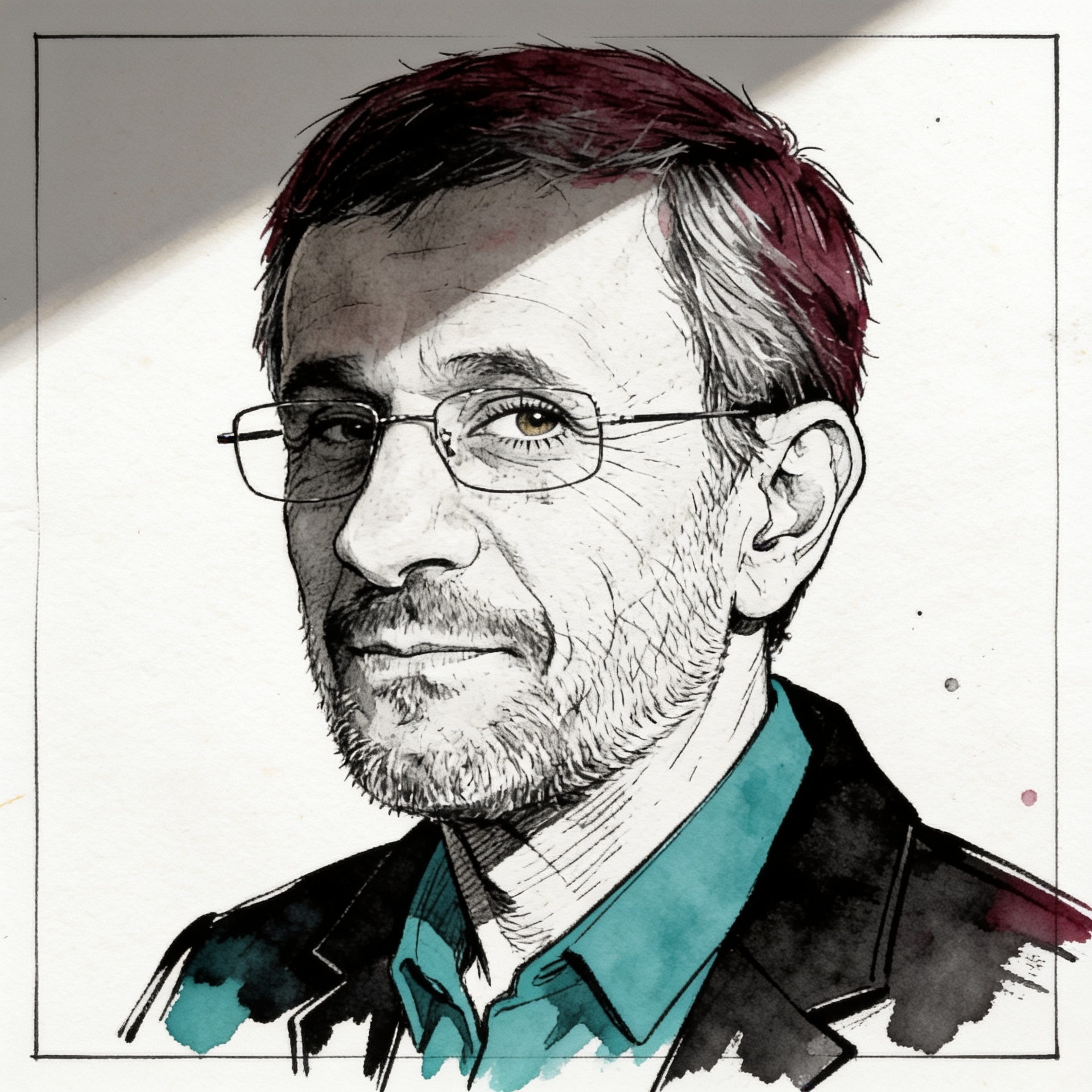
AI-generated editorial illustration
PersonIR

Mahmoud Ahmadinejad

Iran's president 2005-2013; populist hardliner whose nuclear legacy and fall from grace shaped the Islamic Republic.

Last refreshed: 17 June 2026 · Appears in 1 active topic

Key Question

How did Ahmadinejad's presidency shape Iran's nuclear programme and its current isolation?

Timeline for Mahmoud Ahmadinejad

View full timeline →
Common Questions
Who is Mahmoud Ahmadinejad?
Mahmoud Ahmadinejad was President of Iran from 2005 to 2013, notable for Holocaust denial, accelerating the nuclear programme, and a disputed 2009 re-election that triggered the Green Movement. After leaving office he became a public critic of the establishment and was barred from all subsequent elections.
Is Mahmoud Ahmadinejad dead?
Reports of Ahmadinejad's death circulated in early March 2026 but were never officially confirmed or denied by Iranian authorities. His status as of late March 2026 remains unverified.
Why was Ahmadinejad banned from running for president again?
Iran's Guardian Council disqualified him from the 2017 and 2021 elections after his public attacks on IRGC economic privilege and the Khamenei inner circle made him a threat to the establishment he once served.Source: Entity background

Background

Mahmoud Ahmadinejad served as President of Iran from 2005 to 2013, winning two elections: the second, in 2009, was disputed and triggered the Green Movement protests. A populist hardliner and former mayor of Tehran, he built his base on anti-elite rhetoric and Holocaust denial while presiding over an accelerating nuclear programme that drew sweeping Western sanctions. The IRGC's backing was central to both his 2005 and 2009 victories.

After leaving office his relationship with the establishment collapsed entirely. The Guardian Council barred him from the 2017 and 2021 presidential elections, removing him from formal politics. He had grown from regime instrument to regime critic: his attacks on IRGC economic privilege and on Ali Khamenei's inner circle made him a liability. Rumours of his death circulated in early 2026 and were never officially confirmed or denied.

Ahmadinejad embodies the paradox at Iran's centre: the system that elevated him ultimately cast him out for challenging its economic interests. His continued criticism of Khamenei and the IRGC carried weight precisely because it came from within the revolutionary tradition. The factional split between Iran's diplomatic track and IRGC hardliners that has characterised the 2026 conflict mirrors the institutional fault lines his presidency exposed .

More questions
What did Ahmadinejad say about Israel?
Ahmadinejad repeatedly called for Israel to be "wiped off the map" and hosted a Holocaust denial conference in Tehran in 2006. His statements became a central argument for governments pressing for tougher sanctions on the Iranian nuclear programme.
How does Ahmadinejad compare to Pezeshkian as Iranian president?
Masoud Pezeshkian, elected in 2024, is a reformist who campaigned on re-engaging with the West; Ahmadinejad was a hardliner who accelerated nuclear defiance. Both, however, govern within the IRGC's constraints: the civilian presidency has limited authority over military and Foreign Policy decisions.Source: event
Who is Mahmoud Ahmadinejad and what did he do as Iran's president?
Ahmadinejad served as Iran's president from 2005 to 2013, accelerating the nuclear programme, deepening Western sanctions, and winning a disputed 2009 re-election that sparked mass protests known as the Green Movement.Source: Entity background
What happened to Ahmadinejad after he left power?
He became a vocal critic of Iran's clerical and IRGC establishment, was barred from elections, and fell into political obscurity. Rumours of his death in early 2026 were never officially confirmed or denied.Source: Entity background
How did the Green Movement start?
The Green Movement erupted in June 2009 after Ahmadinejad's disputed re-election against reformist challenger Mir Hossein Mousavi. Millions protested across Iran; the regime responded with arrests, killings, and a prolonged crackdown.Source: Entity background
Source Material
