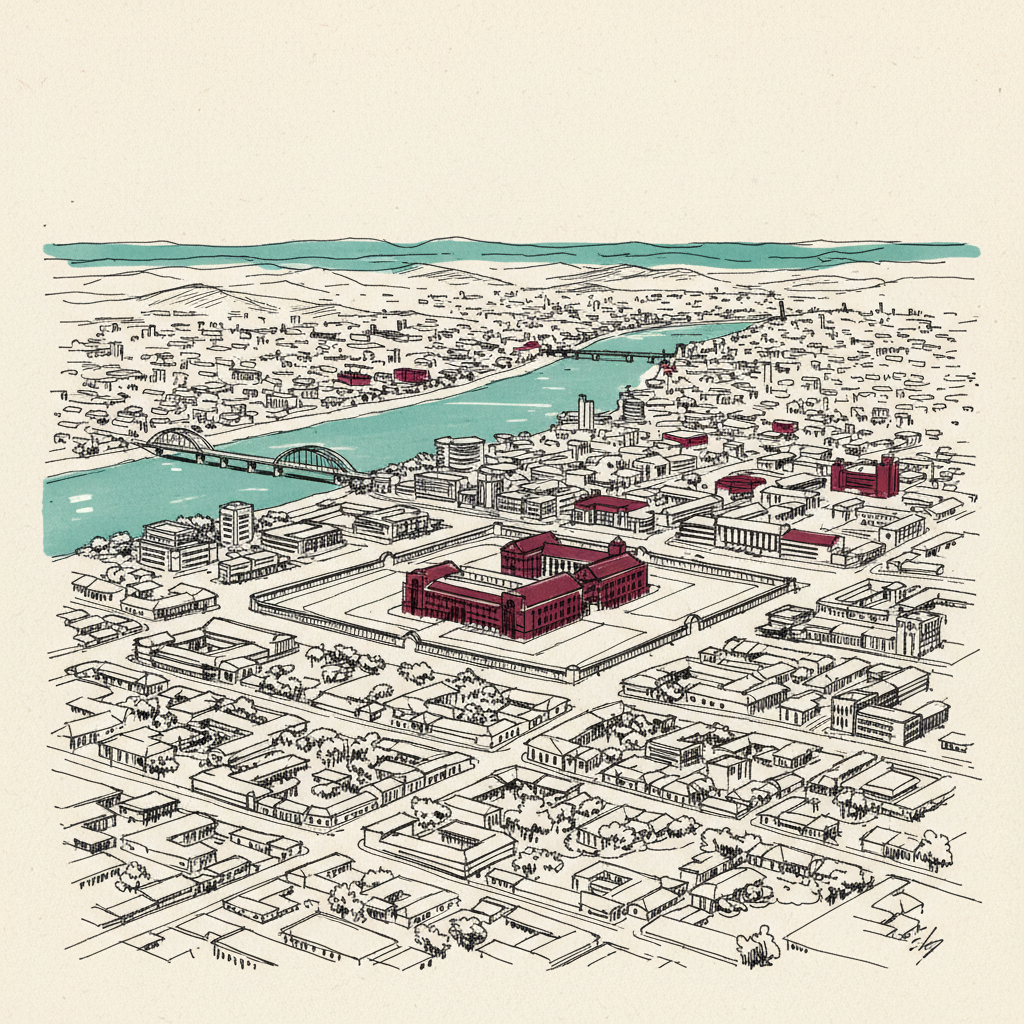
Kinshasa
DRC capital; home to INRB national reference lab; confirmed Bundibugyo species on 14 May 2026.
Kinshasa's national reference laboratory, INRB, confirmed Bundibugyo ebolavirus on 14 May 2026 from samples sent about 1,700 km from Ituri, nine days after WHO's first signal of the largest Bundibugyo outbreak on record.
Last refreshed: 4 October 2026 · Appears in 1 active topic
Why did Kinshasa's lab confirm the Bundibugyo species days after the outbreak was already spreading?
Timeline for Kinshasa
Mentioned in: Ebola reaches Sud-Ubangi by river boat
Pandemics and BiosecurityMentioned in: Ebola staff abandon a Bunia ward
Pandemics and BiosecurityMentioned in: DR Congo score first goal in 52 years
2026 FIFA World CupMentioned in: US widens Ebola ban to green-card holders
Pandemics and BiosecurityWHO declares Ebola PHEIC, no committee
Pandemics and BiosecurityBackground
Kinshasa is the capital of DR Congo and, with about 17 million residents, one of Africa's two largest cities. Every official national outbreak response runs through it. The city houses the health ministry's emergency operations cell, WHO's DR Congo country office and the main logistics hub for supplies sent east.
It is also home to the Institut National de Recherche Biomédicale (INRB), the country's national reference laboratory, which tests samples from outbreak zones across the country.
Ituri, where the 2026 Bundibugyo outbreak began, lies about 1,700 km north-east of Kinshasa across rainforest and the Congo basin, so samples and staff travel FAR before anything happens. Rivers carry risk the other way. In May 2018 Ebola reached Mbandaka, a Congo river port, and WHO warned it could travel downriver towards Kinshasa; that outbreak ended in July 2018 without reaching the capital.
The capital's lab named the virus
The outbreak's identity was settled in Kinshasa. On 14 May 2026 the Institut National de Recherche Biomédicale (INRB) confirmed Bundibugyo ebolavirus after testing 20 samples from Ituri and finding 13 positive, a 65% rate. The result came nine days after WHO received its first signal on 5 May.
DR Congo's health ministry in Kinshasa had made no formal public statement by 16 May, when Africa CDC declared a continental emergency, a day ahead of WHO's international emergency. The gap repeated a known weakness: the 2018-20 Kivu response, also run from Kinshasa, struggled to project capacity into the east.